Waterproof Vanity Cabinet For Bathroom Wholesale
Waterproof Vanity Cabinet For Bathroom Wholesale
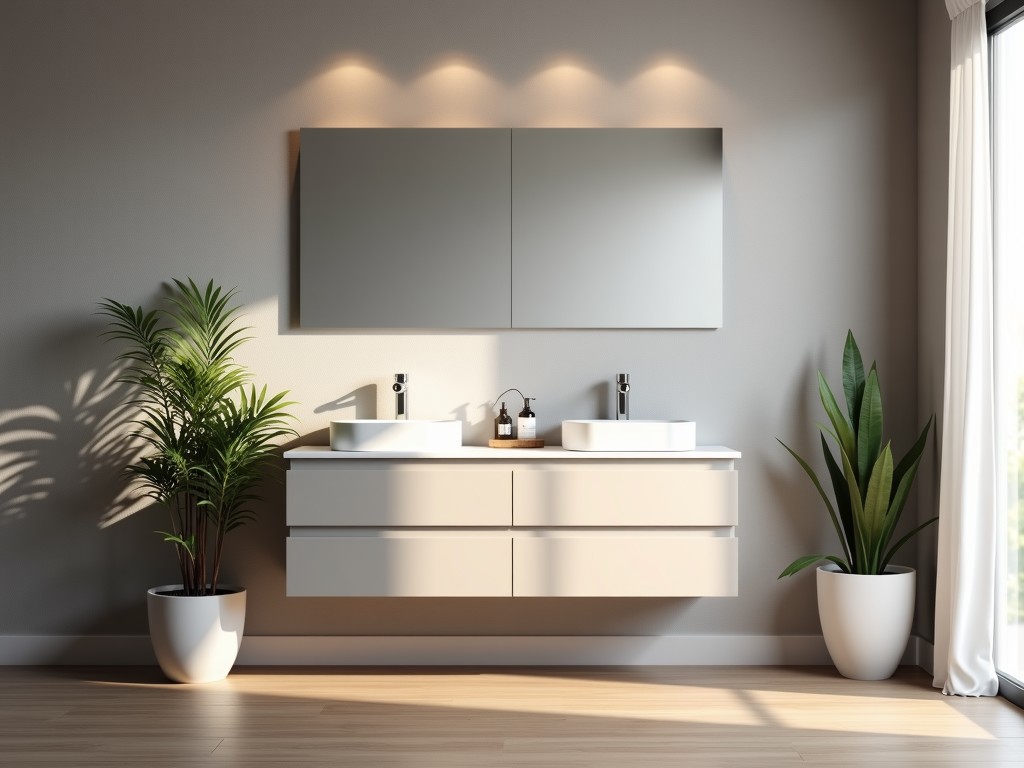
Waterproof Vanity Cabinet for Bathroom
In commercial and institutional bathroom environments, prolonged exposure to moisture, cleaning agents, and temperature fluctuations demands cabinetry that maintains structural integrity and dimensional stability over extended service life. Standard wood-based vanities often suffer from delamination, swelling, or finish degradation under these conditions, leading to premature replacement and increased lifecycle costs. Addressing these challenges requires a purpose-engineered solution where material selection, joint design, and surface protection are evaluated as an integrated system rather than isolated components.
Material Selection for Humid Environments
The core challenge in bathroom cabinetry lies in preventing moisture ingress at the substrate level. Unlike residential applications where occasional splashing occurs, high-traffic facilities such as hospitals, hotels, and public restrooms subject cabinetry to constant humidity cycles and chemical exposure from disinfectants. Marine-grade plywood with phenolic resin bonding provides inherent resistance to delamination, as the adhesive system does not hydrolyze under sustained moisture exposure. For applications requiring enhanced impact resistance, high-density polyethylene (HDPE) panels offer zero water absorption and chemical inertness, though they necessitate specialized joining techniques due to low surface energy.
Surface treatment further defines long-term performance. Thermally fused melamine (TFM) overlays provide a non-porous barrier that resists staining and microbial growth when edges are properly sealed. In contrast, PVC edge banding applied via hot-air welding creates a continuous moisture barrier at panel joints—a critical detail often overlooked in standard manufacturing. The selection between these options depends on cleaning protocols: facilities using hydrogen peroxide-based cleaners may require TFM with UV-stabilized additives to prevent yellowing, while sodium hypochlorite exposure favors HDPE or polypropylene substrates.
Joint Design and Assembly Integrity
Even with moisture-resistant substrates, joint failure remains a primary cause of field degradation. Conventional butt joints secured with screws or nails create stress concentrations that accelerate cracking when panels expand/contract with humidity changes. To mitigate this, we employ biscuit joints reinforced with polyurethane adhesive in plywood constructions, distributing load across a wider area and accommodating minor dimensional movement. For HDPE assemblies, ultrasonic welding creates homogeneous bonds that eliminate interfacial pathways for water migration, though this requires precise control of amplitude and dwell time during production.
Hardware selection directly influences service life. Zinc-plated steel hinges commonly fail in chloride-rich environments due to galvanic corrosion at the screw-hole interface. Stainless steel grade 316 hinges, while higher in initial cost, resist pitting and crevice corrosion in saline or chlorine-exposed conditions, reducing maintenance frequency. Similarly, drawer slides must incorporate sealed ball bearings or polymer rollers to prevent lubricant washout; exposed steel races degrade rapidly when subjected to frequent washing cycles.
Typical Specifications
| Parameter | Typical Range | Notes |
|---|---|---|
| Substrate Material | Marine plywood (BS 1088), HDPE, PVC foam board | Selected based on chemical exposure and impact requirements |
| Surface Finish | TFM overlay, acrylic sheet, solid surface | Edge sealing method critical for moisture resistance |
| Door Thickness | 16–19 mm | Thicker panels reduce deflection in wide-span applications |
| Hinge Type | Stainless steel 316, concealed soft-close | Load rating typically 20–25 kg per hinge pair |
| Adjustable Shelves | Yes, with PVC-coated metal brackets | Spacing adjustable in 32 mm increments |
| Standard Width | 400–800 mm | Custom widths available upon request |
| Standard Height | 700–850 mm | Includes space for countertop and plumbing access |
Application Scenarios
Healthcare facilities present unique demands where cabinetry must withstand frequent cleaning with quaternary ammonium compounds and alcohol-based disinfectants while maintaining a non-porous surface to support infection control protocols. In these settings, seamless HDPE construction with welded seams eliminates crevices where pathogens can harbor, and the material’s resistance to repeated chemical exposure ensures compliance with hygiene standards without surface degradation. The absence of organic substrates also prevents mold growth in high-humidity zones such as patient bathrooms and therapy rooms.
Hospitality environments prioritize aesthetic longevity alongside durability. Luxury hotels often specify vanity cabinets with acrylic-coated marine plywood substrates, where the high-gloss finish resists etching from acidic toiletries and retains clarity over years of use. The thermal stability of acrylic prevents crazing under fluctuating temperatures common in bathrooms with underfloor heating or rapid hot water usage. Edge detailing is critical here—laser-cut acrylic edges polished to match the surface finish avoid visible seams that detract from the premium appearance expected in