Top Frameless Kitchen Cabinets
Top Frameless Kitchen Cabinets
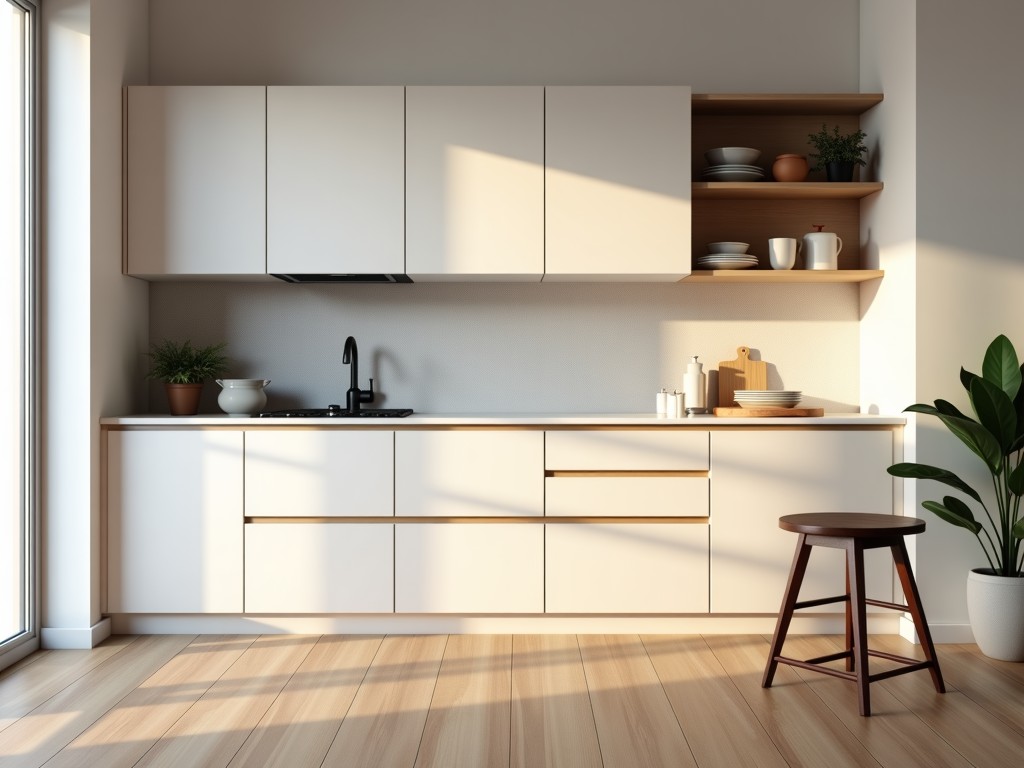
Frameless Kitchen Cabinets: Engineering-Driven Design for Precision Installation
Frameless kitchen cabinets, also known as European-style or full-access cabinets, eliminate the face frame found in traditional designs, allowing direct access to the cabinet interior and maximizing usable storage space. This construction method relies on precise panel joinery and consistent material thickness to maintain structural integrity without the rigidity provided by a solid wood frame. For procurement teams and design engineers evaluating cabinetry for multi-unit residential, hospitality, or high-end commercial projects, understanding the engineering implications of frameless construction is critical to ensuring long-term performance, installation efficiency, and compatibility with standardized hardware systems.
Material Selection and Panel Stability
The absence of a face frame places greater responsibility on the cabinet box itself to resist racking and maintain squareness under load. As a result, frameless cabinets typically use engineered wood substrates such as particleboard, MDF, or plywood with specified density and moisture resistance grades. Panel thickness commonly ranges from 16mm to 19mm, with tighter tolerances on thickness variation (±0.2mm) to ensure consistent reveal alignment and proper hinge operation. Edge banding, usually PVC or ABS with laser-etched or pre-glued application, seals the raw edges against moisture ingress and provides a seamless finish that matches the door and drawer fronts.
Joinery Methods and Structural Integrity
Without a face frame to provide lateral strength, frameless cabinets depend on accurate joinery at the corners—typically dowel, confirmit, or cam-lock systems—to maintain 90-degree angles under static and dynamic loads. Dowel joints, when combined with glue, offer high shear resistance and are preferred in automated production for repeatability. Confirmat screws, with their coarse threads and deep pull-out resistance, are often used in thicker panels (18mm–19mm) where withdrawal strength is critical. Cam-lock fasteners allow for disassembly and reassembly, beneficial in knock-down (KD) shipping scenarios, though they require precise hole alignment to avoid joint creep over time.
Tolerance Control and Installation Precision
Frameless cabinet installation relies heavily on consistent panel dimensions and square corners, as any deviation is directly visible in the reveal between adjacent units or between the cabinet and wall. Unlike framed cabinets, where the face frame can conceal minor misalignments, frameless systems expose gaps or uneven reveals if cabinet boxes are not square within ±1mm over the diagonal. This necessitates CNC-cut panels with tight positional tolerances on bore holes for hinges, shelf pins, and connector hardware—typically ±0.1mm positional accuracy—to ensure repeatable fit during assembly and installation.
Hardware Compatibility and Functional Clearance
The full-access interior of frameless cabinets enables the use of standard European hinges, slide systems, and interior organizers without interference from a face frame. However, this also means that hinge cup depth, slide side clearance, and drawer box thickness must be carefully coordinated to avoid binding or insufficient overlay. Typical full-overlay hinges require a minimum interior depth of 55mm to accommodate the hinge cup and allow 90°+ opening, while undermount slides necessitate precise side clearance (usually 12.5mm per side) to ensure smooth operation. Interior accessories such as pull-out trays or lazy Susans must be designed to fit within the exact internal dimensions, which are equal to the outer box dimensions minus twice the panel thickness.
Typical Specifications
| Parameter | Typical Range / Value | Notes |
|---|---|---|
| Panel Thickness | 16mm, 18mm, 19mm | 19mm preferred for tall units and load-bearing applications |
| Thickness Tolerance | ±0.2mm | Critical for reveal consistency and hardware fit |
| Diagonal Squareness | ≤1mm deviation | Measured corner-to-corner; affects alignment in runs |
| Hinge Cup Depth | Minimum 11.5mm | Requires sufficient panel thickness for secure mounting |
| Drawer Side Clearance | 12.5mm per side | Standard for undermount soft-close slides |
| Edge Banding Thickness | 0.4mm–0.6mm | PVC/ABS; laser or hot-air applied for seamless finish |
Customization and Production Considerations
Frameless cabinets are well-suited to modular production due to their reliance on standardized panel sizes and hardware layouts. Custom dimensions, door styles, and interior configurations can be accommodated through CNC nesting and parametric design tools, though changes to panel thickness or material grade may require requalification of joinery methods and hardware compatibility. Lead times are influenced by material availability, edge banding color matching, and the complexity of interior accessories—particularly when integrating electrical components (e.g., LED lighting, power outlets) that require routing and certification. Packaging for KD units typically includes flat-packed boxes with corner protectors, labeled hardware bags, and assembly instructions to minimize damage during transit and simplify on-site installation.
For engineering teams evaluating frameless cabinetry for repeatable projects, requesting detailed specifications on panel flatness, screw withdrawal resistance, and finish adhesion (per ASTM D3359 or equivalent) can provide insight into long-term performance under varying humidity and thermal cycling. Suppliers should be able to provide material data sheets, joint strength test summaries, and sample units for fit-and-finish validation prior to production approval.
Share your project drawings, material preferences, or hardware requirements for a detailed technical review and customized proposal.
Discuss Your Project with Our Engineering Team Request a Quote