Temperature Controlled Wine Cabinet Supplier
Temperature Controlled Wine Cabinet Supplier
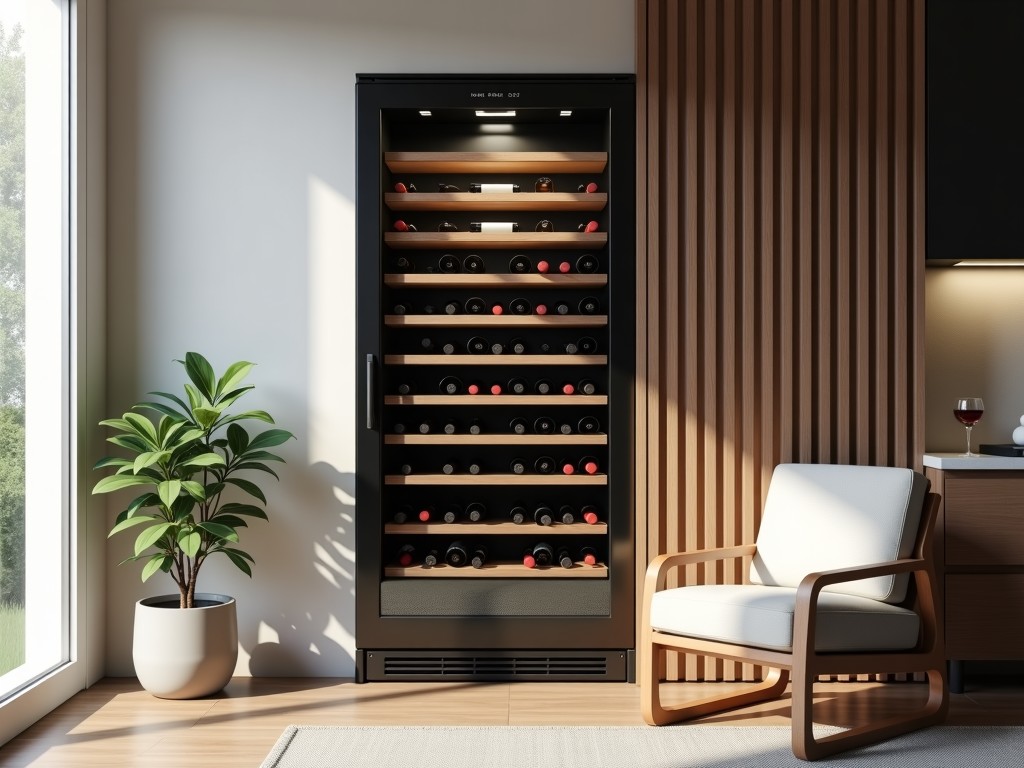
Temperature Controlled Wine Cabinet Supplier: Precision Storage Solutions for Commercial and Industrial Applications
Engineering Challenge in Wine Preservation: Beyond Simple Cooling
In commercial wine storage — whether in distribution centers, hospitality supply chains, or retail aggregation facilities — maintaining consistent thermal conditions is not merely about lowering temperature. Fluctuations as small as ±2°C can accelerate chemical reactions in wine, affecting phenolic stability, ester formation, and long-term aging potential. For OEM buyers and procurement managers evaluating storage infrastructure, the core requirement is not just cooling capacity, but environmental stability: minimizing diurnal swings, managing humidity-induced label degradation, and isolating storage zones from external thermal loads caused by door cycling or equipment proximity.
Working Principle: Dual-Stage Climate Control with Active Humidity Management
Unlike conventional refrigeration units designed for food or beverage cooling, wine storage cabinets require decoupled temperature and humidity regulation. The system employs a variable-speed compressor paired with electronic expansion valves to maintain cabinet temperature within ±0.5°C of setpoint across ambient conditions ranging from 16°C to 32°C. Simultaneously, a desiccant-based dehumidification loop — regenerated via waste heat from the condenser — prevents moisture buildup that promotes mold on corks and label delamination, while an ultrasonic humidifier activates only when relative humidity drops below 50%, avoiding over-saturation that could compromise structural integrity of wooden shelving or promote condensation on glass doors.
Airflow is directed through perforated baffles to ensure laminar circulation without creating localized drafts that could disturb sediment in aged bottles. Sensors are placed at multiple vertical zones to detect stratification, triggering damper adjustments to homogenize conditions throughout the storage volume — critical when storing mixed vintages with differing sensitivity to thermal gradients.
Material Selection: Balancing Thermal Performance, Durability, and Hygiene
The cabinet exterior uses galvanized steel with a powder-coated finish (minimum 80μm thickness) selected for its resistance to scratching in high-traffic environments and compatibility with frequent cleaning protocols using pH-neutral detergents. Interior linings are food-grade 304 stainless steel (2B finish, Ra ≤ 0.8μm) to eliminate off-gassing risks and resist corrosion from occasional spills or high-humidity condensate. Door seals are compression-molded EPDM with a shore hardness of 65A, chosen over silicone for its superior compression set resistance after 5000+ cycles and stability under repeated thermal cycling.
Shelving is constructed from marine-grade plywood with a food-safe phenolic laminate overlay, providing sufficient load-bearing capacity (up to 40kg per shelf) while minimizing thermal bridging compared to metal alternatives. The laminate surface resists staining and allows for easy cleaning without swelling or delamination — a common failure point in lower-grade wood composites exposed to cyclic humidity.
Manufacturing Process: Ensuring Consistency in Thermal Envelope Integrity
Each unit undergoes helium mass spectrometry leak testing after assembly to verify integrity of the refrigeration circuit, with a rejection threshold of 1×10⁻⁶ mbar·L/s — a standard borrowed from semiconductor and medical device manufacturing where even micro-leaks compromise long-term performance. Door alignment is verified using laser triangulation to ensure gasket compression uniformity within ±0.2mm across the perimeter, preventing localized cold spots or air infiltration.
Insulation is injected as a closed-cell polyurethane foam with a core density of 38±2 kg/m³, selected for its low thermal conductivity (0.021 W/m·K at 10°C mean temperature) and dimensional stability. The foaming process is conducted under vacuum to eliminate voids, followed by a 24-hour stabilization period before final assembly to prevent post-expansion warping that could misalign doors or create thermal bridges.
Typical Specifications: Configurable Parameters for Industrial Integration
| Parameter | Typical Range / Value | Notes |
|---|---|---|
| Temperature Control Range | 5°C – 20°C | Adjustable in 0.5°C increments |
| Temperature Stability | ±0.5°C (steady state) | Measured at center point after 2h stabilization |
| Relative Humidity Range | 50% – 75% RH | Active control via humidification/dehumidification |
| Humidity Stability | ±3% RH | After door closed for 30min |
| Insulation Thickness | 50mm – 75mm | Dependent on model and ambient class |
| External Dimensions (HxWxD) | 1800x600x600mm – 2000x800x800mm | Custom heights available upon request |
| Power Consumption (avg.) | 0.8 – 1.5 kWh/24h | At 25°C ambient, 12°C setpoint |
| Noise Level | ≤38 dB(A) | Measured at 1m distance, free field |
Application Scenarios: Where Thermal Stability Impacts Operational Outcomes
In wine import consolidation hubs, these cabinets serve as pre-distribution conditioning units, allowing received containerized cargo to equilibrate to target storage temperature before palletizing — reducing thermal shock that can cause premature cork migration or leakage. For airline catering logistics providers, units installed in ground support facilities maintain bottle temperature during crew rest periods, preventing heat accumulation in galley carts that could exceed 25°C even when ambient is controlled.
Retail distribution centers use zoned cabinets to separate red and white wine varietals during cross-docking, ensuring that temperature-sensitive whites (e.g., Sauvignon Blanc, Pinot Grigio) are not exposed to conditions optimized for reds during intermediate storage. In museum-grade archival facilities storing investment-grade vintages, the cabinets function as secondary barriers within climate-controlled rooms, providing localized protection against HVAC cycling or power fluctuation events.
Customization Options: Adapting to Facility Constraints and Operational Workflows
Standard units are designed for through-the-wall installation with front-breathing condensers, but rear-exhaust configurations are available for ducting into mechanical rooms or plenums where floor-level airflow is restricted. Door hinges can be specified as left- or right-handed, with optional 90-degree or 180-degree swing limits to accommodate aisle constraints or adjacent equipment.
Interior lighting can be upgraded to motion-activated LED strips with CRI >90 and zero UV emission to prevent photodegradation of labels during inspection. For facilities requiring integration with building management systems, Modbus RTU or BACnet MS/TP interfaces are available for remote monitoring of temperature, humidity, door ajar status, and compressor runtime — enabling predictive maintenance scheduling based on actual duty cycles rather than fixed intervals.
Shelving configurations include fixed, sliding, or angled racks for display-oriented storage, with load ratings adjustable based on bottle format (standard 750ml, magnum, or champagne). Custom color matching to corporate palette or facility wayfinding systems is available via RAL-matched powder coating on external panels.
Quality Control and Testing: Validation Beyond Factory Acceptance
Before shipment, each unit undergoes a 72-hour environmental soak test at 32°C ambient and 80% RH to verify condensation resistance and control system stability under stress. Door opening simulations (10 cycles/hour for 8 hours) are performed to evaluate recovery time and temperature overshoot — critical metrics for facilities with high access frequency. Insulation continuity is verified via infrared thermography to detect missing fill or settling that could create thermal bridges.
Performance data is logged and traceable by serial number, with reports available upon request detailing sensor calibration certificates, refrigerant charge verification, and electrical safety testing (IEC 60335-2-24 compliant). While specific MTBF values are application-dependent, design principles prioritize component accessibility — using standardized refrigeration components and modular control boards to minimize mean time to repair.
Packaging and Logistics: Protecting Dimensional Integrity in Transit
Units are packaged in triple-wall corrugated containers with internal bracing formed from die-cut honeyboard to prevent shifting during transport. Corner protectors are made from recycled polyethylene foam with a density of 60kg/m³, selected for its recovery characteristics after compression. The package includes shock indicators (50g threshold) and tilt sensors to alert handlers to mishandling — data that can be used to assess potential misalignment of internal components upon receipt.
For LCL shipments, units are stacked no higher than two layers with interlocking pallet patterns to distribute load evenly. Export documentation includes material safety data sheets for refrigerants (R600a or R134a depending on model), declaration of conformity for CE or UL marking where applicable, and ISPM 15-compliant wood packaging if used in palletization. Delivery lead times are typically 4–6 weeks for standard configurations, with custom builds subject to tooling and material availability.
Installation and Maintenance: Minimizing Operational Disruption
Installation requires only a level surface and dedicated 16A or 20A circuit (depending on model) with appropriate RCD protection. No special ventilation clearances are needed for front-breathing models, though 50mm rear clearance is recommended for optimal condenser airflow. Leveling feet allow adjustment of up to 15mm to compensate for uneven floors, ensuring door alignment remains within tolerance after placement.
Preventive maintenance involves quarterly inspection of door gaskets for cracking or compression set, annual cleaning of condenser coils using low-pressure air or soft brush (never water or solvents), and biennial verification of sensor accuracy against a calibrated reference thermometer/hygrometer. The control system logs runtime and fault history, accessible via service port for diagnostics — reducing reliance on guesswork during troubleshooting.
Selection Guide: Matching Specifications to Operational Needs
When evaluating options, prioritize temperature stability over nominal range — a cabinet that holds 12°C ±0.3°C is more valuable for long-term storage than one that swings between 10°C and 14°C even if both advertise the same setpoint capability. Humidity control is non-negotiable for natural cork closures; synthetic alternatives may tolerate wider ranges, but even then, excessive dryness risks oxygen ingress while condensation promotes mold.
Assess duty cycle based on expected door frequency: high-access environments (e.g., retail prep areas) benefit from faster recovery compressors and reduced thermal mass, while archival storage favors higher insulation and slower cycling for energy efficiency. Always verify that the condenser type matches installation constraints — rear-exhaust units require ducting capacity, while front-breathing models need unobstructed grille access.
Request thermal performance data under conditions matching your facility’s profile — not just nominal ratings. A unit tested at 25°C ambient may behave differently at 32°C with frequent door opens. Suppliers should provide pull-down and recovery curves, not just steady-state specs.
Discuss Your Project Requirements with Our Engineering Team
Share your facility layout, expected load profiles, and environmental constraints for a tailored proposal that addresses both performance and integration challenges. Our team provides detailed thermal simulations, wiring schematics, and clearance drawings to ensure seamless deployment.