Restaurant Display Cabinets Factory Sale
Restaurant Display Cabinets Factory Sale
Restaurant Display Cabinets
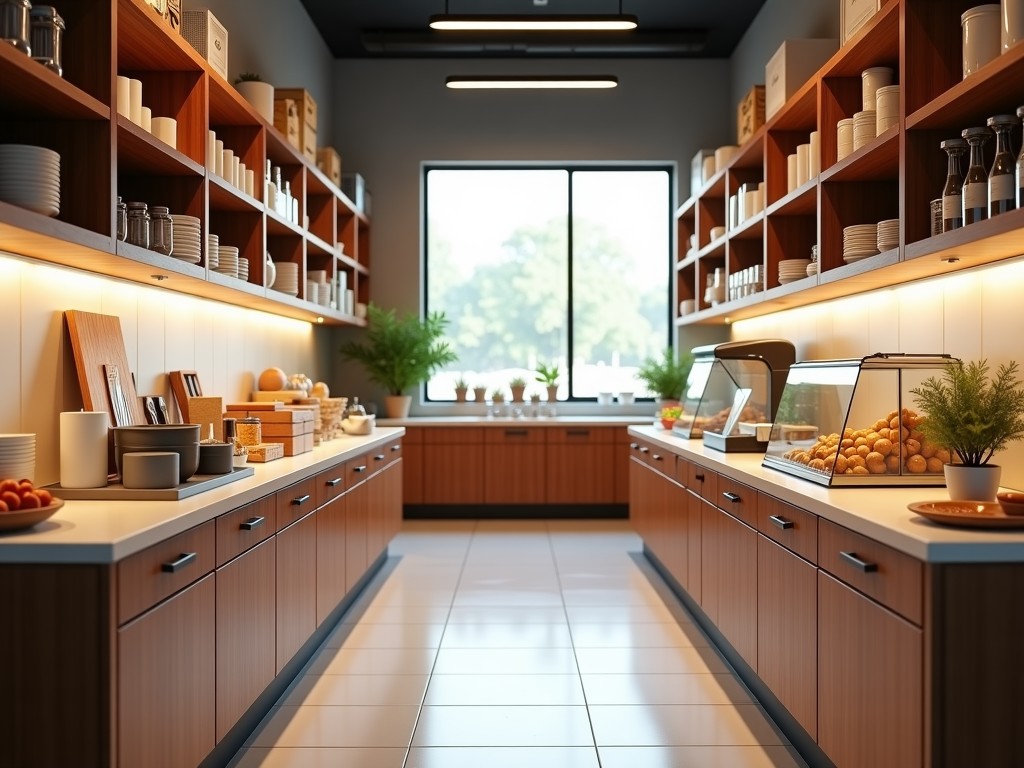
Designed for front-of-house food presentation in commercial dining environments, restaurant display cabinets combine temperature control, visibility, and accessibility to maintain product quality while supporting service efficiency. These units are commonly used in buffets, cafés, quick-service restaurants, and hotel dining areas where consistent food safety and visual appeal are critical.
Industry Challenge: Balancing Visibility and Food Safety
In high-traffic foodservice operations, display equipment must protect perishable items from temperature fluctuations while ensuring clear sightlines for customers. Conventional open displays risk bacterial growth in the danger zone (4°C–60°C), while opaque storage limits impulse sales. Engineers and procurement teams evaluate cabinets based on thermal stability, humidity control, glare reduction, and ease of cleaning—factors that directly impact HACCP compliance and customer perception.
Working Principle: Integrated Thermal and Airflow Management
Restaurant display cabinets use forced-air circulation or gravity-cooled systems to maintain uniform temperatures across all display zones. Cold air is introduced at the top or rear and circulated downward or horizontally to minimize stratification. Digital controllers monitor return air temperature and adjust compressor cycling to hold setpoints within ±1°C. For hot displays, infrared heating elements or heated air systems prevent surface drying while maintaining safe holding temperatures above 60°C.
Material Selection: Durability in Hygienic Environments
Exterior panels are typically fabricated from stainless steel grades 304 or 430 for corrosion resistance and ease of sanitation. Interior liners may use aluminum or food-grade ABS with smooth, radius-ed corners to eliminate crevices where debris accumulates. Viewing surfaces employ tempered glass or acrylic with anti-fog coatings; glass is preferred for scratch resistance and clarity, while acrylic reduces weight in mobile units. Door gaskets use compressible vinyl or silicone to maintain seals during frequent cycling.
Manufacturing Process: Precision Assembly for Consistent Performance
Cabinet frames are CNC-cut and welded to tight tolerances (<±0.5mm on critical joints) to ensure door alignment and seal integrity. Insulation is injected as polyurethane foam between inner and outer shells, achieving thermal conductivity of 0.022–0.028 W/m·K. Electrical components are pre-wired and tested at sub-assembly level to reduce field failures. Each unit undergoes a 24-hour pull-down test to verify pull-down time and stability before packaging.
Performance Advantages: Engineered for Service Reliability
Unlike residential display units, commercial cabinets are built for 12–18 hour daily operation with frequent door openings. High-efficiency compressors and EC fan motors reduce energy consumption by 20–30% compared to shaded-pole alternatives. Automatic defrost systems prevent ice buildup on evaporator coils without manual intervention. LED lighting provides high CRI (>80) for accurate food color rendering while generating minimal heat.
Typical Specifications
| Parameter | Typical Range | Notes |
|---|---|---|
| Temperature Range (Cold) | 2°C to 8°C | Adjustable via digital controller |
| Temperature Range (Hot) | 60°C to 75°C | Holding only; not for cooking |
| External Dimensions | 600–1800mm W × 600–800mm D × 900–1500mm H | Countertop, floor-standing, or wall-mounted |
| Power Consumption | 0.8–2.2 kWh/24h | Varies with size, usage, and ambient temp |
| Lighting | LED, 3000K–4000K, >80 CRI | Shatterproof, low-heat emission |
| Glass Type | Tempered or acrylic, 4–6mm thick | Anti-fog coating available |
Application Scenarios: Matching Cabinet Type to Service Model
Countertop models suit pastry displays in cafés where vertical space is limited but impulse access is key. Floor-standing units with sliding or hinged doors are common in hotel breakfast buffets, allowing easy replenishment from the rear. Curved-glass designs enhance visibility in self-serve salad bars, reducing the need for customers to lean forward. Dual-zone cabinets (hot and cold compartments) support mixed-service concepts like breakfast bars with pastries and hot entrées.
Customization Options: Adapting to Operational Needs
Standard configurations can be modified to include adjustable shelving, night curtains for after-hours energy savings, or castor kits for mobile service stations. Electrical specs (voltage, phase, plug type) are adjusted per regional requirements. Custom graphics or branding can be applied to exterior panels via vinyl wraps or laser etching. Shelving layouts are reconfigured to accommodate specific product heights—such as tall bottles in beverage displays or flat trays for sushi.
Packaging and Logistics: Protecting Finish and Function
Units are packed in triple-wall corrugated containers with corner protectors and foam edge guards. Glass panels are isolated with interstitial cardboard or corrugated dividers to prevent point loading. Each package includes installation hardware, a quick-start guide, and a warranty registration card. For export, ISPM-15 compliant pallets and stretch wrapping are used to resist moisture and shifting during transit. Lead time typically ranges from 4–6 weeks for standard models, with custom builds subject to tooling and material availability.
Installation and Maintenance: Ensuring Long-Term Performance
Cabinets require level installation to prevent door misalignment and compressor oil pooling. A minimum 50mm clearance at the rear and sides is recommended for airflow. Condenser coils should be cleaned quarterly in dusty environments to maintain efficiency. Door gaskets are inspected monthly for wear and replaced as needed to preserve seal integrity. Interior surfaces are cleaned daily with neutral pH detergents; abrasive pads are avoided to prevent scratching on glass or polished surfaces.
Quality Control: Consistency Across Production Runs
Every unit receives a functional test cycle verifying temperature pull-down, recovery time, lighting operation, and alarm responsiveness. Electrical safety is confirmed via hi-pot and ground continuity tests. Aesthetic checks include glass clarity, door gap uniformity, and finish adhesion. Statistical process control monitors critical dimensions during frame fabrication to detect drift before it affects assembly. Test data is retained for traceability but not disclosed as guaranteed performance.
Share your drawings or specifications for a customized proposal.