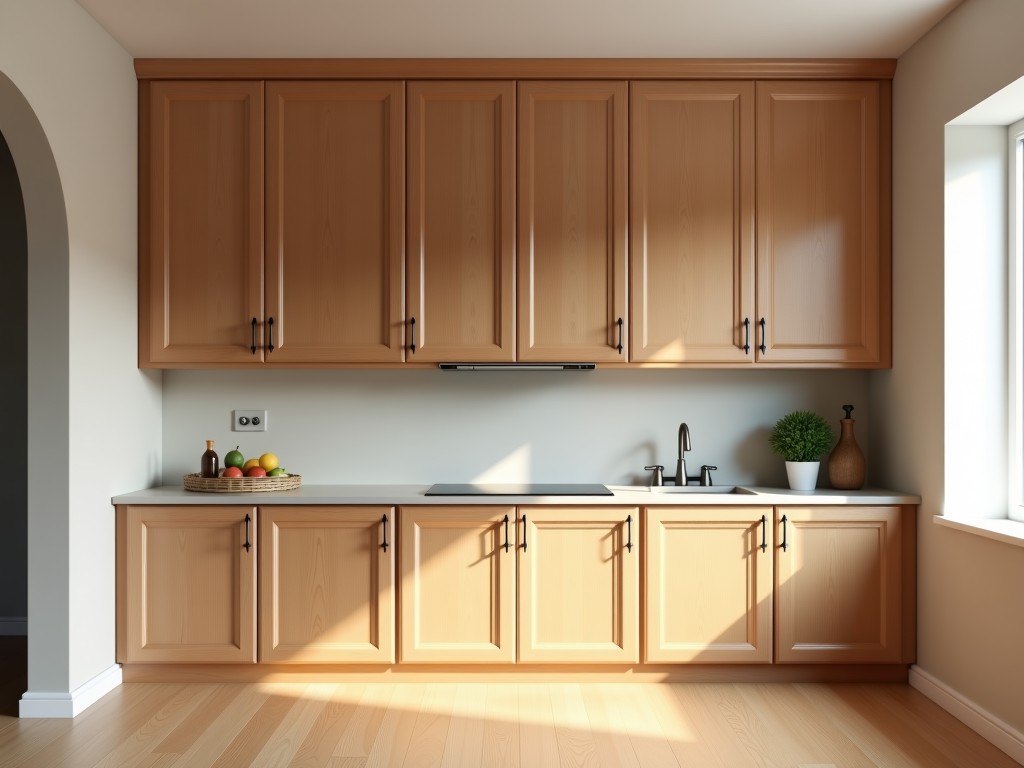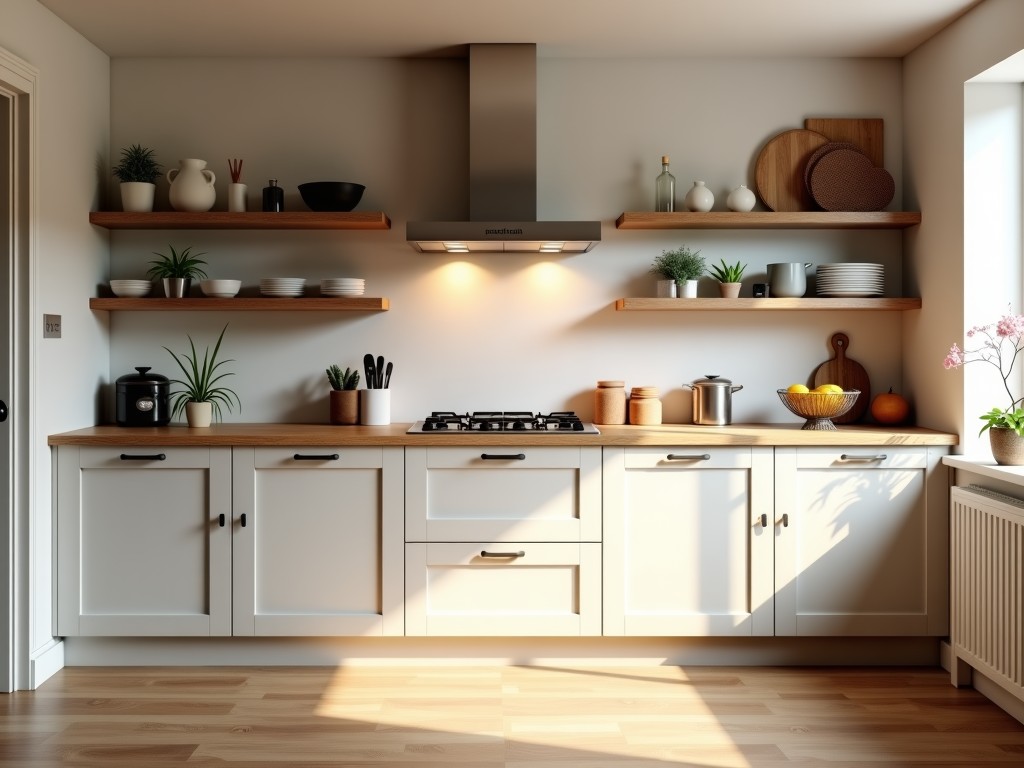
Ready Assembled Kitchen Cabinets Manufacturer
Ready Assembled Kitchen Cabinets Manufacturer
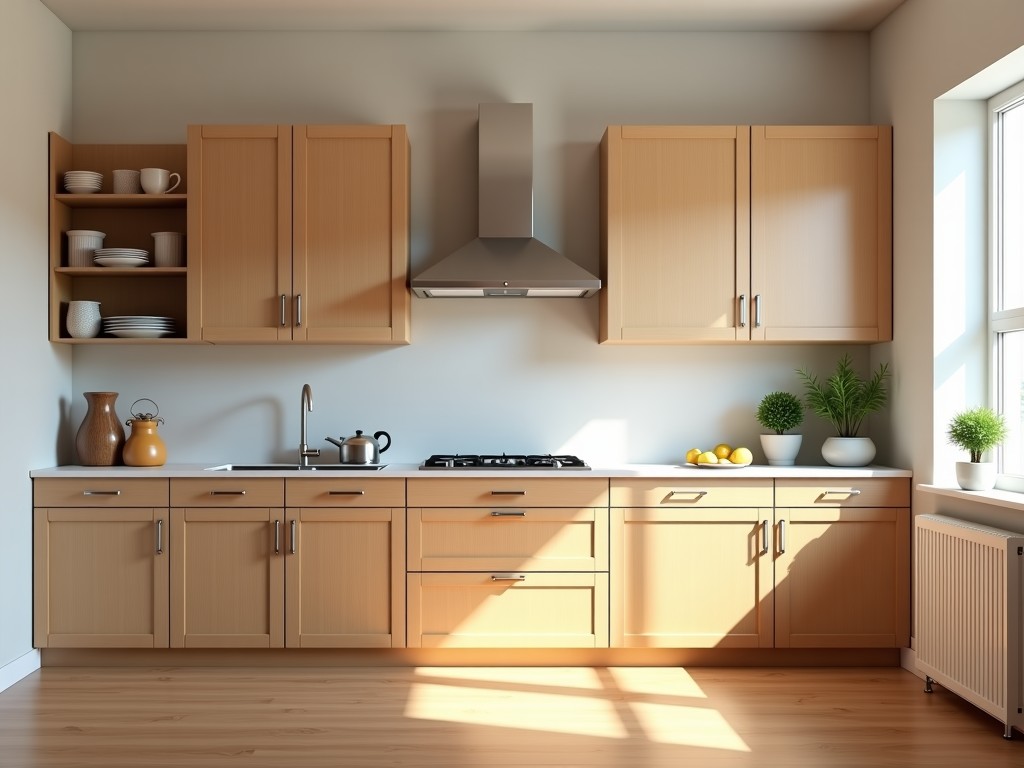
Ready Assembled Kitchen Cabinets for Commercial and Industrial Applications
In commercial kitchen design, cabinetry must withstand continuous use, exposure to moisture, temperature fluctuations, and cleaning agents while maintaining dimensional stability and structural integrity. Ready assembled kitchen cabinets eliminate on-site construction variability by delivering fully fabricated units that meet tight installation schedules and quality expectations.
Engineering Perspective: Material Selection and Structural Performance
The performance of kitchen cabinets in demanding environments depends on substrate selection, panel thickness, and joint construction. Common substrates include moisture-resistant particleboard, MDF with melamine overlay, and marine-grade plywood, each chosen based on exposure levels and load requirements. Particleboard with MR (moisture-resistant) resin is typical for wall units where direct water contact is limited, while plywood cores are preferred for base cabinets supporting countertops and appliances due to superior screw holding and resistance to delamination.
Panel thickness typically ranges from 16mm to 19mm for carcasses, with 25mm used for load-bearing shelves in high-traffic areas. Edge sealing with PVC or ABS tape prevents moisture ingress at cut edges, a critical factor in preventing swelling and joint failure over time. Door and drawer fronts often use the same substrate with thermoformed, laminate, or lacquer finishes selected for chemical resistance and ease of cleaning.
Manufacturing Process and Quality Control
Ready assembled cabinets are produced using CNC cutting for precise panel dimensions, automated edge banding for consistent seal integrity, and pneumatic or cam-lock fastening systems that ensure repeatable joint strength. Assembly occurs on jig-based fixtures to maintain squareness within ±1.5mm diagonal tolerance, a standard verified during intermediate inspection.
Quality control includes visual inspection for surface defects, dimensional verification of carcass and door alignments, and functional testing of hinges and drawer slides through 5,000-cycle operations. Finish adhesion is assessed via cross-hatch testing per ASTM D3359, with results available upon request. Packaging uses corner protectors, edge foam, and shrink-wrap to prevent damage during transit, particularly important for export shipments.
Typical Specifications
| Parameter | Typical Range | Notes |
|---|---|---|
| Car carcass thickness | 16–19 mm | MR particleboard or plywood |
| Shelf thickness | 19–25 mm | 25 mm for spans >600 mm |
| Door thickness | 18–22 mm | Laminate, lacquer, or thermofoil finish |
| Overlay type | Full, partial, inset | Determined by door and frame design |
| Hinge type | Soft-close, concealed | 35mm cup, 110° opening |
| Drawer slide rating | 30–50 kg dynamic load | Full extension, ball bearing |
| Diagonal tolerance | ±1.5 mm | Measured per carcass |
| Finish adhesion | ASTM D3359 Class 4B or better | Available upon request |
Application Scenarios: Where Ready Assembly Adds Value
In institutional kitchens such as hospitals, schools, and correctional facilities, ready assembled cabinets reduce on-site labor and minimize disruption during renovations. The elimination of field cutting and assembly shortens installation timelines by up to 40%, allowing faster commissioning of food service operations.
For modular restaurant chains and food service contractors, consistency across multiple locations is critical. Factory-assembled units ensure identical dimensions, finish quality, and hardware performance, simplifying maintenance and parts replacement. This consistency also supports warranty compliance and reduces field service variability.
In offshore marine galleys and remote industrial camps, where skilled labor is limited and logistics are complex, ready assembled cabinets reduce the risk of installation errors. Pre-drilled mounting points and standardized hanging systems allow secure attachment to wall rails or studs with minimal on-site adjustment.
Customization Options and OEM Considerations
While standard configurations cover common wall, base, tall, and corner units, customization is available for non-standard dimensions, specialized interiors (such as pull-out waste bins, utensil organizers, or appliance garages), and modified hardware layouts. Changes to panel material, finish, or edge treatment require updated tooling or programming but do not necessarily increase MOQ for repeat projects.
OEM buyers supplying kitchen systems to contractors or developers can provide CAD drawings or CNC-ready files for direct translation into production. Design changes are reviewed for manufacturability, with feedback on tolerances, edge sealing requirements, and hardware compatibility provided early in the quotation phase.
Packaging, Logistics, and Installation
Cabinets are packaged flat or assembled depending on destination and handling requirements. Assembled units are wrapped in protective film, secured with corner boards, and placed in corrugated cartons or on pallets with intermediate stacking limits to prevent deformation. Flat-pack options include pre-drilled holes, labeled cam locks, and illustrated assembly guides for partners who prefer on-site build.
Installation typically involves wall rail systems or direct screw attachment to studs, with shimming used to compensate for wall unevenness. Leveling legs on base cabinets allow adjustment for uneven floors, a common condition in retrofit projects. Clearance requirements for doors and drawers are specified in the product documentation to ensure proper function after installation.
Selection Guide: What Procurement and Engineering Teams Evaluate
When assessing ready assembled cabinets, technical teams focus on substrate suitability for the expected humidity and chemical exposure, joint construction method and its impact on long-term rigidity, and finish durability under repeated cleaning. Lead times are influenced by material availability, finish complexity, and order volume, with typical ranges of 4–6 weeks for standard configurations and 6–8 weeks for custom finishes.
Sample evaluation is recommended for finish color and texture verification, particularly when matching to countertops or wall coatings. Functional samples of drawer slides and hinges allow testing of load capacity and smoothness under simulated use. Third-party inspection reports for dimensional accuracy and finish adhesion can be arranged prior to shipment.
Discuss your project requirements with our engineering team to review material options, dimensional constraints, and customization possibilities for your kitchen cabinetry needs.