Outdoor Kitchen Cabinet Supplier
Outdoor Kitchen Cabinet Supplier
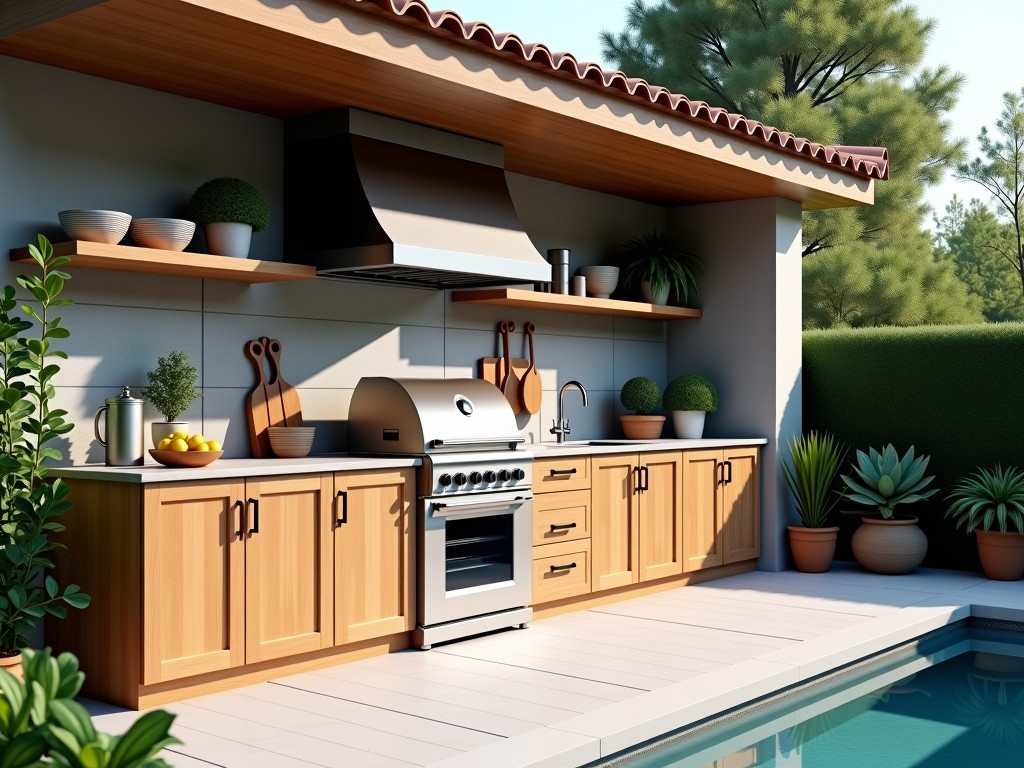
Industrial-Grade Outdoor Kitchen Cabinet Manufacturing and Specification
Selecting an outdoor kitchen cabinet supplier requires a shift from aesthetic furniture logic to structural engineering and environmental resilience. Unlike indoor cabinetry, outdoor units must withstand extreme thermal fluctuations, high humidity levels, UV exposure, and direct precipitation without compromising structural integrity or surface finish. We focus on providing high-grade alloys and reinforced assemblies that maintain dimensional stability over a multi-year lifecycle in exposed exterior environments.
Material Selection for Atmospheric Resistance
The primary failure point in outdoor cabinetry is galvanic corrosion and oxidation. Standard domestic-grade stainless steel often fails in coastal or high-humidity regions due to pitting corrosion. Our manufacturing process prioritizes materials based on their chemical composition and mechanical properties:
- 304 Grade Stainless Steel: Contains chromium and nickel, providing good resistance to general oxidation. Suitable for standard outdoor environments where salt-air exposure is minimal.
- 316 Grade Stainless Steel: Includes molybdenum, which significantly enhances resistance to chlorides and marine environments. This is the technical standard for coastal installations or high-moisture environments.
- Powder-Coated Aluminum: Offers a high strength-to-weight ratio. When treated with high-micron polyester powder coatings, it provides a robust barrier against UV degradation and thermal expansion stress.
Engineering and Construction Standards
The structural performance of a cabinet is determined by its frame geometry and joint welding techniques. We utilize heavy-gauge metal framing rather than thin-walled skins to ensure the unit can support significant loads, such as professional-grade grills and solid stone countertops, without sagging or deflection.
Each unit is constructed using TIG (Tungsten Inert Gas) welding to ensure deep penetration and clean joints that prevent water ingress. Internal configurations are designed with ventilation pass-throughs to prevent heat buildup around gas components, a critical safety consideration that procurement teams often overlook.
Technical Specification Matrix
| Parameter | Standard Specification | Heavy/Marine Grade |
|---|---|---|
| Material Thickness | 18 Gauge (1.2mm) | 16 Gauge (1.5mm) |
| Alloy Type | 304 Stainless Steel | 316 Stainless Steel |
| Hinge Hardware | 304 Steel Soft-close | Marine-grade Reinforced Steel |
| Load Capacity | Up to 50kg per shelf | Up to 100kg+ per shelf |
| Surface Finish | Brushed Satin | Mirror Polish or Powder-coated |
OEM and Customization Capabilities
Commercial-scale residential projects and hospitality developments rarely adhere to standard dimensions. We provide OEM and ODM services to integrate specific appliance layouts, including custom sinks, under-counter refrigeration, and specialized grill modules.
Our engineering team works with your CAD files to ensure that internal clearances for plumbing and electrical lines are met with precise tolerances. This reduces on-site modifications, which are costly and risky during the installation phase.
Quality Assurance and Logistics
To protect the surface finish during international transit, we utilize multi-layer packaging. This includes polyethylene foam wrapping, protective film-wrap, and reinforced wooden crates for bulk-order shipments. Each unit undergoes a visual inspection for weld integrity and a functional test of all hardware components before dispatch.
For technical data sheets or to request a quote based on your specific project blueprints, contact our technical department.
Frequently Asked Questions
How do the cabinets handle salt-air environments?
We recommend 316 grade stainless steel for coastal projects. The addition of molybdenum prevents the localized pitting corrosion commonly seen in standard 304 steel near saltwater.
Can these cabinets be integrated into existing masonry?
Yes, we manufacture modular inserts that can be recessed into stone, brick, or concrete structures, providing adjustable leveling to account for site variations.
What is the maintenance requirement for stainless steel?
Minimal maintenance is required: periodic cleaning with mild soap and water to remove atmospheric pollutants and salt buildup maintains the protective oxide layer of the metal.