Outdoor Built In Cabinets Factory Sale
Outdoor Built In Cabinets Factory Sale
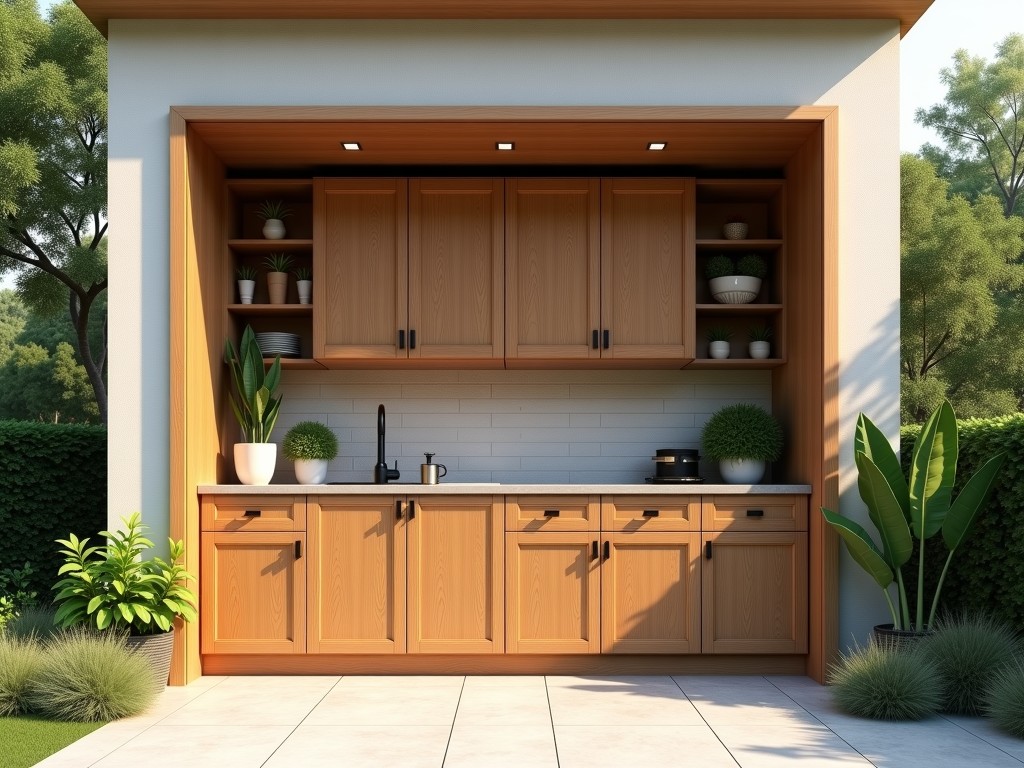
Outdoor Built-In Cabinets for Industrial Environments
Outdoor built-in cabinets are engineered to protect critical equipment, controls, and instrumentation from environmental exposure while maintaining accessibility for maintenance and operation. Designed for permanent or semi-permanent installation in exposed settings, these enclosures balance structural integrity, thermal management, and long-term durability under varying climatic conditions. Selection depends on understanding how material choice, sealing effectiveness, and structural design interact with local weather patterns, UV exposure, and potential particulate ingress.
Material Selection for Long-Term Outdoor Exposure
The primary material determines resistance to corrosion, thermal expansion, and degradation from sunlight. Powder-coated carbon steel offers cost-effective protection in moderate climates but requires intact coating to prevent underfilm corrosion. Stainless steel grades 304 and 316 provide inherent corrosion resistance, with 316 preferred in coastal or industrial atmospheres due to molybdenum content resisting chloride-induced pitting. Aluminum alloys (5052, 6061-T6) deliver lightweight options with natural oxide layer protection, though surface treatments like anodizing or clear coating enhance UV stability and reduce galvanic risk when mounted to dissimilar metals.
Sealing and Environmental Protection Performance
Ingress protection is defined by IP ratings, with outdoor cabinets typically targeting IP65 or higher to resist dust and water jets. Sealing relies on continuous gaskets—commonly EPDM, silicone, or neoprene—compressed via door flanges or compression latches. Gasket material selection considers temperature range (-40°C to +120°C for EPDM, wider for silicone), UV stability, and compression set resistance. Over-compression can cause gasket creep, while under-compression compromises sealing; optimal deflection is typically 15–30% of gasket cross-section. Door design incorporates overlapping flanges or labyrinth paths to minimize direct water impingement on seals.
Thermal Management Considerations
Solar radiation significantly increases internal temperature, affecting electronic component lifespan. Passive cooling relies on natural convection through strategically placed vents with rain shields or labyrinth designs to maintain IP rating. Active cooling options include filtered fans, heat exchangers, or air conditioners sized according to internal heat load, solar gain, and maximum ambient temperature. Surface finish affects solar absorptivity—white or reflective coatings reduce heat gain compared to dark colors. Thermal modeling accounts for enclosure orientation, surrounding structures, and local solar irradiance data to prevent overheating.
Structural Design and Mounting Stability
Outdoor cabinets must resist wind loads, snow accumulation, and potential impact. Structural stiffness comes from material thickness, bend radii, and reinforcement features like folded edges, internal stiffeners, or tubular frames. Mounting methods—direct bolt-down to concrete pads, stanchion installation, or wall mounting—require consideration of load distribution and vibration isolation. Base designs often include drainage channels and raised sills to prevent water pooling. For seismic zones, anchoring systems must comply with local codes, transferring loads through base plates or chemical anchors into the substrate.
Typical Specifications
| Parameter | Typical Range / Options | Notes |
|---|---|---|
| External Dimensions (H x W x D) | 600–2000 mm × 400–1200 mm × 300–800 mm | Custom sizes available; modular stacking possible |
| Material Thickness | 1.2–2.5 mm (steel), 1.5–3.0 mm (aluminum), 1.2–2.0 mm (stainless) | Depends on span, load, and deflection limits |
| Ingress Protection (IP Rating) | IP55, IP65, IP66 | Verified per IEC 60529; gasket and door design critical |
| Surface Finish | Powder coating (steel), anodizing (aluminum), passivation (stainless) | Color and gloss level customizable; UV-stable options available |
| Operating Temperature Range | -30°C to +60°C (ambient); internal depends on load and cooling | Gasket and material limits may restrict extremes |
| Mounting Options | Floor mount, wall mount, pole mount, skid base | Includes template, hardware, and drainage provisions |
Customization and Integration Flexibility
Beyond standard dimensions, built-in cabinets accommodate internal mounting panels, DIN rails, 19-inch rack frames, or custom trays for specific equipment. Cutouts for conduits, cables, or thermal interfaces are precision-machined during production to maintain sealing integrity. Door configurations include single, double, or hinged with optional viewing windows (tempered polycarbonate or glass with appropriate gaskets). Locking options range from standard key locks to padlock hasps, combination locks, or electronic access control interfaces. Internal lighting, thermostats, and hygrostats can be pre-wired for factory installation.
Quality Control and Production Consistency
Dimensional accuracy is maintained through CNC punching, laser cutting, and press brake forming with compensated tooling to account for springback. Welded constructions, where used, undergo post-weld treatment to restore corrosion resistance in heat-affected zones. Sealing effectiveness is validated via water spray and dust chamber testing on sample units. Surface coating adhesion and thickness are verified per ASTM standards. For repeat orders, first-article inspection ensures conformity before full production, with process monitoring to detect drift in bending angles or hole placement.
Packaging and Logistics for Project Delivery
Cabinet packaging prioritizes corner and edge protection using corrugated inserts, foam blocks, or wooden crates depending on size and quantity. Moisture barrier layers prevent condensation during transit. Units are typically shipped on pallets with stretch wrapping and corner boards for stability. For export, ISPM-15 compliant packaging is available. Documentation includes material certificates, coating reports, IP test summaries, and installation manuals. Lead time depends on material availability, complexity of cutouts, and finishing requirements, typically ranging from 3 to 8 weeks for standard configurations.
Discuss your outdoor enclosure requirements with our engineering team