Office Storage Cabinet B2B Supplier
Office Storage Cabinet B2B Supplier
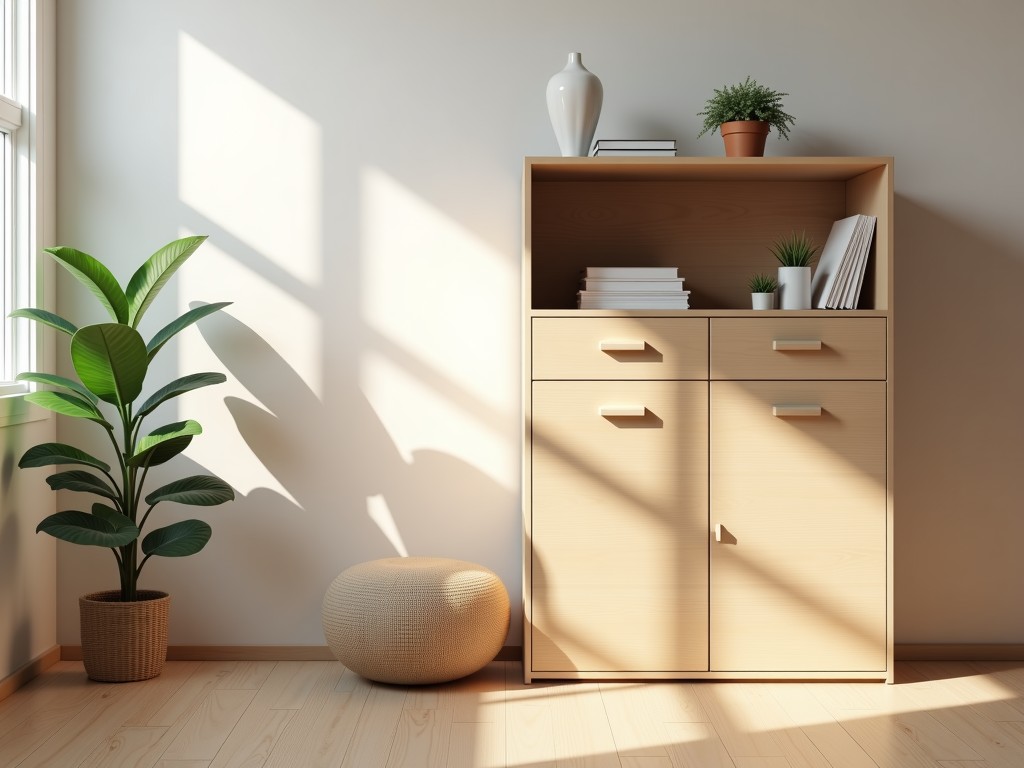
Office Storage Cabinet
In administrative and industrial office environments, secure and organized storage of documents, tools, and supplies directly impacts workflow efficiency and workplace safety. A well-designed office storage cabinet must balance structural integrity, accessibility, and adaptability to varying load types while fitting within standard office footprints. Material selection, locking mechanisms, and internal configuration determine long-term usability and resistance to daily wear.
Material Selection and Structural Design
The cabinet frame is typically constructed from cold-rolled steel with a minimum thickness of 0.8mm for side panels and 1.0mm for doors, providing sufficient rigidity to resist deformation under distributed loads. Corners are reinforced with welded gussets or folded flanges to prevent racking, especially important in cabinets exceeding 1800mm in height. Powder coating is applied after phosphating to ensure adhesion and corrosion resistance, with film thickness averaging 60–80μm for indoor office use.
Shelves are manufactured from the same steel substrate, often featuring a 25mm return flange on all four sides to increase load-bearing capacity and prevent sagging. Adjustable shelf systems use zinc-plated steel brackets or polymer inserts that engage with punched holes in the sidewalls at 25mm increments, allowing reconfiguration without tools. This modularity supports evolving storage needs, from file folders to bulky equipment.
Locking Mechanisms and Access Control
Security is a primary consideration in office storage, particularly for sensitive documents or valuable components. Standard configurations include cam locks with tubular keys, offering adequate resistance to unauthorized access in low-to-moderate risk environments. For higher security needs, alternatives such as disc tumbler locks or electronic keypad systems can be integrated, depending on the door design and internal clearance.
Door hinges are typically concealed or semi-concealed butt hinges made of steel, finished to match the cabinet body, and rated for over 50,000 cycles. Some designs incorporate soft-close dampers to reduce impact noise and extend hinge life. Ventilation options, such as louvers or perforated panels, may be included in cabinets intended for electronic equipment storage to manage internal temperature.
Typical Specifications
| Parameter | Typical Value / Option |
|---|---|
| External Dimensions (HxWxD) | 900–1800mm × 400–900mm × 400–500mm |
| Frame Material | Cold-rolled steel (SPCC) |
| Material Thickness | Side: 0.8mm, Door: 1.0mm, Shelf: 0.7–0.8mm |
| Finish | Powder coating (epoxy-polyester), 60–80μm |
| Shelf Load Capacity | 40–60kg per shelf (UDL) |
| Lock Type | Cam lock (standard), optional disc tumbler or electronic |
| Adjustable Shelf Pitch | 25mm increments |
| Door Swing | 180° full access (optional) |
Application Scenarios
Office storage cabinets are deployed across diverse environments where document control, tool organization, or personnel storage is required. In corporate offices, they serve as filing adjuncts for departments handling contracts, HR records, or project documentation, reducing reliance on centralized archives. In manufacturing facilities, cabinets near production lines store gauges, fixtures, and PPE, minimizing retrieval time and protecting sensitive tools from contaminants.
Educational institutions use them in classrooms and labs for storing instructional materials, student projects, or safety equipment. Healthcare administrative offices utilize cabinets for patient intake forms, billing records, and compliance documentation, where accessibility and confidentiality must be balanced. The adaptability of internal configuration allows the same cabinet model to serve multiple roles across different floors or departments.
Customization Options
Standard configurations address common needs, but many applications require tailored solutions. Internal accessories such as pull-out drawers, suspension files rails, or fixed partitions can be added to optimize space for specific item types. Door variants include solid, perforated, or glass panels (tempered or acrylic) depending on visibility and security requirements.
Exterior dimensions can be adjusted within manufacturing constraints to fit niche spaces, such as under desks or in narrow corridors. Color matching to corporate branding or facility standards is available through custom powder coating runs. For OEM clients, integration of branding elements, custom locking systems, or specialized internal layouts is feasible upon submission of detailed specifications or drawings.
Packaging and Logistics
Cabinets are typically shipped knocked down (KD) to maximize container utilization and reduce freight costs. All panels, hardware, and assembly instructions are packed in a single corrugated carton with edge protectors and internal bracing to prevent deformation during transit. Assembly requires basic tools (screwdriver, mallet) and takes approximately 20–30 minutes per unit for two personnel, following a standardized sequence.
For fully assembled shipments, additional protective framing and corner guards are used, though this increases volumetric weight and handling complexity. Export packaging complies with ISPM 15 standards for wooden pallets when required. Tracking information is provided upon shipment, and damage claims are processed based on photographic evidence and packaging integrity checks at receipt.
Installation and Maintenance
Installation involves leveling the cabinet using adjustable feet or shims to ensure proper door alignment and smooth operation. Once positioned, anchoring to the wall or floor is recommended for cabinets exceeding 1500mm in height, particularly in seismic zones or high-traffic areas, to prevent tipping. Clearance of at least 50mm should be maintained behind the cabinet for ventilation and access to power outlets if used for equipment storage.
Maintenance is minimal under normal office conditions. Surfaces can be cleaned with mild detergent and soft cloth; abrasive cleaners should be avoided to prevent coating damage. Periodic inspection of hinges, locks, and shelf brackets ensures continued functionality. Lubrication of lock cylinders with graphite-based powder (not oil) helps maintain smooth operation in dusty environments.
Quality Control and Consistency
Dimensional accuracy is verified at multiple stages: after cutting, during forming, and post-coating. Diagonal measurements are checked to ensure squareness, with tolerances typically held within ±2mm for overall dimensions. Coating uniformity is assessed using gloss meters and adhesion tests (cross-hatch method) to confirm compliance with indoor durability standards.
Load testing is performed on sample units to validate shelf capacity and door cycle life. Suppliers should provide inspection reports upon request, including material certificates and coating thickness data. Consistent sourcing of raw materials and controlled process parameters ensure repeatability across production batches, reducing variability in fit and finish.
For organizations seeking a dependable storage solution that adapts to evolving operational needs, the office storage cabinet offers a balance of strength, security, and configurability. Understanding the interplay between material thickness, locking mechanism, and internal layout enables informed selection that minimizes future modifications or replacements.
Share your drawings or specifications for a customized proposal.