Oem Outdoor Bbq Cabinet
Oem Outdoor Bbq Cabinet
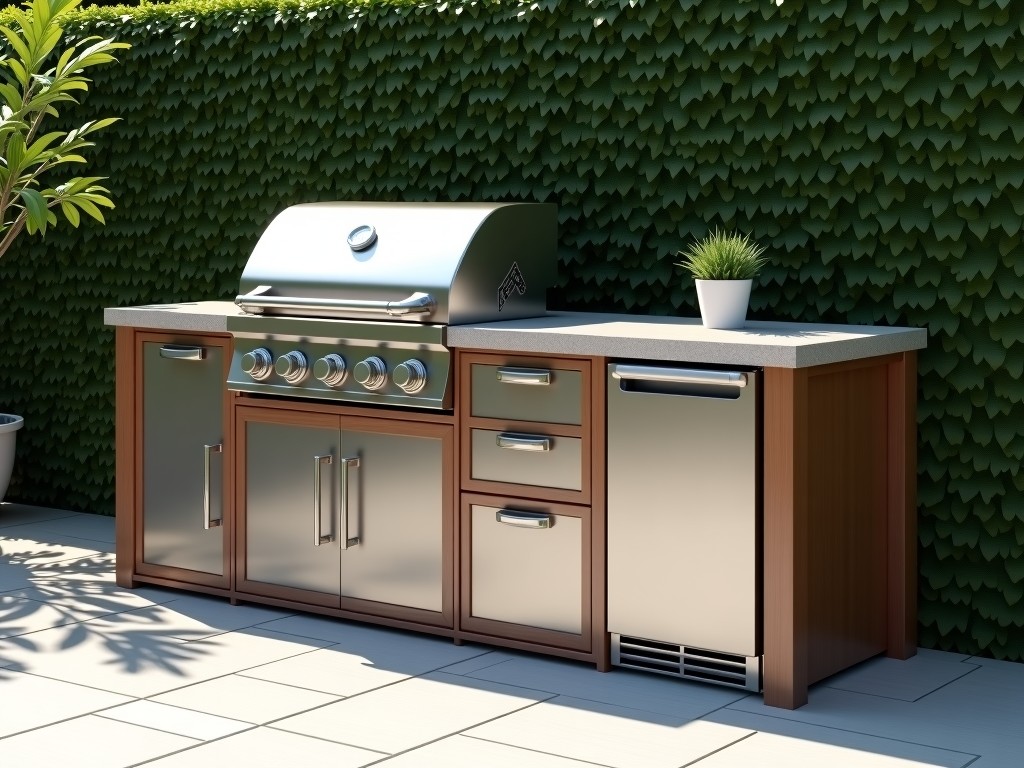
OEM Outdoor BBQ Cabinet: Engineered for Durability and Integration in Commercial Outdoor Kitchens
Outdoor cooking environments demand materials and construction that withstand prolonged exposure to UV radiation, temperature cycling, moisture, and grease accumulation. For OEMs integrating BBQ cabinets into modular outdoor kitchen systems, material stability, corrosion resistance, and dimensional consistency are critical to long-term performance and brand reputation. This page outlines the engineering considerations behind OEM outdoor BBQ cabinets, focusing on material behavior, fabrication methods, and integration requirements that directly impact field performance.
Material Selection: Balancing Corrosion Resistance and Structural Integrity
The most common substrate for outdoor BBQ cabinets is marine-grade stainless steel, specifically AISI 304 or 316L, selected for its chromium-nickel composition that resists oxidation in chloride-rich environments. 304 offers adequate resistance for most temperate climates, while 316L, with added molybdenum, performs better in coastal or high-humidity zones where salt spray accelerates pitting. Cabinet frames typically use 1.2mm to 1.5mm thickness sheet, providing sufficient rigidity to support grill heads, countertops, and storage loads without flexing under dynamic loads.
Alternative materials include powder-coated aluminum alloys (such as 5052-H32) for weight-sensitive applications, though these require thicker sections to match steel stiffness. However, aluminum’s lower thermal conductivity reduces heat transfer from adjacent grills, which can be beneficial in enclosed designs. Surface treatments like anodizing or polyester powder coating add UV stability and scratch resistance, but coating integrity must be maintained — any breach exposes the substrate to corrosion, particularly in crevices or weld zones.
Manufacturing Process: Precision Fabrication for Repeatable Assembly
OEM BBQ cabinets are typically produced using CNC punch presses and laser cutting for precise hole patterns, ventilation slots, and mounting brackets. Bending is performed on press brakes with radius tooling to avoid micro-cracking in stainless steel, especially in 304 where work hardening increases brittleness. Welding, when required, uses TIG (GTAW) with argon shielding to minimize carbide precipitation and preserve corrosion resistance along the heat-affected zone. Post-weld passivation or electropolishing is often applied to restore the chromium oxide layer.
Tolerances for mating surfaces — such as door frames, drawer slides, or countertop supports — are typically held to ±0.5mm to ensure smooth operation and prevent air or moisture ingress. Hinge and latch mounting points are reinforced with internal gussets or welded nuts to prevent pull-out under repeated use. Drainage channels are sloped at 2–3 degrees to direct condensate and cleaning runoff away from internal components.
Typical Specifications: Configurable Dimensions and Performance Parameters
| Parameter | Typical Range / Option | Notes |
|---|---|---|
| Primary Material | AISI 304 or 316L Stainless Steel | 316L recommended for coastal/high-chloride environments |
| Sheet Thickness | 1.2mm – 1.5mm | Thicker gauges used for load-bearing frames |
| Surface Finish | Brushed (#4), Mirror (#8), or Powder Coated | Brushed finishes hide scratches; powder coat adds color options |
| Standard Width | 600mm – 900mm | Modular widths align with countertop modules |
| Standard Height | 800mm – 900mm | Matches ergonomic counter height |
| Depth | 500mm – 600mm | Accommodates grill heads and propane tanks |
| Load Capacity (Shelf) | Up to 50kg evenly distributed | Reinforced with internal brackets or thicker shelving |
| Ingress Protection (Optional) | IP44 – IP54 (with gaskets) | Achieved via door seals and covered vents |
OEM & ODM Service: Integration-Focused Customization
For OEMs developing proprietary outdoor kitchen lines, customization extends beyond dimensions to include branded cutouts, control panel integration, and accessory compatibility. We support OEM projects from DFM (Design for Manufacturability) review through tooling and pilot runs. Common modifications include:
- Custom laser-cut logos or model numbers on doors or side panels
- Pre-drilled mounting patterns for specific grill brands or side burners
- Integrated utility chases for gas lines, electrical conduits, or ventilation ducts
- Soft-close hinges or magnetic latches for premium segments
- Ventilated back panels with adjustable louvers for heat dissipation
Tooling costs are amortized over production volume, with no NRE for standard configurations. Prototype samples are available upon request to validate fit, finish, and function before full-scale production. All custom work follows internal quality gates, including dimensional inspection, finish uniformity checks, and cycle testing of moving parts.
Packaging and Logistics: Protecting Finish During Transit
Surface protection is critical during shipping and handling. Cabinets are wrapped in reusable polyethylene film with corner guards and edge protectors. Units are packed in double-wall corrugated cartons with internal bracing to prevent shifting. For LCL or FCL shipments, pallets are stretch-wrapped and secured with corner boards. Each carton includes QR-coded labels linking to inspection records and material certificates, traceable to batch and run number.
Lead times vary based on material availability and customization complexity. Standard 304 cabinets typically ship in 3–4 weeks; 316L or powder-coated variants may extend to 5–6 weeks. We maintain buffer stock of commonly ordered sizes to support urgent OEM replenishment needs. Export documentation includes fumigated wood statements (if applicable), REACH compliance declarations, and country-of-origin markings.
Quality Control: Process-Driven Consistency
Quality assurance begins with incoming material verification — mill test reports are reviewed for chemical composition and mechanical properties. In-process checks include bend angle verification, weld penetration analysis (via dye penetrant or ultrasonic methods), and flatness measurement on large panels. Final inspection includes door alignment, latch engagement force, and surface gloss or roughness measurement where applicable.
We do not rely on end-of-line sampling alone; SPC (Statistical Process Control) is applied to critical dimensions and coating thickness. Non-conformances trigger root cause analysis and corrective action, documented per ISO 9001-aligned procedures. While we do not certify to specific standards unless requested, our internal protocols align with industry expectations for durable goods in outdoor environments.
Discuss your project requirements with our engineering team to review material options, tolerances, and integration details for your outdoor BBQ cabinet design.