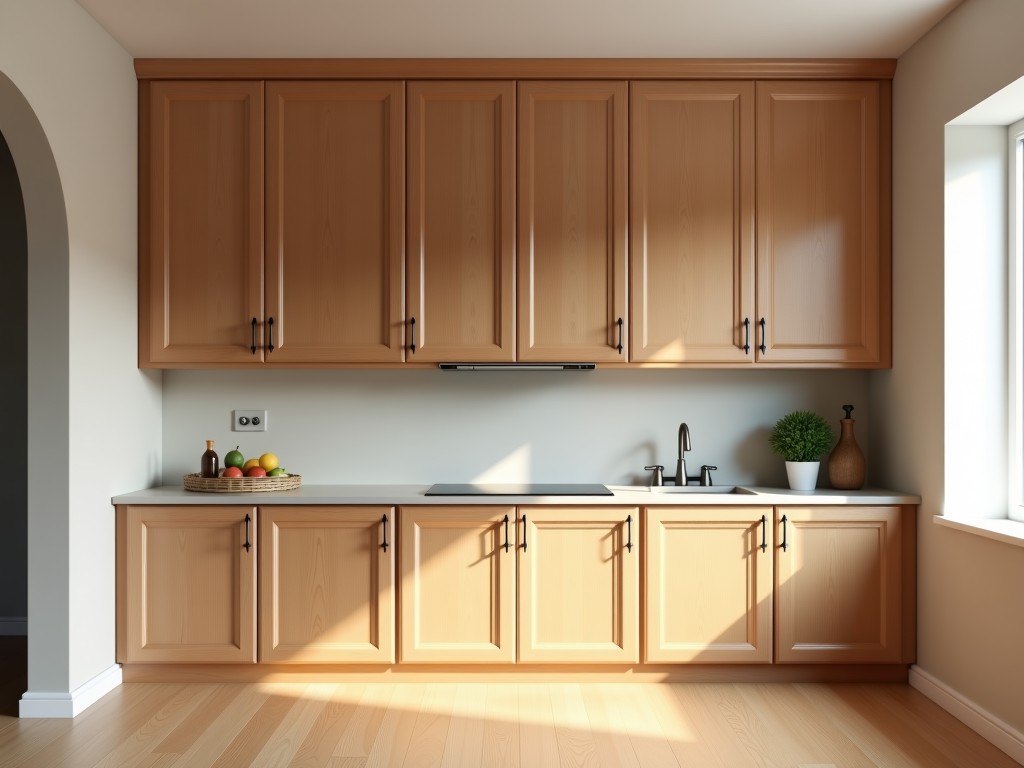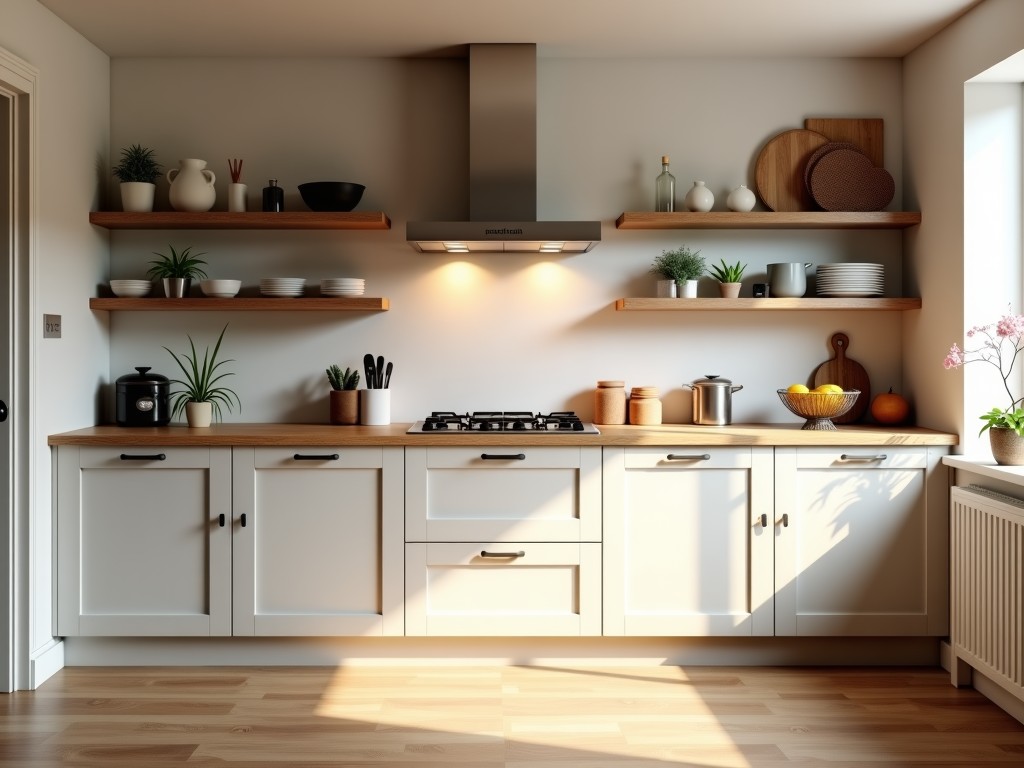
Oem Kitchen Pantry Cabinet
Oem Kitchen Pantry Cabinet
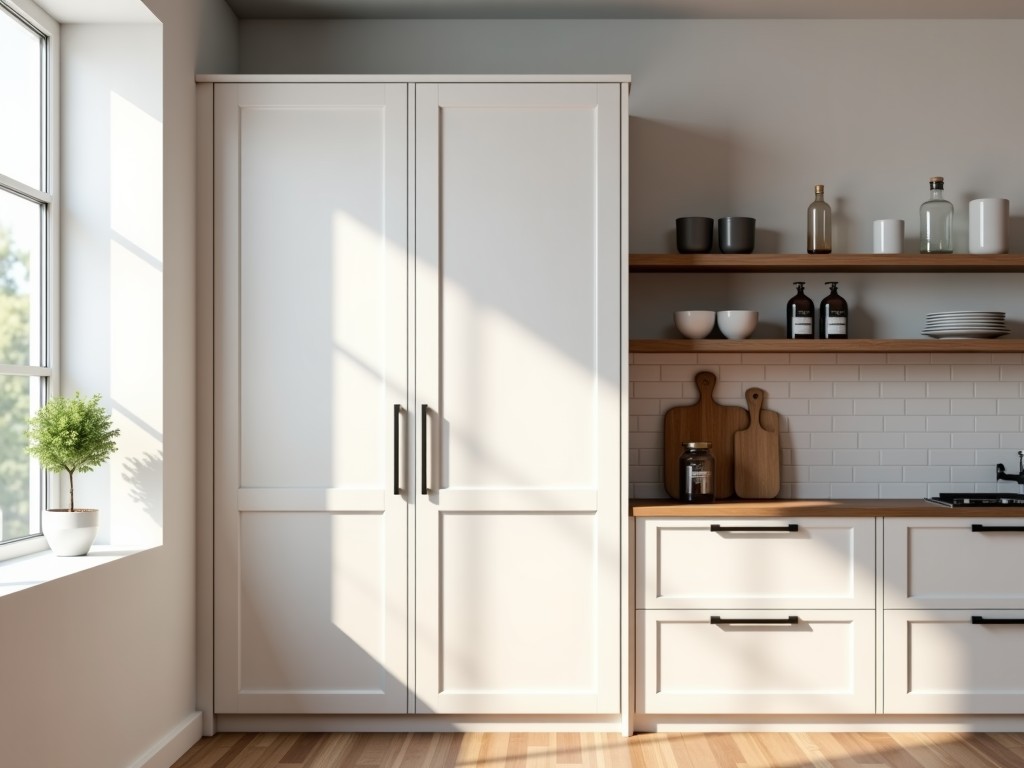
OEM Kitchen Pantry Cabinet Systems for Commercial and Institutional Applications
Selecting pantry cabinetry for high-use environments such as hospitals, schools, corporate cafeterias, and multi-unit residential buildings requires more than aesthetic consideration. Industrial buyers prioritize dimensional stability under fluctuating humidity, resistance to daily wear from utensils and cleaning agents, and compatibility with modular installation workflows. OEM kitchen pantry cabinets address these demands through engineered material selection, precision manufacturing, and configurable designs that support both new construction and retrofit projects.
Material Selection for Long-Term Performance in Humid Environments
The core challenge in pantry cabinet specification lies in maintaining structural integrity when exposed to steam, frequent cleaning, and temperature variations common in food service areas. Standard particleboard with melamine facing often exhibits edge swelling or delamination over time, particularly at sink-adjacent zones or near dishwashers. To mitigate this, OEM systems typically utilize moisture-resistant (MR) grade MDF or marine-grade plywood as substrates, selected based on project-specific humidity exposure levels and load requirements.
MR MDF offers uniform density and excellent screw holding strength, making it suitable for painted finishes or thermofoil wraps where edge sealing is critical. Marine plywood, with its cross-laminated veneer construction and waterproof adhesive bonds, provides superior resistance to cyclic wet-dry conditions and is often specified for base cabinets in wet zones. Surface finishes—including high-pressure laminate (HPL), thermally fused laminate (TFL), or 2K polyurethane coatings—are chosen not only for appearance but for abrasion resistance (measured via Taber testing) and chemical compatibility with hospital-grade disinfectants.
Manufacturing Process Ensuring Dimensional Consistency
Variability in cabinet dimensions directly impacts installation efficiency and long-term alignment of doors, drawers, and countertops. OEM production employs CNC nesting routers with laser-guided positioning to achieve panel cutting tolerances within ±0.5mm, ensuring repeatability across large production runs. Edge banding is applied using hot-air melt systems with precise temperature control to prevent delamination, followed by buffing to create a seamless transition between substrate and edge material.
Assembly relies on Euro-style concealed hinges and drawer slides mounted via pre-drilled, bored holes using multi-spindle drill presses. This method eliminates field adjustments and ensures consistent reveal gaps (typically 2mm) across all units. For projects requiring integrated lighting or power access, factory-installed conduit channels and pre-cut access panels reduce on-site labor and minimize risks of moisture ingress during retrofitting.
Typical Specifications for Evaluation
| Specification | Typical Range / Option | Notes |
|---|---|---|
| Substrate Material | MR MDF, Marine Plywood, or Particleboard (MR Grade) | Selected based on humidity exposure and load requirements |
| Surface Finish | HPL, TFL, 2K Paint, or Thermofoil | Abrasion resistance: HPL > 2K Paint > TFL; chemical resistance varies by formulation |
| Panel Thickness | 16mm or 18mm (standard); 25mm available for heavy-load bases | Thicker panels reduce sag in wide-span applications (>900mm) |
| Edge Banding | 0.5mm PVC, 2mm ABS, or 3mm Wood Veneer | PVC/ABS preferred for impact resistance; wood veneer for stain-matched finishes |
| Door Overlay | Full Overlay, Partial Overlay, or Inset | Full overlay maximizes storage; inset requires precise framing |
| Load Capacity (Shelf) | Up to 40kg/m² (dependent on shelf thickness and support spacing) | Reinforced with metal brackets or vertical dividers for heavy items |
| Modular Width Increments | 100mm (standard); 50mm available for custom layouts | Enables tight fitting around appliances and utilities |
Application-Specific Design Considerations
In healthcare facilities, pantry cabinets must withstand frequent cleaning with hydrogen peroxide or quaternary ammonium compounds. Here, seamless edges and non-porous finishes (such as post-formed HPL or solid surface overlays) are specified to prevent microbial harborage. Cabinet interiors may include removable, polymer-coated shelves for easy sterilization, and kick plates are often fabricated from stainless steel to resist corrosion from mop water.
For educational institutions, durability against impact and vandalism is paramount. Specifications often include reinforced door corners, anti-ligature hinges in behavioral health zones, and scratch-resistant surfaces tested to Level 3 of the SEFA 8-MPL standard. Adjustable shelving with tool-free reconfiguration supports evolving storage needs across semesters without requiring maintenance intervention.
In multi-unit residential projects, visual consistency across units is critical for resale value. OEM suppliers maintain tight color and texture batch control across production lots, using spectrophotometers to verify Delta-E values under 2.0 between samples. This ensures that replacement cabinets, ordered years after initial installation, match existing units without noticeable variation—reducing long-term maintenance complexity for property managers.
Customization and OEM Services
OEM pantry cabinet programs are structured around project-specific requirements rather than catalog SKUs. Engineering teams work from architectural drawings or BIM models to develop shop drawings that detail panel layouts, hardware placement, and service cutouts. This approach allows for integration of unique features such as pull-out waste bins with soft-close mechanisms, appliance garages with ventilation baffles, or adjustable spice racks with tiered shelving.
Tooling costs are minimized through modular design libraries—standardized carcass dimensions, hinge patterns, and drawer box profiles—enabling efficient adaptation to new layouts without full redesign. Minimum order quantities typically start at 10 units for standard configurations, with scalability to hundreds of units for large-scale projects. Lead times are influenced by material selection (e.g., imported marine plywood vs. domestic MR MDF) and finish complexity, but are communicated early in the quoting phase based on current capacity and material availability.
Packaging and Logistics for Damage-Free Delivery
Flat-pack design optimizes container utilization, but protection during transit is essential to preserve edge integrity and finish quality. Cabinets are packaged in double-wall corrugated cartons with corner protectors and edge foam padding. Interior components (shelves, drawers, hardware) are segregated in labeled bags to prevent loss and simplify on-site sorting. Each pallet includes a loading diagram indicating correct stacking limits (typically no more than 2 layers high) to prevent compressive deformation of lower units.
For export shipments, ISPM 15-compliant pallets are used, and humidity indicators are placed inside select cartons to monitor transit conditions. Upon delivery, receivers are advised to acclimatize cabinets to the installation environment for 48 hours before unpacking—particularly in climates with significant seasonal humidity shifts—to minimize post-installation movement. These procedures reduce field-reported issues related to warping or finish cracking by addressing acclimatization proactively.
Quality Control and Inspection Protocol
Incoming raw materials are inspected for moisture content (target: 7–9% for MDF, <12% for plywood), surface flatness, and edge straightness. During production, first-article inspection validates CNC program accuracy, edge bond strength (via peel testing), and hole placement using coordinate measuring machines. Random sampling occurs at 1:50 intervals for critical dimensions and finish adhesion.
Final inspection includes operational testing of all doors and drawers (minimum 20 cycles), verification of reveal consistency, and surface inspection under 500 lux lighting to detect micro-scratches or coating defects. Packaging integrity is confirmed before sealing, and a QR code-linked build sheet is affixed to each unit, detailing material batch, finish code, and QC inspector ID for traceability. These practices support warranty claims and facilitate root-cause analysis if field performance deviates from expectations.
Engineered for stability, adaptability, and long-term service in demanding environments, OEM kitchen pantry cabinets deliver measurable value through precision manufacturing and material science—not marketing claims. Share your project specifications or drawings with our engineering team to receive a detailed, manufacturable proposal tailored to your application’s unique demands.