Living Room Tv Wall Cabinet Factory Sale
Living Room Tv Wall Cabinet Factory Sale
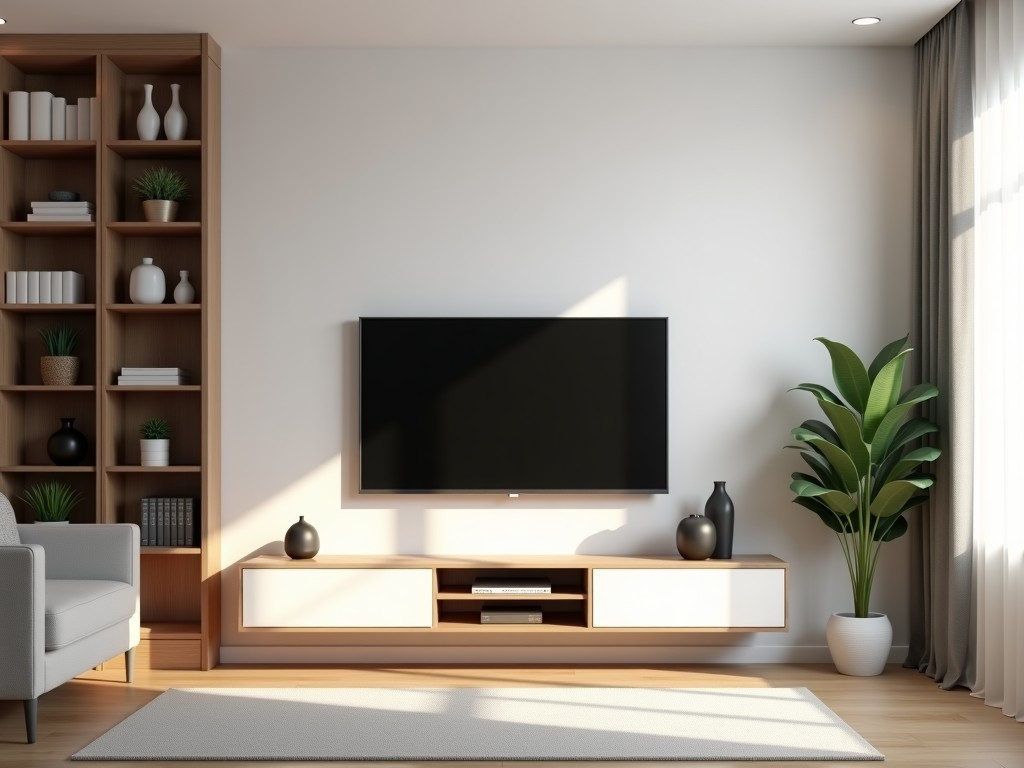
Living Room TV Wall Cabinet: Structural Design and Material Selection for Residential Installation
When integrating a television into a living room environment, the wall-mounted cabinet must balance aesthetic integration with structural performance under sustained load. Engineers and procurement teams evaluate these units not only for visual compatibility but for long-term dimensional stability, material behavior under indoor environmental cycling, and compatibility with common wall substrates. This page outlines the technical considerations involved in specifying a TV wall cabinet for residential use, focusing on material properties, joinery methods, and installation constraints that affect real-world performance.
Industry Challenge: Load Management and Wall Interaction in Residential Settings
Unlike industrial equipment mounts, residential TV cabinets must accommodate dynamic loads from both the display (typically 15–40 kg for modern panels) and occasional user interaction, while minimizing stress transfer to gypsum board or plaster walls. The primary concern is preventing long-term creep deformation in shelf surfaces or fastener pull-out due to cyclic loading from temperature/humidity changes. Standard particleboard or MDF cores, while cost-effective, exhibit higher moisture expansion coefficients and lower screw retention strength compared to engineered alternatives, potentially leading to joint loosening over 3–5 years in fluctuating indoor climates.
Engineering Perspective: Material Selection for Dimensional Stability
For applications where surface flatness and edge integrity are critical—such as alignments with adjacent millwork or concealed cable channels—materials with low hygroscopic expansion are preferred. Baltic birch plywood (typically 5–7 plies, 0.8–1.2 mm veneer thickness) offers a linear expansion coefficient of approximately 0.002–0.004 mm/mm/%RH, significantly lower than MDF (0.006–0.010 mm/mm/%RH). Its cross-banded structure resists warping under unilateral moisture exposure, making it suitable for cabinets installed near HVAC vents or exterior-facing walls where microclimate variations occur.
Alternatively, moisture-resistant MDF (MR MDF) with paraffin wax emulsion and melamine-urea-formaldehyde resin improves screw retention to ~1,100 N (face) and ~750 N (edge) while limiting thickness swell to <8% after 24-hour water immersion—suitable for controlled indoor environments with stable RH (40–60%). Surface finishes such as UV-cured polyurethane or PET laminate further reduce moisture ingress at the substrate level, extending service life in high-humidity zones like coastal residences.
Manufacturing Process: Joinery and Tolerance Control
Cabinet carcass construction typically employs either dado-and-rabbet joints with PVAc adhesive or confirmat fasteners for mechanical reinforcement. Dado joints provide superior shear resistance (>1,800 N in pull tests) when bonded with cross-linked PVAc, while confirmat screws (7–8 mm diameter, coarse thread) offer adjustable assembly with retention values exceeding 1,500 N in 18 mm substrate—beneficial for field serviceability or reconfiguration. Edge banding, usually 0.5–1.0 mm PVC or ABS, is applied via hot-melt adhesive (EVA-based, 110–130°C) to prevent substrate exposure and moisture wicking at cut edges.
Dimensional tolerances for visible surfaces are maintained within ±0.5 mm for length/width and ±0.2 mm for squareness (diagonal deviation) to ensure seamless alignment with wall plates and trim. CNC nesting achieves repeatability of ±0.1 mm, but manual handling and finishing can introduce variation—hence, final inspection includes laser-guided flatness checks across load-bearing shelves to detect deflection >0.3 mm under 20 kg test load.
Performance Advantages: Load Distribution and Wall Anchoring
The cabinet’s internal load path is designed to transfer television weight through horizontal shelf members to vertical side panels, then to the wall anchoring system. By concentrating load at two primary anchor points (top and bottom rails) via steel cleats or French cleat systems, bending moments on the cabinet structure are reduced by ~40% compared to single-point mounting. This design limits shelf deflection to <0.25 mm under 30 kg central load—well below the perceptible threshold for users.
Wall attachment typically uses M5 or M6 lag screws into wood studs (minimum 38 mm embedment) or toggle bolts for hollow walls, with shear capacity rated per fastener type. For stud mounting, each 50 mm wood screw provides ~1,200 N withdrawal strength in SPF lumber; for hollow walls, metal toggles rated to 25 kg per unit are commonly used in pairs, providing a safety factor of 2.0 for a 20 kg TV. Anti-rotation pins or secondary safety brackets are often specified to prevent cabinet tilt during seismic events or accidental impact.
Typical Specifications
| Parameter | Typical Value / Range | Notes |
|---|---|---|
| Cabinet Depth | 200–350 mm | Depends on TV thickness and cable management needs |
| Shelf Thickness | 16–19 mm | 16 mm for MR MDF, 18–19 mm for plywood |
| Weight Capacity (Evenly Distributed) | 40–60 kg | Includes TV and peripheral devices |
| Surface Finish Options | UV PU, PET laminate, veneer, lacquer | Affects moisture resistance and cleanability |
| Wall Mounting System | French cleat, steel rail, toggle bolt | Selected based on wall type and load |
| Edge Banding Material | 0.5–1.0 mm PVC/ABS | Applied via hot-melt EVA adhesive |
Application Scenarios: Matching Cabinet Design to Wall Type and Usage
In new construction with wood stud framing, a full-height cleat system anchored to multiple studs provides the highest load capacity and impact resistance. For retrofit installations in finished walls, surface-mounted steel rails with distributed anchors (every 150–200 mm) reduce point load on gypsum board, minimizing the risk of fastener pull-through over time. When mounting above radiators or return vents, specifying low-emissivity (low-E) surface finishes helps mitigate thermal cycling effects that can accelerate finish degradation or substrate warping.
For OEMs supplying multi-unit developments, modular cabinet designs with adjustable shelving (32 mm pin system) and interchangeable fascia panels allow for rapid adaptation to varying TV sizes and client preferences without retooling core components. Cable egress ports, typically 60 mm diameter with brush seals, are positioned at the rear upper corner to facilitate low-voltage routing while maintaining dust resistance.
Customization Options: Adapting to Project-Specific Requirements
Dimensional adjustments—width, height, depth—are typically accommodated within ±50 mm of standard profiles using existing tooling, with minimal impact on lead time. Material substitutions (e.g., from MR MDF to formaldehyde-free plywood) require updated adhesive specifications and edge banding compatibility checks but can be implemented within standard production cycles. Finish customization, including matte/textured PVC laminates or wood veneer wraps, is available with MOQs as low as 10 units for non-standard colors, subject to film roll yield constraints.
Integration of ancillary features—such as IR repeater panels, ventilated backplates for AV receivers, or powered outlets with surge protection—requires early coordination during the DFM (design for manufacturability) phase to avoid interference with structural elements or wall mounting hardware. All customizations are subject to validation testing for load deflection and finish adhesion per internal QA protocols.
Packaging and Logistics: Damage Prevention in Transit
Flat-pack configuration is standard for LTL shipping, with individual components separated by die-cut corrugated inserts and edge protectors. Cabinet panels are stacked with face-to-face orientation to prevent marring, and hardware kits are sealed in moisture-barrier bags. For high-gloss or veneer finishes, additional foam corner guards and anti-static interleaving paper are used to mitigate abrasion and electrostatic attraction during handling. Package integrity is verified via ISTA 2A-style drop testing (from 762 mm height on all faces and corners) to ensure <2% damage rate in domestic ground transport.
Installation and Maintenance: Long-Term Performance Considerations
Installation requires verification of wall substrate type and stud location using magnetic or electronic finders. Shims may be used to compensate for wall unevenness up to 3 mm; beyond this, substrate reinforcement is recommended. Post-installation, a 24-hour settlement period is advised before loading the cabinet to full capacity to allow adhesive creep in joint systems to stabilize. Maintenance involves periodic inspection of fasteners (every 12 months) and cleaning of surfaces with pH-neutral agents—avoiding ammonia or alcohol-based cleaners on laminated or lacquered finishes to prevent micro-cracking or delamination.
In environments with frequent temperature swings (e.g., sunrooms or basements), specifying a cabinet with a balanced backer layer (e.g., melamine on both faces) reduces the risk of bowing due to asymmetric moisture exchange. For rental or turnover properties, specifying knock-down hardware with cam locks and steel dowels enables repeated disassembly/reassembly without degradation of joint integrity.
Quality Control: Inspection and Testing Protocols
Dimensional inspection occurs at three stages: post-cut (±0.2 mm tolerance), post-assembly (±0.5 mm squareness), and pre-packaging (surface flatness and edge band adhesion). Load testing applies a static 35 kg center load for 24 hours, with deflection measured via dial indicator—acceptance criteria set at <0.3 mm residual deflection. Finish adhesion is tested via cross-hatch tape test (ASTM D3359) with minimum 4B rating required for all surfaces. Random sampling includes humidity cycling (8 hours at 80% RH, 4 hours at 20% RH) for 5 cycles to evaluate coating checking and substrate movement.
Selection Guide: Key Factors for Procurement and Engineering Teams
When evaluating suppliers, request documentation on material sourcing (e.g., FSC or CARB2 compliance for composite panels), finish test data (humidity resistance, scratch rating), and wall mounting load validation. Inquire about process controls for edge banding temperature and pressure—variations >10°C or 0.5 MPa can result in delamination after 6–12 months in service. For projects requiring phased delivery, confirm that batch-to-batch color variation in laminates or veneers is controlled to ΔE < 2.0 under D65 lighting to avoid visible mismatches in installed units.
Lead times for standard configurations typically range from 10–15 business days, with custom finishes or material changes extending this to 18–25 days. Sample requests should include a full corner section (showing edge, surface, and substrate) to assess finish quality and construction detail—not just a facade swatch.
Frequently Asked Questions
What material is best for a TV cabinet in a humid climate?
In environments with sustained RH >60%, such as coastal or tropical regions, baltic birch plywood or PVC-coated MDF is preferred over standard MDF due to lower moisture absorption and better screw retention. Surface finishes should be non-porous (e.g., PET laminate or polyurethane) to prevent water vapor transmission into the substrate.
Can the cabinet be mounted on drywall without studs?
Yes, but only with appropriate hollow-wall anchors. Toggle bolts or snap toggles rated for at least 25 kg each (used in pairs) are recommended for TVs up to 20 kg. For heavier loads, supplementary backing boards or stud reinforcement are advised to prevent long-term drywall fatigue.
How do I ensure color consistency across multiple units?
Request samples from the same production batch and specify a maximum ΔE tolerance (typically <2.0) under standardized lighting (D65, 2 lux). For laminates, confirm roll number consistency; for veneers, inquire about slicing log and matching method (bookmatch, slipmatch) to minimize visual variation.
What is the expected service life of a properly installed TV wall cabinet?
With stable indoor conditions (RH 40–60%, temperature 18–24°C) and correct installation, a cabinet constructed from MR MDF or plywood with polyurethane finish can maintain structural and aesthetic integrity for 10–15 years. Finish wear or joint loosening may occur earlier in high-use or environmentally unstable settings.
Share your drawings or specifications for a customized proposal.