Laundry Stainless Cabinet For Sale
Laundry Stainless Cabinet For Sale
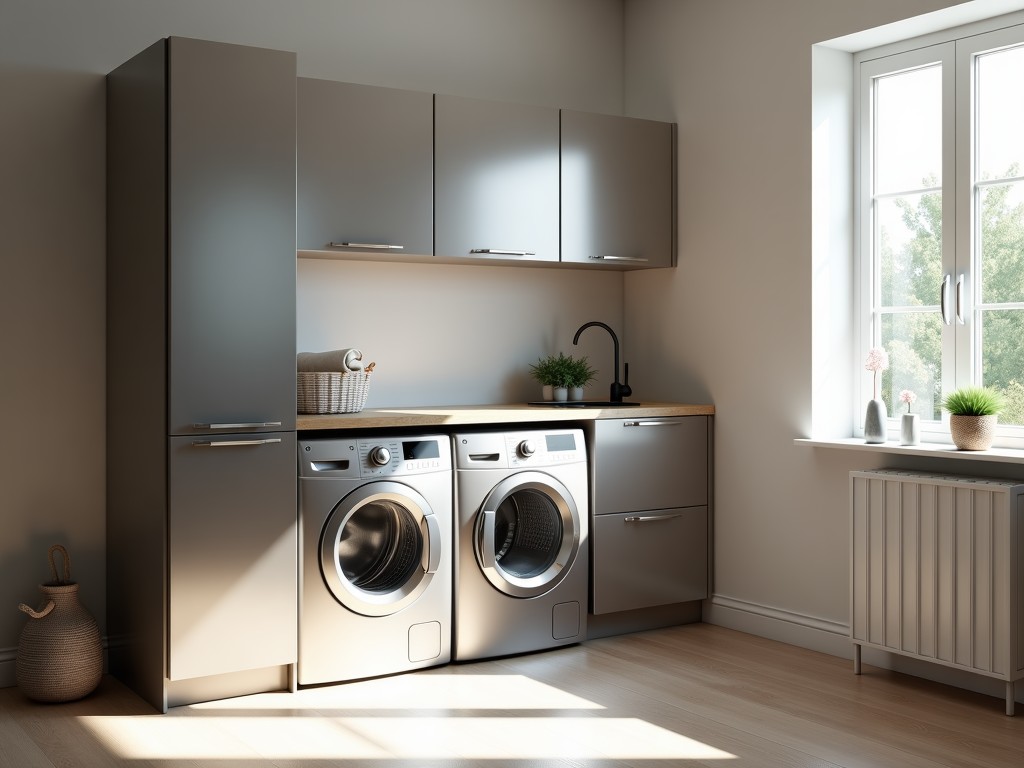
Laundry Stainless Steel Cabinet: Engineered for Demanding Washroom Environments
In commercial and institutional laundry facilities, equipment housings face constant exposure to moisture, detergents, high humidity, and frequent cleaning cycles. Standard carbon steel or painted cabinets corrode rapidly under these conditions, leading to structural degradation, contamination risks, and unscheduled downtime. A purpose-built stainless steel cabinet provides a durable, hygienic enclosure that maintains integrity over years of service while supporting efficient maintenance access.
Material Selection: Why Grade Matters in Wet Environments
Not all stainless steels perform equally in laundry settings. While 304 grade offers good resistance to atmospheric corrosion and mild chemicals, prolonged exposure to chloride-containing detergents and elevated temperatures can initiate pitting or crevice corrosion. For enhanced durability, 316L stainless steel—with molybdenum addition—provides superior resistance to pitting and stress corrosion cracking in hostile washroom atmospheres. The choice between grades depends on specific chemical exposure, cleaning protocols, and humidity levels, which our engineering team evaluates during project scoping.
Manufacturing Process: Precision Fabrication for Long-Term Performance
Cabinet construction begins with laser-cut blanks from certified coil stock, ensuring dimensional consistency and minimal thermal distortion. Components are formed using CNC press brakes with precision tooling to maintain bend radii and angular tolerances within ±0.5°. All seams are continuously TIG welded using pulsed argon shielding to prevent oxidation and ensure full penetration. Post-weld, surfaces undergo passivation treatment to remove free iron and restore the chromium oxide layer—a critical step often overlooked in generic fabrication but essential for corrosion resistance in humid environments.
Design Considerations for Serviceability and Hygiene
Laundry cabinets must balance protection with accessibility. Internal layouts accommodate plumbing, electrical conduits, and drainage while maintaining minimum 25mm clearance for airflow and leak detection. Door designs incorporate concealed hinges and compression gaskets rated for continuous wet exposure, preventing water ingress into sensitive components. Interior surfaces feature a No. 4 brushed finish (Ra ≤ 0.8μm) to minimize microbial retention and facilitate cleaning with standard industrial detergents. Optional slope-top designs prevent water pooling on horizontal surfaces, reducing long-term corrosion risk.
Typical Specifications
| Parameter | Typical Range / Option |
|---|---|
| Material Grade | AISI 304 / 316L (customizable) |
| Panel Thickness | 1.2mm – 2.0mm (dependent on size and load) |
| Door Configuration | Single/double swing, removable, or lift-off |
| Ingress Protection (IP Rating) | IP54 standard; IP65 available upon request |
| Surface Finish | No. 4 brushed (standard); No. 8 mirror or electropolished (optional) |
| Custom Dimensions | Available up to 2400mm H × 1200mm W × 600mm D (project-specific) |
Customization Options for OEM Integration
Standard configurations address common laundry equipment housings, but OEMs often require tailored solutions. We support modifications including:
- Cutouts for service panels, meters, or control interfaces
- Integrated mounting brackets for pumps, valves, or sensors
- Ventilation louvers with removable mesh filters
- Internal lighting provisions with vapor-tight fixtures
- Electromagnetic shielding for sensitive electronics
Tooling costs for custom profiles or punching patterns are amortized over production volumes. Prototypes can be delivered within 3–4 weeks after drawing approval, depending on complexity and material availability.
Quality Control and Traceability
Each cabinet undergoes dimensional verification against approved CAD models using CMM or laser tracking for critical interfaces. Weld integrity is assessed via visual inspection (per ASTM E570) and liquid penetrant testing on representative samples. Material test reports (MTRs) are maintained for all raw stock, and final assemblies are labeled with unique serial numbers for lifecycle tracking. While we do not fabricate certifications, we can provide documentation supporting compliance with ISO 9001-based quality systems upon request.
Packaging and Logistics for Damage-Free Delivery
To prevent surface damage during transit, cabinets are wrapped in VCI-inhibited polyethylene film, then secured in triple-wall corrugated containers with corner protectors and foam edge guards. For export shipments, ISPM-15 compliant wooden crates are available. Units are designed to stack safely when palletized, with clear handling labels indicating orientation and lift points. Lead times typically range from 4–6 weeks for standard configurations, extending to 8–10 weeks for highly customized projects requiring new tooling or material sourcing.
When to Specify a Stainless Steel Laundry Cabinet
Choose this solution when:
- Equipment operates in continuously humid or wet environments
- Cleaning protocols involve alkaline detergents, chlorine-based sanitizers, or high-pressure washdown
- Long-term hygiene and contamination control are priorities (e.g., healthcare, hospitality, food processing)
- Equipment lifespan exceeds 7–10 years, making lifecycle cost a key factor
- Aesthetic consistency with other stainless steel fixtures is required
For technical evaluation, we recommend sharing your equipment layout, environmental conditions, and access requirements. Our engineering team will assess material suitability, structural needs, and integration points to deliver a proposal aligned with your operational demands.