Kitchen Cabinets With Built In Pantry Factory
Kitchen Cabinets With Built In Pantry Factory
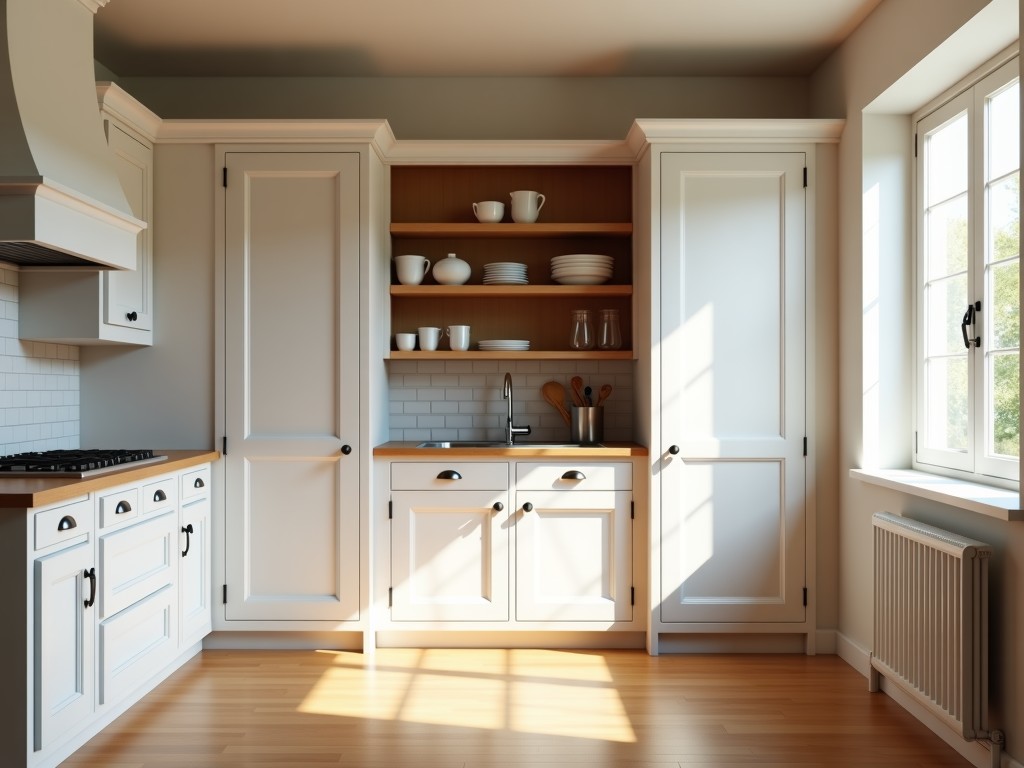
High-Capacity Kitchen Cabinetry Systems with Integrated Pantry Solutions
Integrating a built-in pantry into professional cabinetry architecture requires a precise balance between structural integrity, load-bearing capacity, and ergonomic spatial optimization. Unlike standalone modular units, integrated pantry systems are engineered to provide high-density storage within vertical space while maintaining the aesthetic continuity of the overall kitchen layout. This technical overview focuses on the material specifications, hardware durability, and dimensional tolerances necessary for seamless flush-fit installation in commercial and high-end residential environments.
Engineering Considerations for Integrated Storage Density
The primary challenge in designing pantry-integrated cabinetry is the static load exerted on horizontal shelving. Standard consumer-grade shelving often fails over time when subjected to heavy dry goods or bulk kitchen appliances. To mitigate deflection, industrial-grade cabinets utilize high-density fiberboard (HDF) or plywood cores with reinforced edge-bandinging.
- Structural Stability: 18mm to 25mm thick carcass construction to prevent warping under high-weight distribution.
- Hardware Duty Cycle: Heavy-duty soft-close slides and pull-out mechanisms rated for minimum of 45kg-75kg per pair.
- Alignment Tolerance: Adjustable 3D-concealed hinges used to ensure perfectly gap-alignment across full-height pantry doors.
Material Selection and Environmental Resistance
Selecting the substrate material dictates the lifecycle of the cabinetry in environments with varying humidity levels. In professional kitchen environments where moisture fluctuations occur, moisture-resistant marine-grade plywood is preferred to prevent swelling and delamination.
| Specification Component | Technical Advantage | Typical Application |
|---|---|---|
| Carcass Material | Melamine-faced Moisture Resistant Chipboard | High-traffic zones |
| Surface Finish | Low-pressure Laminate (LPL) or Acrylic | Sanitary surfaces |
| Pantry Hardware | Ball-bearing telescopic runners | Heavy-duty storage |
| Edge Banding | 2mm PVC or ABS | Impact resistance |
Customization Options for Workflow Efficiency
Built-in pantry systems are categorized by their internal configuration, which dictates the operational workflow. Pull-out pantry units utilize internal drawers to provide full access to rear-stored items, reducing ergonomic strain. Conversely, fixed-shelf configurations with adjustable heights maximize vertical volume for smaller, uniform items or specialized kitchen equipment.
Procurement teams should specify the depth of the pantry unit—typically 600mm to 650mm—to ensure compatibility with standard countertop depths while maintaining clear sightlines.
Quality Control and Inspection Standards
Our manufacturing process ensures that every integrated unit maintains dimensional stability over thousands of cycles. Each hardware component undergoes rigorous stress testing to ensure that the full-height pantry doors do not sag over time, which is a common failure point in large-scale cabinetry projects.
- Squareness Verification: Ensuring tolerances remain within ±1.5mm for seamless on-site assembly.
- Load Testing: Internal hardware is verified for rated weight capacities before shipment.
- Finish Adhesion: Impact testing of edge banding to ensure no peeling in humid environments.
Frequently Asked Questions
Can the integrated pantry units be customized for specific ceiling heights?
Yes, we utilize adjustable plinth systems and filler panels to allow for floor-to-ceiling installation, compensating for variations in architectural surfaces.
What is the difference between pull-out and fixed-shelf pantry pantries?
Pull-out units offer superior accessibility by bringing contents to the user, whereas fixed-shelf units offer maximum storage volume for large, bulky items.
How is the hardware protected during long-distance logistics?
All units are packed in reinforced corrugated or wooden crates with internal bracing to prevent mechanical shock-induced hardware misalignment during transit.
Ready to Specify Your Next Project?
For technical drawings, material samples, or a custom quote based on your cabinetry requirements, contact our engineering team.
Request Technical Specifications & Quote