Kitchen Cabinets With Built In Bread Box Exporter
Kitchen Cabinets With Built In Bread Box Exporter
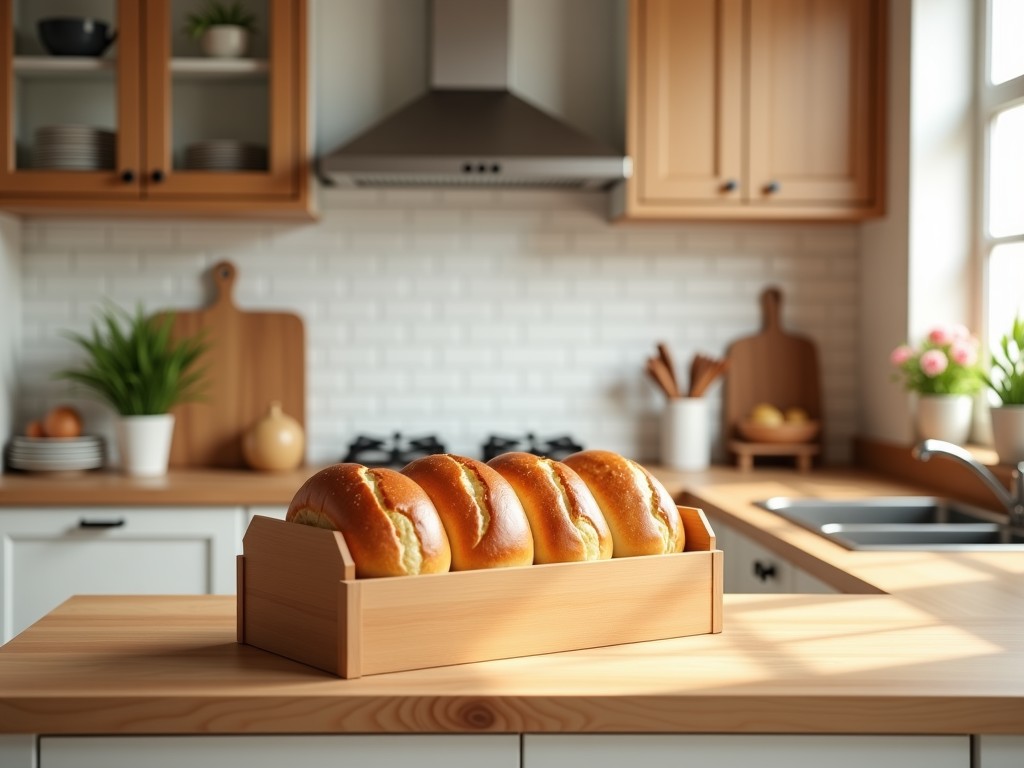
Kitchen Cabinets with Integrated Bread Storage
In commercial food preparation environments, dedicated storage for bread and baked goods requires protection from moisture, temperature fluctuations, and physical contamination while maintaining accessibility for high-frequency use. Standard cabinetry often lacks the internal geometry or material compatibility needed to preserve product integrity, leading to accelerated staling, cross-contamination risks, or inefficient workflow integration.
Engineered for bakery production lines, institutional kitchens, and high-volume food service operations, this cabinet system incorporates a purpose-built bread box compartment designed to regulate microclimate conditions without active refrigeration. The solution addresses core pain points in bakery operations: inconsistent product freshness, inefficient use of vertical space, and cleaning challenges associated with loose shelving or open containers.
Material Selection for Food Contact and Durability
The cabinet carcass is constructed from 18mm marine-grade plywood with a food-safe, moisture-resistant laminate finish (HPL, 0.8mm thickness), selected for its resistance to steam, cleaning agents, and impact wear in wet zones. Internal bread box surfaces use 304 stainless steel (1.2mm gauge, #4 brushed finish) to eliminate crevices where particulates can accumulate and to comply with FDA 21 CFR Part 110 for food-contact surfaces.
Unlike melamine or particleboard alternatives, this material combination resists delamination under repeated humidity cycling and maintains dimensional stability in environments exceeding 80% RH. The stainless steel liner is seam-welded at corners and fastened with tamper-resistant, countersunk fasteners to prevent harbor points and facilitate thorough cleaning-in-place (CIP) procedures.
Engineered Bread Box Geometry and Airflow Management
The bread compartment measures 400mm (W) x 300mm (D) x 200mm (H) internally, accommodating standard 2-loaf trays or perforated baskets with 25mm clearance on all sides for passive air circulation. Front access is via a full-extension, soft-close drawer (30kg dynamic load rating) with ball-bearing slides rated for 50,000 cycles, eliminating the need for lift-out lids that disrupt workflow.
Ventilation is achieved through laser-perforated slots (1.5mm diameter, 8mm pitch) in the stainless steel rear panel, calibrated to maintain 45–55% relative humidity inside the box under ambient kitchen conditions (22–26°C, 50–70% RH). This passive system prevents condensation buildup while reducing moisture loss sufficient to extend freshness of artisan breads by 24–36 hours compared to open storage.
Typical Specifications and Performance Parameters
| Parameter | Value |
|---|---|
| External Dimensions (WxDxH) | 600mm x 500mm x 850mm |
| Bread Box Internal Volume | 24L |
| Carrying Load (Cabinet Total) | 120kg (UDL) |
| Drawer Dynamic Load | 30kg |
| Slide Cycle Life | 50,000 cycles |
| Internal Humidity Range (Passive) | 45–55% RH @ 24°C ambient |
| Material – Carcass | 18mm Marine Ply + 0.8mm HPL |
| Material – Bread Box Liner | 1.2mm 304 Stainless Steel (#4 Finish) |
| Finish – Exterior | Anti-fingerprint, Chemical-resistant Laminate |
Customization for Line Integration and Workflow
Standard units are designed for end-of-line placement or island installation, but depth, height, and bread box orientation can be modified to align with specific production flows. Common adaptations include left-hand or right-hand drawer configuration, reduced depth (400mm) for narrow aisles, or increased height (1000mm) to accommodate proofing baskets.
For OEM integration, the cabinet frame can be prepared with pre-drilled mounting points for conveyor guards, splash guards, or overhead pot racks. Interior lighting (IP65-rated LED strip, 12V DC) is available as a factory-installed option for low-light environments, wired to a external junction box for field connection.
All modifications are subject to material compatibility review and structural validation. Lead time for standard configurations is 4–5 weeks; customized units require 6–8 weeks post-approval of production drawings. Minimum order quantity is one unit for prototype validation.
Quality Control and Factory Testing
Each unit undergoes dimensional verification of the bread box interior (±1mm tolerance on width/depth, ±2mm on height) using calibrated CMM probes. Slide operation is tested over 100 cycles under load, and door/drawer alignment is verified with feeler gauges to ensure consistent reveal (<1.5mm variation).
Food-contact surfaces are inspected for weld continuity, surface roughness (Ra ≤ 0.8μm), and absence of sharp edges per ISO 13732-1. Laminate adhesion is tested via cross-hatch method (ISO 2409) to ensure minimum 3B rating after 24-hour water immersion. Final inspection includes a 24-hour environmental chamber test at 32°C/80% RH to validate passive humidity control performance.
Units are packed in double-wall corrugated cartons with corner protectors and internal bracing to withstand ISTA 1A transit standards. Each shipment includes a material declaration of conformity and cleaning procedure guide tailored to stainless steel and laminate surfaces in food zones.
Discuss your production layout and bread storage requirements with our engineering team to review material options, dimensional adjustments, and integration possibilities.
Share your facility drawings or operational constraints for a customized proposal and lead time confirmation.