Kitchen Cabinets For Built In Appliances Top Supplier
Kitchen Cabinets For Built In Appliances Top Supplier
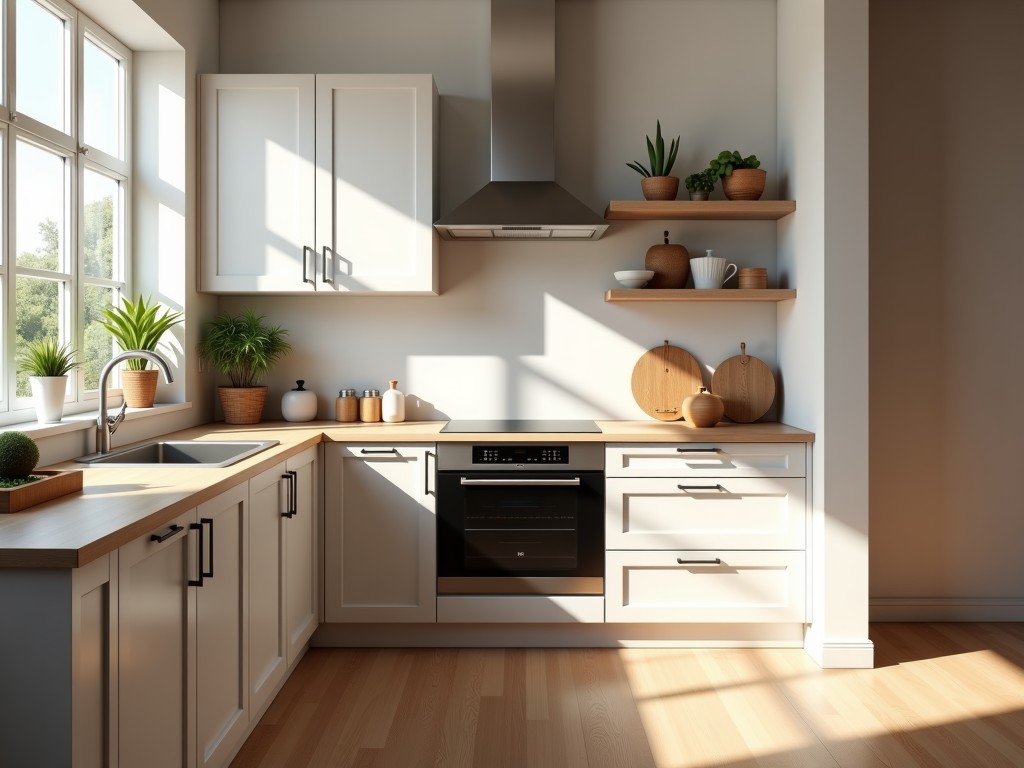
Kitchen Cabinets for Built-in Appliances: Engineering and Installation Considerations
When integrating ovens, steamers, microwaves, or warming drawers into kitchen cabinetry, the surrounding enclosure must meet precise dimensional, thermal, and structural requirements. Unlike standard cabinetry, these units are subjected to concentrated heat loads, vibration from compressors or fans, and frequent access cycles. The cabinet structure must maintain alignment over time to ensure proper door sealing, ventilation clearance, and appliance longevity. This article outlines the key engineering factors that influence performance, durability, and serviceability in built-in appliance applications.
Material Selection for Thermal and Mechanical Stability
The cabinet carcass must resist warping or delamination when exposed to sustained surface temperatures of 60–80°C near oven cavities or 40–50°C around refrigerator condensers. Particleboard with melamine facing is commonly used due to its cost-effectiveness and dimensional stability, but only when manufactured with low-formaldehyde, moisture-resistant grades (e.g., CARB Phase 2 or E0 certified). For higher thermal loads, plywood carcasses with cross-banded veneers offer superior resistance to creep and thickness swelling, particularly in humid environments. Edge banding must be PVC or ABS with heat-reflective backing to prevent softening at panel joints adjacent to heat sources.
Shelf load capacity is another critical factor. Built-in ovens can exert dynamic loads of 25–35 kg during insertion/removal, requiring shelf pins and brackets rated for minimum 40 kg static load with a 1.5 safety factor. Steel shelf supports with anti-disengagement lugs are preferred over plastic alternatives in high-cycle applications. Adjustable shelving systems should use 5 mm diameter holes spaced at 32 mm intervals, conforming to the European standard for kitchen hardware, ensuring compatibility with OEM mounting brackets.
Ventilation Clearance and Airflow Management
Insufficient clearance around built-in appliances is a leading cause of premature failure. Manufacturers specify minimum rear, side, and top clearances to allow convective cooling and exhaust dispersion. For example, a typical built-in microwave requires 50 mm rear clearance and 20 mm side clearance, while a steam oven may need 100 mm above for condensate drainage and vapor release. Cabinet design must incorporate these gaps without compromising aesthetic alignment.
Ventilation is not merely about space — it involves airflow path integrity. Obstructions such as solid back panels or inadequate toe-kick grilles can trap heat, raising internal cabinet temperatures beyond safe limits. Perforated metal or wood veneer grilles with minimum 60% open area are recommended at the top and bottom of appliance enclosures. In island installations, ductwork may be required to direct exhaust to external vents, necessitating coordination with HVAC planners during the design phase.
Dimensional Tolerances and Appliance Integration
Built-in appliances are manufactured to tight tolerances — typically ±1 mm in height, width, and depth. The cabinet opening must match these dimensions to avoid forcing the unit into place, which can damage internal components or misalign door seals. A common practice is to size the rough opening 2–3 mm larger than the appliance’s nominal dimensions to allow for shimming and leveling during installation.
Frameless (full-access) cabinet designs are often preferred for built-in applications because they provide unobstructed access to the appliance cavity and simplify trim kit installation. Face-frame cabinets require careful planning to ensure the stile width does not interfere with appliance door swing or handle clearance. Filler strips, when used, should be screwed and glued to prevent rattling and maintain thermal continuity.
Hardware and Functional Details
Hinges and drawer slides must withstand frequent use and potential misalignment from settling. Soft-close hinges with 3-way adjustment (depth, side, height) are standard for appliance doors to prevent impact damage. For pull-out trays or accessory drawers (e.g., for microwave turntables or oven accessories), full-extension ball-bearing slides with 30 kg load capacity and anti-rebound mechanisms ensure smooth operation under load.
Cable management is frequently overlooked. Built-in appliances require dedicated channels for power cords, data cables (for smart features), and ventilation ducts. Molded rubber grommets in panel edges prevent chafing, while removable access plates allow service technicians to reach connections without dismantling the cabinet.
Quality Control and Assembly Consistency
Variability in panel cutting or drilling can accumulate to cause misalignment during appliance installation. CNC-guided saws and drilling machines with ±0.1 mm positioning accuracy are essential for maintaining repeatability across production runs. Edge banding must be applied with hot-melt adhesive at 180–200°C to ensure bond strength exceeding 1.5 N/mm, preventing delamination during thermal cycling.
Before shipment, cabinets should undergo a dry-fit verification using appliance templates or actual units to confirm clearance, squareness, and hardware function. Any deviation beyond 1.5 mm in diagonal difference (indicating racking) warrants rework. Packaging must protect corners and edges with expanded polystyrene or molded pulp inserts, and units should be stacked flat to avoid racking during transit.
Customization and Project Coordination
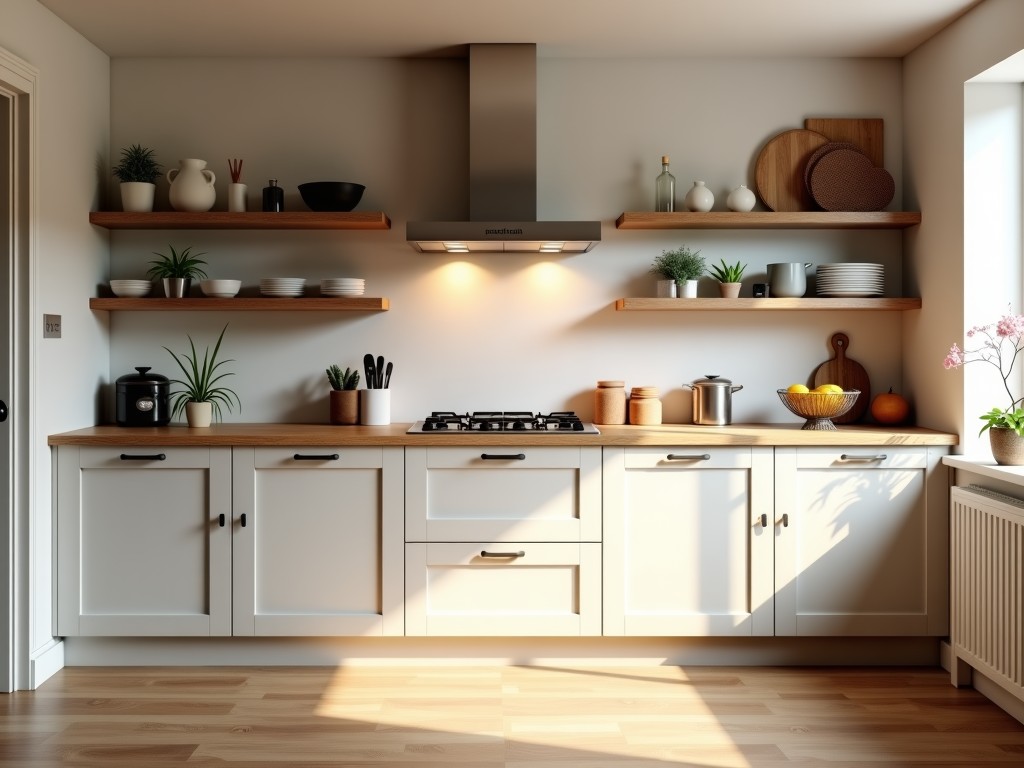
Built-in appliance layouts vary significantly by project — galley, L-shaped, U-shaped, or island configurations each present unique integration challenges. Custom cabinet depths (e.g., 600 mm vs. standard 560 mm) may be required to accommodate deeper appliances or to align with countertop overhangs. Filler panels, end panels, and appliance garages can be fabricated to match door styles and finishes, ensuring visual continuity.
For OEM or project-based orders, providing detailed shop drawings that include appliance model numbers, cutout dimensions, ventilation requirements, and hardware locations reduces field errors. Adjustments for uneven walls or floors can be addressed through scribeable filler strips or adjustable leg systems, but these should be specified early to avoid last-minute modifications.
Long-Term Performance and Serviceability
Over time, heat exposure can cause finishes to fade or adhesives to degrade. UV-stable melamine or acrylic-coated panels resist discoloration better than untreated surfaces. Accessibility for service is critical — appliances should be removable without damaging surrounding cabinetry. This requires sufficient clearance, removable trim kits, and avoidance of permanent adhesives or screws through the cabinet into the appliance chassis.
Regular inspection of ventilation grilles for dust buildup and hinge tension for drift helps maintain performance. In commercial kitchens or high-use residential settings, preventive maintenance schedules should include checking for panel warping near heat sources and tightening loose mounting hardware.
| Design Factor | Typical Requirement | Engineering Rationale |
|---|---|---|
| Cabinet Carcass Material | Moisture-resistant particleboard or plywood | Resists swelling and creep under thermal cycling and humidity |
| Edge Banding | PVC or ABS with heat-reflective backing | Prevents softening at panel joints adjacent to heat sources |
| Shelf Load Capacity | Minimum 40 kg static load | Supports dynamic loads during appliance insertion/removal |
| Ventilation Clearance | As per appliance manufacturer (e.g., 50 mm rear) | Ensures adequate convective cooling and exhaust dispersion |
| Opening Tolerance | +2/-0 mm relative to appliance nominal size | Allows for shimming and leveling without forcing the unit |
| Hinge Adjustment | 3-way (depth, side, height) | Compensates for settling and ensures proper door alignment |
Each built-in appliance installation presents unique constraints based on model specifications, kitchen layout, and environmental conditions. Successful integration depends on aligning cabinet design with the appliance’s thermal, mechanical, and dimensional requirements — not merely fitting it into a space.
To ensure your cabinetry meets the precise demands of built-in appliance applications, share your project drawings, appliance models, and layout details with our engineering team. We will review thermal loads, clearance needs, and hardware specifications to provide a customized proposal that addresses fit, function, and long-term reliability.