Grey Built In Cupboards Top Supplier
Grey Built In Cupboards Top Supplier
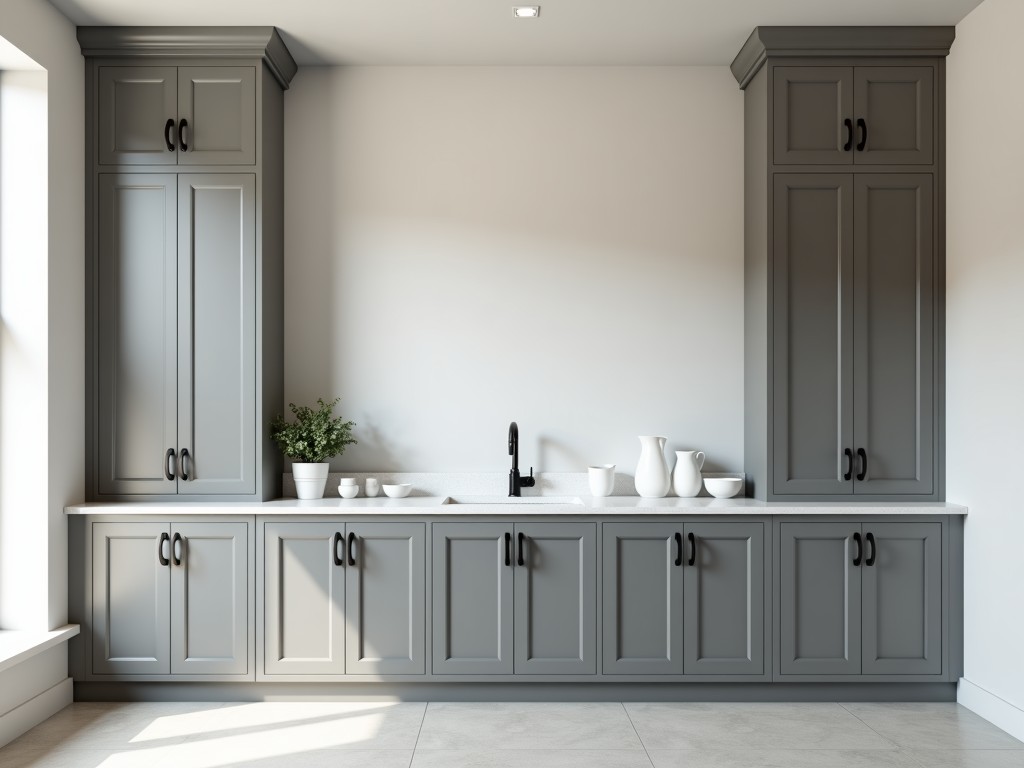
Grey Built-In Cupboards: Engineered for Industrial Storage and Workspace Integration
In manufacturing facilities, laboratories, and technical workshops, storage solutions must withstand constant use, resist environmental exposure, and integrate seamlessly with existing infrastructure. Grey built-in cupboards are designed not as freestanding furniture, but as permanent, load-bearing components of wall systems, machine bases, or control room enclosures. Their value lies in dimensional stability, material compatibility with industrial environments, and the ability to maintain alignment over years of vibration, cleaning cycles, and temperature fluctuation.
Material Selection for Long-Term Performance
The structural integrity of built-in cupboards begins with substrate choice. Unlike residential cabinetry that prioritizes appearance, industrial versions use substrates selected for moisture resistance, screw retention, and minimal creep under sustained load. Common options include:
- High-density fibreboard (HDF) with moisture-resistant (MR) grade core, typically 18–25mm thick, offering uniform density and excellent machinability for precise routing of hinges, slides, and cable grommets.
- Marine-grade plywood with cross-banded veneers and phenolic glue lines, chosen in environments with periodic washdowns or humidity swings, where delamination resistance is critical.
- Galvanized steel frames with powder-coated infill panels, used when fire rating, chemical resistance, or electromagnetic shielding is required — common in electrical rooms or clean zones.
Surface finishes are not decorative; they are functional barriers. The grey finish is typically achieved through:
- Melamine-faced panels with UV-stabilised, abrasion-resistant overlays — rated for 150+ cycles of Taber abrasion (CS-10 wheel, 500g load) without visible wear.
- High-pressure laminate (HPL) with post-forming capability, allowing seamless edges and resistance to oils, solvents, and impact — essential in machining areas or assembly lines.
- Electrostatic powder coating on steel substrates, providing a uniform, chip-resistant grey finish with salt spray resistance exceeding 500 hours (ASTM B117).
Engineering Integration and Tolerance Control
Built-in installation demands tighter tolerances than freestanding units. Misalignment of even 1–2mm can prevent door closure, bind drawer slides, or create gaps that compromise dust or liquid ingress protection. To ensure fit:
- Cabinet carcasses are manufactured to ±0.5mm squareness and ±1.0mm dimensional tolerance on width, height, and depth — verified on CNC routers with laser-guided positioning.
- Mounting systems use adjustable steel brackets or French cleats with vertical and horizontal micro-adjustment (±3mm), allowing compensation for wall irregularities common in older facilities or modular wall panels.
- Back panels are often omitted or made from perforated hardboard to allow airflow behind the unit, preventing moisture trapping and enabling routing of conduits or data cables without modifying the cabinet structure.
Door and drawer alignment is maintained through concealed, full-extension soft-close hinges and slides rated for 50,000+ cycles — tested to EN 15338 Level 2 — ensuring consistent operation despite daily use in shift-based environments.
Typical Specifications
| Parameter | Typical Range / Specification |
|---|---|
| Substrate Thickness | 18–25mm (HDF/plywood); 1.2–1.5mm (steel frame) |
| Panel Finish | Melamine, HPL, or powder-coated steel |
| Door/Drawer Load Capacity | Up to 25kg per drawer; 40kg per door (with reinforced hinges) |
| Adjustment Range (Mounting) | ±3mm vertical, ±3mm horizontal |
| Ingress Protection (Optional) | IP54-rated gaskets and sealed joints available |
| Fire Rating (Optional) | Class B-s2,d0 (EN 13501-1) achievable with mineral-core panels |
Application Scenarios Where Integration Matters
These cupboards are specified when storage must become part of the workflow, not an obstacle to it:
- Control rooms adjacent to CNC machines, where operators require immediate access to manuals, tools, and spare parts without leaving the ergonomic zone.
- Cleanroom antechambers in pharmaceutical or electronics manufacturing, where seamless, non-participating surfaces prevent contamination traps and allow for validated cleaning protocols.
- Wall-mounted units beside assembly lines, designed to hold fixtures, gauges, and documentation at point-of-use — reducing motion waste and improving 5S compliance.
- Under-bench configurations in laboratory settings, where chemical resistance and spill containment are balanced with the need to secure reagents and instruments.
In each case, the grey finish is chosen not for aesthetics alone, but for its low visual contrast — reducing glare under industrial lighting, minimizing the visibility of dust or light scratches, and providing a neutral backdrop that does not interfere with colour-coded safety systems or inspection lighting.
Customization and OEM Considerations
Standard dimensions rarely fit existing infrastructure. Customization is expected, not optional:
- Depth adjustments to accommodate wall protrusions, conduit runs, or varying countertop depths — common in retrofits where wall surfaces are uneven.
- Internal configurations: adjustable shelves, drawers with dividers, pull-out trays for heavy tools, or laminated work surfaces integrated into the cabinet top.
- Access modifications: cutouts for monitors, keyboard drawers, ventilation fans, or service panels for electrical or pneumatic lines.
- Edge treatments: PVC, ABS, or laser-sealed edges to prevent moisture ingress at cut points — critical in humid or washdown environments.
Minimum order quantities for custom builds typically start at 5–10 units due to tooling and programming setup. Lead times range from 3–6 weeks for standard configurations to 6–10 weeks for complex integrations involving cutouts, special finishes, or certified materials. Prototypes or digital mockups are available upon request to validate fit before full production.
Quality Control and Consistency
Variability in storage units leads to installation delays and field modifications. To prevent this:
- All panels are cut from nested CNC programs to ensure grain direction and finish consistency across mating surfaces.
- Edge banding is applied via hot-air extrusion with real-time temperature and pressure monitoring to prevent delamination.
- Hardware installation uses programmable torque drivers to ensure consistent fastening force — preventing over-tightening that cracks substrates or under-tightening that causes loosening under vibration.
- Final inspection includes diagonal measurement checks, door gap uniformity (target: 2–3mm consistent reveal), and slide operation testing under load.
Packaging is designed for industrial handling: units are wrapped in polyethylene foam, corner-protected with recycled cardboard, and stacked on pallets with interlocking frames to prevent shifting during transit. Each unit includes a label with project reference, dimensions, and hardware list — reducing on-site confusion during installation.
Share your drawings or specifications for a customized proposal