Floating Tv Cabinet Supplier
Floating Tv Cabinet Supplier
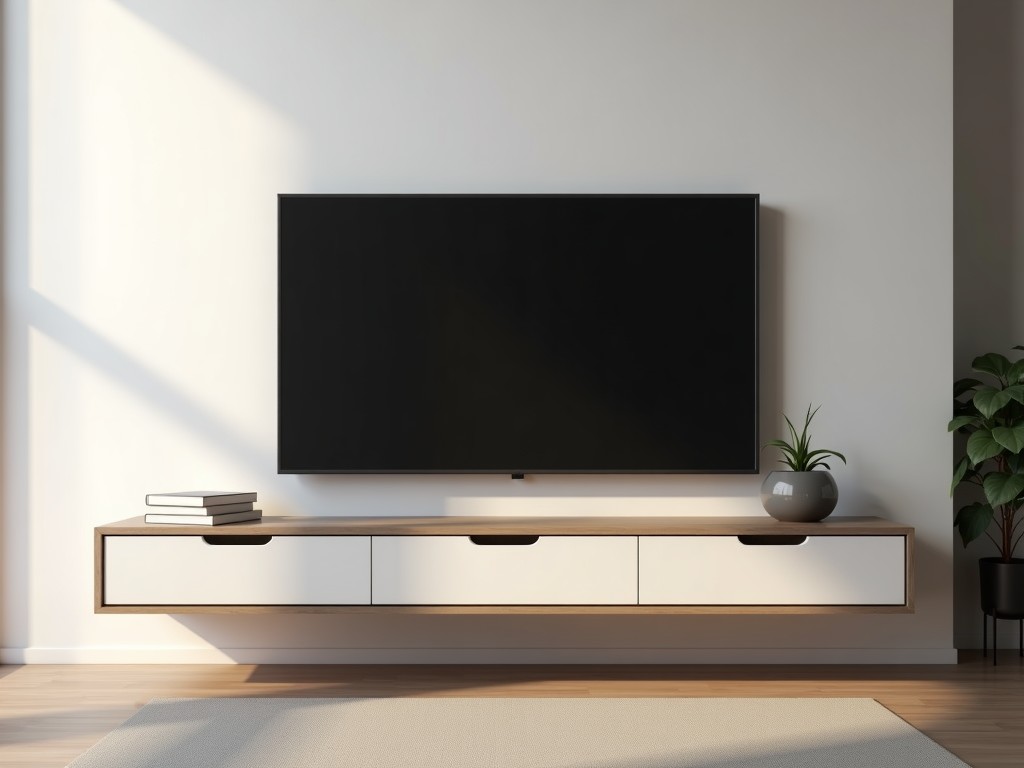
Floating TV Cabinet Supplier – Engineered for Precision Installation and Long-Term Stability
Selecting a floating TV cabinet requires more than aesthetic consideration — it demands structural integrity, load predictability, and compatibility with diverse wall substrates. For OEMs, integrators, and procurement teams specifying wall-mounted media solutions, the cabinet’s ability to safely support dynamic loads while maintaining precise alignment over time is critical. This page outlines the engineering considerations, material behaviors, and manufacturing controls that define reliable floating TV cabinet supply for commercial and residential applications.
Engineering Perspective: Load Path and Wall Interaction
Unlike freestanding units, floating cabinets transfer all gravitational and moment loads directly into the wall anchoring system. The primary design challenge lies in minimizing deflection under eccentric loading — such as when a large TV is offset from the cabinet’s centroid — while preventing long-term creep in the mounting interface. Engineers evaluate this through bending moment calculations at the fastener group, factoring in TV weight, depth, and dynamic forces from vibration or accidental impact.
Wall substrate variability significantly influences performance. Drywall anchors behave differently than concrete or masonry fasteners, and stud spacing dictates load distribution. A well-designed floating cabinet incorporates a rigid internal frame — typically steel or reinforced aluminum — that spreads point loads across multiple anchors, reducing peak stress on any single fastener. This load-spreading mechanism is essential for maintaining alignment and preventing sag over 5–10 year lifespans.
Material Selection: Balancing Rigidity, Weight, and Finish Compatibility
Material choice affects not only structural performance but also manufacturability, surface quality, and integration with finishing processes. Common substrates include:
- Cold-rolled steel (SPCC) for high-strength internal frames — offers yield strength >250 MPa, predictable elongation, and excellent weldability for custom bracket integration.
- Extruded aluminum (6063-T5) for lightweight assemblies — provides natural corrosion resistance, tight dimensional tolerances (±0.15 mm), and compatibility with anodizing or powder coating for seamless finish matching.
- Engineered wood (MDF or particleboard with PVC/veneer laminate) for visible panels — selected for uniform density, screw holding strength (>80 N/mm²), and stability under ±15% RH fluctuations when properly sealed.
The combination of a metal subframe with engineered wood façades optimizes stiffness-to-weight ratio while allowing CNC routing for precise cutouts, cable management channels, and mounting plate integration. Surface finishes are applied post-assembly to ensure color and texture uniformity across mixed-material joints.
Manufacturing Process: Tolerance Control and Repeatability
Dimensional consistency is non-negotiable in floating cabinet supply, particularly for OEMs integrating these units into larger millwork systems or hotel room packages. CNC machining of metal brackets and panel cutting tolerates ±0.5 mm positional accuracy, ensuring mounting holes align with pre-drilled wall templates. Panel edge banding is applied via hot-air extrusion to maintain <0.1 mm glue line variation, preventing moisture ingress at joints.
Assembly involves mechanical fastening (confirmed torque-controlled screws) and structural adhesives where shear strength >1.5 MPa is required. Each unit undergoes a dry-fit check against a master jig to verify squareness (<0.5° deviation) and flatness (<0.3 mm over 800 mm). This process minimizes field adjustment and reduces installation risk for contractors.
Typical Specifications: Configurable Parameters for Project Integration
While standardized dimensions exist for common TV sizes (42–86 inch equivalents), floating cabinets are frequently customized to match specific screen VESA patterns, wall stud layouts, or architectural recesses. Key parameters include:
| Parameter | Typical Range | Notes |
|---|---|---|
| Overall Width | 800–1800 mm | Matches TV width ±100 mm for side clearance |
| Height (Vertical) | 300–600 mm | Scales with TV height and desired bottom clearance |
| Depth | 150–300 mm | Depends on cable management needs and wall protrusion limits |
| Max Load Capacity | 60–150 kg | Tested per static load; dynamic factor applied for safety margin |
| Mounting Plate Thickness | 2.5–4.0 mm steel | Stiffened with ribs to limit deflection <1 mm at edge |
Customization Options: Adapting to OEM and Project Requirements
Supply flexibility extends beyond dimensions. Common customization paths include:
- Integrated power and data channels — routed internally with fire-retardant PVC conduits, accessible via removable panels.
- VESA adapter plates — laser-cut to match non-standard bolt patterns (e.g., 400×400, 600×400) with M6/M8 standoffs.
- Finish matching — powder coating or laminate sampling to align with adjacent millwork, door profiles, or wall colors.
- Reinforced brackets for seismic zones — upgraded to 3mm steel with gusseted corners and certified anchor compatibility.
MOQ for customized units typically starts at 20–50 pieces, depending on tooling requirements. Sample validation includes load testing, finish adhesion (ASTM D3359), and dimensional inspection against approved CAD models.
Packaging and Logistics: Protecting Finish and Integrity in Transit
Surface damage during handling is a frequent cause of field rejection. Packaging systems are designed to mitigate edge impact and torsional stress:
- Corner protectors — molded polyethylene or foam, rated for 50J impact absorption.
- Interleaving — anti-static PE film between panels to prevent marring.
- Crates — ISPM-15 compliant plywood or reinforced cardboard with internal bracing to limit flex <5 mm under 100kg stacked load.
- Labeling — includes handling arrows, center-of-gravity markers, and QR codes linking to installation instructions and test reports.
Lead time for standard configurations averages 3–4 weeks; customized orders add 1–2 weeks for tooling and finish approval. Shipping is typically FOB factory, with consolidation options available for LCL or FCL shipment to reduce per-unit cost.
Quality Control: Process Verification Over End-Line Testing
Rather than relying solely on final inspection, quality is built into the process:
- Incoming material certification — mill test reports for steel thickness and temper; laminate adhesion checks for wood substrates.
- Process monitoring — CNC tool wear tracked via part dimension drift; adhesive viscosity checked per batch.
- Final verification — 100% check of mounting hole location (±0.3 mm), squareness, and finish uniformity under 500 lux lighting.
- Load validation — sample units tested to 1.5x rated load for 24 hours with deflection measured at 100mm intervals.
Documentation includes material traceability, process logs, and a compliance statement — available upon request for audits or project submittals.
Selection Guide: Matching Cabinet Design to Application Needs
Procurement teams should evaluate based on:
- Wall type — determine anchor capacity and select cabinet with appropriate load-spreading frame.
- TV specifications — verify VESA compliance, weight, and depth to avoid interference with wall protrusions.
- Environment — humid climates require sealed edges and corrosion-resistant fasteners; high-traffic areas benefit from impact-resistant edges.
- Integration — consider cable access, ventilation for media components, and alignment with shelving or lighting.
Engaging early with the supplier’s engineering team allows for design-for-manufacturability feedback — reducing revision cycles and ensuring the final product meets both performance and aesthetic targets.
Discuss your project requirements with our engineering team. Share your drawings, load specifications, or wall conditions for a customized proposal that addresses structural, material, and logistical considerations.