Factory Direct Wardrobe Cabinet With Lighting
Factory Direct Wardrobe Cabinet With Lighting
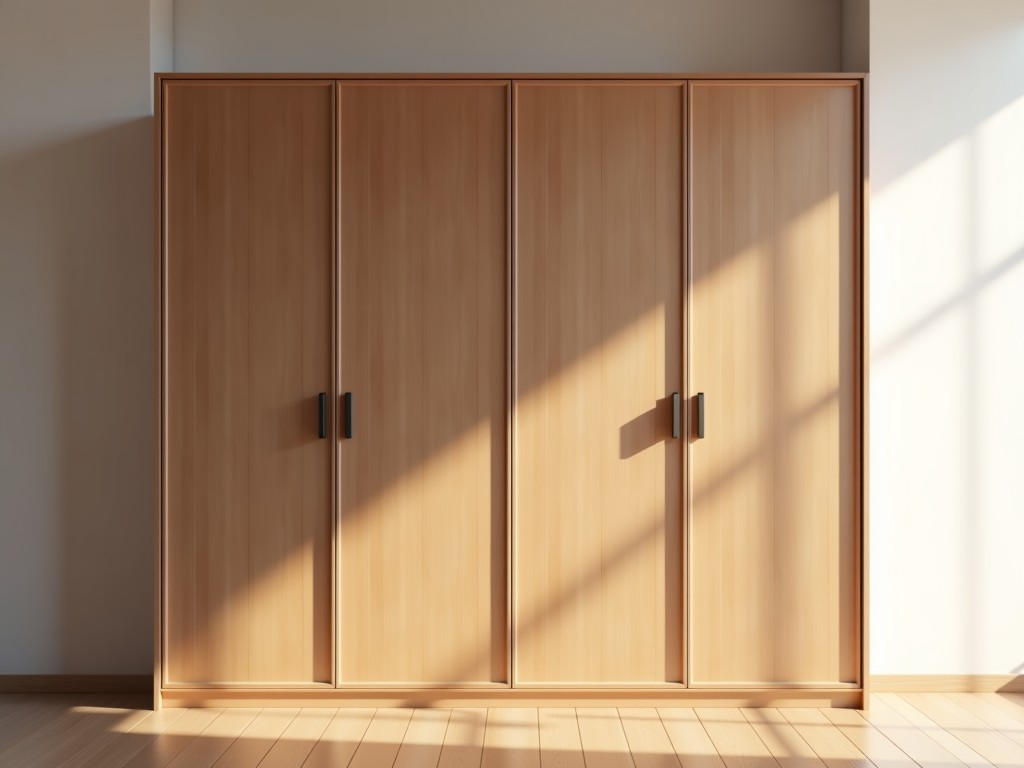
Wardrobe Cabinet with Integrated Lighting for Industrial Storage Applications
In manufacturing facilities, maintenance workshops and distribution centers, secure and organized storage of personal protective equipment, workwear and tools directly impacts operational efficiency and compliance with workplace safety standards. Conventional storage solutions often lack adequate internal illumination, leading to prolonged search times, misplaced items and potential safety hazards in low-light environments. A wardrobe cabinet with integrated lighting addresses these challenges by combining secure enclosure with task-appropriate lighting, ensuring contents remain visible and accessible regardless of ambient facility lighting conditions.
Engineering Perspective on Integrated Storage and Illumination
Effective industrial storage requires more than just physical enclosure; it demands consideration of usability within the specific operational context. When designing storage for environments with variable lighting — such as night shifts in production areas or dimly lit equipment rooms — reliance on overhead facility lighting alone can result in insufficient vertical illumination inside closed cabinets. Integrated lighting systems solve this by providing localized, uniform light distribution directly where it is needed: inside the storage volume. This approach minimizes glare, reduces eye strain and improves retrieval accuracy, particularly for small items or color-coded PPE where visual identification is critical.
From an electrical safety standpoint, industrial-grade integrated lighting must comply with relevant low-voltage directives and feature appropriate ingress protection ratings to withstand dust, moisture and occasional splashes common in industrial settings. The lighting circuit is typically isolated from the main power supply via a low-voltage driver, enhancing safety during maintenance and reducing risks associated with exposed conductors inside the storage compartment.
Material Selection for Durable Industrial Construction
The structural integrity and longevity of a wardrobe cabinet in industrial use depend heavily on material choice and surface treatment. Cold-rolled steel is commonly selected for the cabinet body due to its high strength-to-weight ratio, ease of forming and compatibility with powder coating processes that provide corrosion resistance. Typical thicknesses range from 0.8mm to 1.2mm for door panels and 1.0mm to 1.5mm for the carcass, balancing rigidity with manufacturability.
For environments with higher humidity or exposure to cleaning agents — such as food processing areas or chemical plants — stainless steel grades (e.g., 304 or 316) may be specified despite higher material costs, offering superior resistance to corrosion and staining. Interior components such as hanging rods and shelves often utilize galvanized steel or aluminum to prevent rust transfer to stored garments while maintaining load-bearing capacity for multiple uniforms or tool belts.
The lighting diffuser and lens are typically made from UV-stabilized polycarbonate or acrylic, chosen for impact resistance, light transmission efficiency (>85%) and stability under prolonged LED exposure. These materials resist yellowing and brittleness, ensuring consistent luminous output over the product’s service life.
Manufacturing Process and Quality Control
Production begins with CNC punching and laser cutting of steel blanks to achieve precise hole patterns for ventilation, cable routing and mounting hardware. Bent components are formed using press brakes with tolerances typically held within ±0.5mm for critical interfaces, ensuring door alignment and smooth operation after powder coating. Welding is minimized in favor of interlocking joints and mechanical fasteners to reduce thermal distortion and maintain coating integrity.
Surface preparation follows a multi-stage pretreatment process (degreasing, phosphating, passivation) before electrostatic powder coating application. Standard finishes include epoxy-polyester hybrids for general use or pure polyester for UV stability in areas with indirect sunlight exposure. Coating thickness is monitored to maintain 60–80μm for adequate corrosion protection without interfering with fit tolerance.
Electrical integration involves routing low-voltage LED strips through dedicated channels in the cabinet frame, secured with clips to prevent chafing. Connections are made via plug-in connectors to allow field replacement of lighting modules without rewiring. Each unit undergoes functional testing, including illuminance measurement (targeting 100–150 lux at mid-height inside the cabinet), continuity checks and insulation resistance verification before packaging.
Typical Specifications and Configuration Options
| Parameter | Typical Range / Options |
|---|---|
| Overall Height | 1800mm – 2000mm (customizable) |
| Overall Width | 600mm – 900mm (single door); 900mm – 1200mm (double door) |
| Overall Depth | 500mm – 600mm |
| Door Configuration | Single or double swing; optional sliding for space-constrained areas |
| Lighting Type | LED strip (12V or 24V); 4000K–5000K color temperature; CRI >80 |
| Illuminance (Inside Cabinet) | 100–180 lux (measured at 1000mm height) |
| Ingress Protection (Lighting) | IP44 (standard); IP65 available for washdown areas |
| Power Consumption | 5–15W depending on size and LED density |
| Material Options | Cold-rolled steel (SPCC); galvanized steel; stainless steel 304/316 |
| Finish Options | Powder coating (RAL colors); brushed stainless (for SS units) |
| Interior Fittings | Hanging rod; adjustable shelves; optional shoe rack or tray |
| Door Lock | Cam lock; hasp for padlock; optional electronic keypad |
| Ventilation | Louvered doors or passive vents (top/bottom) |
Application Scenarios in Industrial and Commercial Facilities
In automotive assembly plants, these cabinets are commonly installed in changing rooms adjacent to production lines, allowing technicians to store coveralls, safety gloves and hearing protection. The integrated lighting ensures quick visual confirmation of PPE completeness before entering zones requiring specific safety gear, reducing the likelihood of non-compliance incidents during audits.
Pharmaceutical and electronics manufacturing facilities utilize stainless steel variants in gowning areas where contamination control is paramount. The smooth, non-porous surfaces withstand frequent cleaning with isopropyl alcohol or hydrogen peroxide-based solutions, while the sealed lighting prevents particle entrapment. Uniform color temperature and high CRI support accurate visual inspection of garments for defects or contamination prior to entry into cleanrooms.
Distribution centers and logistics warehouses deploy these units in driver rest areas and security checkpoints. Personnel can securely store personal belongings during shifts, with lighting facilitating rapid retrieval of items such as wallets, phones or documentation — particularly during early morning or night shifts when ambient lighting may be minimized for energy efficiency.
Customization and OEM Considerations
Beyond standard dimensions, manufacturers can adjust internal layouts to accommodate specific storage needs — such as extended hanging length for coats, partitioned sections for tool segregation or integrated charging ports for radios and flashlights. Door handedness (left- or right-hinged) is configurable to match room layout and traffic flow.
Electrical customization includes options for motion-activated lighting (to conserve energy in intermittently used spaces), daylight sensors that disable the cabinet lighting when ambient room light exceeds a set threshold, or centralized switching via facility management systems. All electrical modifications adhere to low-voltage safety standards and are clearly labeled for maintenance personnel.
For OEM clients integrating these cabinets into modular locker systems or facility furniture lines, manufacturers provide CAD models, wiring diagrams and assembly instructions to streamline incorporation into larger projects. Prototyping support is available to validate fit, function and lighting performance before full production commitment.
Packaging, Logistics and Installation
Units are typically shipped knock-down (KD) to optimize container utilization and reduce freight costs. Each cabinet is packed with corner protectors, edge foam and wrapped in polyethylene film before placement in a five-layer corrugated carton. Hardware kits (fasteners, wall brackets, lighting drivers) are included in a sealed polybag with multilingual assembly instructions.
Assembly requires basic tools and generally takes 20–30 minutes per unit for two personnel. Wall mounting brackets are recommended for taller configurations to prevent tipping, especially in seismic zones or high-traffic areas. Leveling feet accommodate uneven floors commonly found in older industrial buildings.
Electrical connection involves plugging the low-voltage driver into a standard AC outlet (via included adapter) or hardwiring to a junction box — the latter preferred for permanent installations to eliminate tripping hazards from loose cords. Drivers are mounted externally or in a dedicated cavity to maintain interior storage volume.
Maintenance and Long-Term Serviceability
Routine maintenance focuses on cleaning and functional verification. Exterior surfaces can be wiped down with mild detergent and water; abrasive cleaners should be avoided to preserve powder coating integrity. Interior lighting lenses are cleaned periodically with a microfiber cloth to maintain light output — frequency depends on environmental dust levels.
LED modules are designed for 50,000+ hour lifespan under normal operating conditions. Replacement involves accessing the driver compartment, disconnecting the plug-in connector and sliding out the strip — no rewiring required. Spare lighting kits are available upon request, typically matching the original specifications for seamless integration.
Annual inspection should verify door alignment, latch operation, hinge tightness and lighting functionality. In corrosive environments, touch-up of coating scratches prevents localized rust propagation. Proper maintenance ensures the cabinet remains serviceable for 10–15 years in industrial settings, reducing total cost of ownership compared to frequently replaced consumer-grade alternatives.
Selecting the Right Configuration for Your Facility
Begin by assessing the environmental conditions: humidity levels, exposure to cleaning agents, temperature ranges and potential for physical impact. This informs material selection — cold-rolled steel for dry, controlled areas; stainless steel for washdown or corrosive zones. Evaluate the required storage volume based on the number of users and items per person (e.g., one uniform set, safety boots, personal bag).
Determine lighting needs: continuous operation for permanently staffed areas versus motion-sensing for intermittent use. Verify electrical access points and whether hardwiring is feasible. Consider door configuration relative to room layout — sliding doors save space in narrow corridors, while swing doors offer full unobstructed access when clearance permits.
Finally, engage with the manufacturer’s technical team to confirm tolerances, finish options and lead times. Providing detailed requirements — including electrical preferences, accessory needs and installation constraints — enables accurate quotation and minimizes the risk of costly revisions during production or installation.
Discuss your project requirements with our engineering team to receive a customized proposal for wardrobe cabinets with integrated lighting tailored to your facility’s operational demands.