Direct Factory Project Storage Cabinet
Direct Factory Project Storage Cabinet
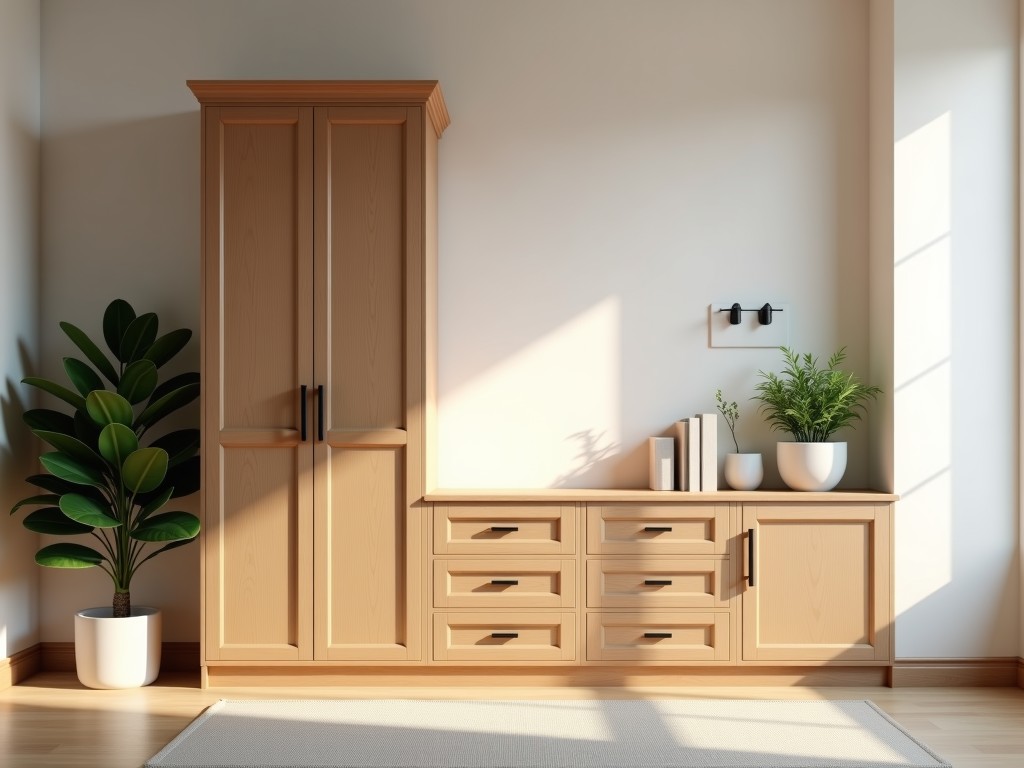
Project Storage Cabinet: Engineered for Industrial Organization and Workflow Efficiency
In manufacturing, assembly, and maintenance environments, disorganized workspaces directly impact productivity, increase error rates, and create safety hazards. A project storage cabinet addresses these challenges by providing structured, durable storage for tools, components, documentation, and work-in-progress items. Unlike generic shelving or plastic bins, industrial-grade storage cabinets are designed to withstand daily use in demanding conditions while supporting lean workflows and 5S principles.
Engineering Perspective: Designing for Real-World Use
Effective project storage begins with understanding the physical demands of the environment. Cabinets used in machining areas, electronic assembly lines, or maintenance shops must resist vibration, occasional impacts, and exposure to oils or coolants. The structural integrity of the cabinet — particularly the frame, door hinges, and shelf supports — determines long-term usability. Engineers evaluating these units prioritize load distribution, deflection limits under load, and resistance to racking when doors are opened frequently.
Material Selection: Matching Construction to Application
The choice of material affects not only durability but also suitability for specific processes. Cold-rolled steel is commonly used for its strength-to-weight ratio and ease of fabrication, with thicknesses typically ranging from 0.8mm to 1.2mm for cabinet bodies and 1.2mm to 1.5mm for doors. In environments requiring corrosion resistance — such as food processing, pharmaceutical, or outdoor maintenance — stainless steel (grades 304 or 316) or powder-coated finishes may be specified. For lighter-duty applications where weight reduction is beneficial, aluminum alloys offer adequate rigidity with improved handling characteristics.
Manufacturing Process: Ensuring Consistency and Fit
Precision in manufacturing directly influences cabinet performance. Laser cutting or CNC punching ensures dimensional accuracy of panels, while robotic welding maintains consistent joint strength without distorting thin-gauge materials. Powder coating is applied via electrostatic spray and cured at controlled temperatures to achieve uniform thickness (typically 60–80 microns), providing both corrosion protection and a clean, professional appearance. Door alignment relies on precision-extruded hinges and magnetic catches or roller latches to ensure smooth operation over thousands of cycles.
Performance Advantages: What Engineers Observe in Use
A well-designed storage cabinet reduces search time, minimizes component damage, and supports standardized work procedures. Shelves with adjustable increments (commonly 25mm or 32mm pitch) allow reconfiguration as project needs evolve. Load capacity per shelf typically ranges from 50kg to 150kg depending on material thickness and reinforcement, preventing sagging under heavy tools or stacked components. Ventilation options — such as louvers or perforated panels — help manage heat dissipation when storing electronics or battery-powered tools.
Typical Specifications: Understanding Configurable Parameters
| Parameter | Typical Range | Notes |
|---|---|---|
| External Dimensions (H×W×D) | 900–2000mm × 600–1200mm × 400–600mm | Custom heights available for bench-mounted or floor-standing units |
| Shell Thickness | 0.8–1.5mm (steel) | Thicker gauges used for high-load or high-vibration areas |
| Shelf Load Capacity | 50–150kg per shelf (UDL) | Depends on material, support brackets, and shelf depth |
| Door Type | Solid, perforated, or polycarbonate view | View doors allow visual inventory without opening |
| Finish | Powder coating (RAL colors), galvanized, or brushed stainless | Chemical-resistant coatings available upon request |
| Locking Mechanism | Cam lock, padlock hasp, or electronic keypad | Master key systems available for facility-wide access control |
Application Scenarios: Where These Cabinets Add Value
In CNC machining centers, project storage cabinets hold fixtures, gauges, and spare tooling near the machine, reducing setup time and minimizing movement. In electronics assembly, anti-static versions or those with grounded shelving protect sensitive components during kitting. Maintenance teams use mobile variants with locking casters to transport preventive maintenance kits between production lines. For long-term projects — such as aerospace sub-assembly or custom machinery build — cabinets serve as centralized repositories for drawings, fasteners, and intermediate parts, improving traceability and reducing misplacement.
Customization Options: Adapting to Specific Workflows
Standard configurations may not always align with unique operational needs. Customization options include adjustable shelf heights, drawers for small parts, integrated power strips for tool charging, and labeling systems for visual management. Door configurations can be modified to include sliding panels in tight spaces or bi-fold designs for wider access. Interior lighting — such as LED strips with motion sensors — improves visibility in low-light areas. For cleanroom environments, cabinets can be constructed with seamless interiors and electropolished stainless steel to meet ISO cleanliness standards.
Packaging and Logistics: Protecting Quality in Transit
Cabinets are typically packaged flat-packed or pre-assembled depending on size and destination. Flat-pack versions use corner protectors, edge guards, and polyethylene wrapping to prevent scratches and dents during transit. Pre-assembled units are secured to pallets with stretch film and corner bracing, with foam padding applied to vulnerable areas like door edges and handles. Packaging includes clear labeling with part numbers, quantity, and handling instructions to simplify receiving and inventory. For export shipments, ISPM 15-compliant pallets and humidity-resistant barriers are available upon request.
Installation and Maintenance: Ensuring Long-Term Usability
Proper installation affects stability and longevity. Floor-standing units should be leveled using adjustable feet to prevent door misalignment. Wall-mounted cabinets require appropriate fasteners based on substrate — concrete anchors for masonry, toggle bolts for hollow walls, or direct stud fastening for steel framing. Maintenance is minimal: periodic inspection of hinges, latch function, and shelf leveling ensures smooth operation. Touch-up paint kits are available for powder-coated finishes to address minor chips and maintain corrosion protection.
Quality Control: Building Confidence in Consistency
Quality assurance begins with material verification — incoming steel is checked for thickness, yield strength, and coating adhesion. During production, critical dimensions are monitored at key stages: panel flatness, hole alignment, and weld penetration. Final assembly includes door swing testing, load verification on shelves, and locking mechanism cycling. Visual inspection under standardized lighting checks for coating uniformity, scratch resistance, and proper alignment of all components. These procedures help ensure that each cabinet meets performance expectations before leaving the facility.
Selection Guide: Matching Cabinet to Operational Needs
Choosing the right storage cabinet involves evaluating the environment, load requirements, and workflow integration. Begin by assessing the types of items to be stored — weight, size, sensitivity, and access frequency. Determine whether mobility is needed; if so, caster rating and locking mechanism become key factors. Consider environmental exposures: humidity, chemicals, temperature extremes, or particulate contamination may dictate material and finish choices. Finally, evaluate access patterns — high-frequency use demands durable hinges and smooth-gliding shelves, while occasional access may prioritize security over convenience.