Direct Factory Bookcase Cabinet For Built Ins
Direct Factory Bookcase Cabinet For Built Ins
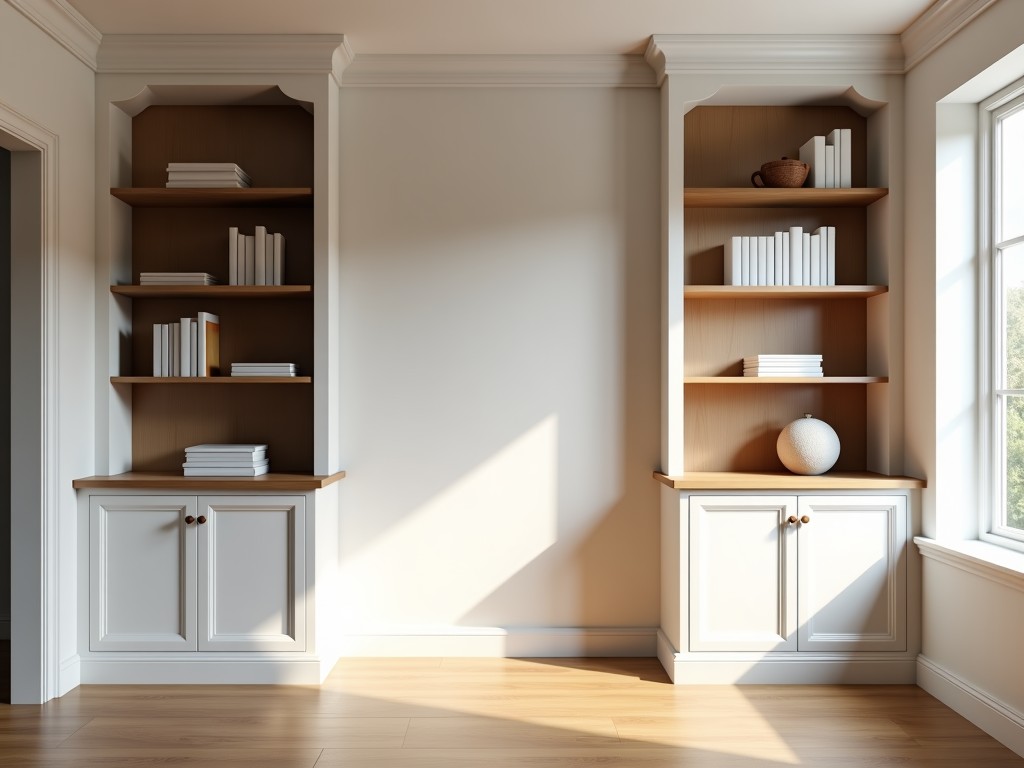
Precision-Engineered Bookcase Cabinets for Built-In Applications
Integrating storage into commercial or residential architectural spaces requires a precise understanding of structural integrity and material dimensional stability. Unlike freestanding units, built-in bookcase cabinets must be engineered to handle specific load-bearing requirements while maintaining a seamless aesthetic fit against non-square architectural planes. Our manufacturing process focuses on achieving high-tolerance joinery that ensures the unit remains flush with the surrounding structure without sagging or mechanical misalignment over time.
Structural Considerations for Fixed-Span Installations
The primary challenge in built-in cabinetry is the deflection of horizontal spans under static loads. When designing for heavy-duty archival media or technical equipment, standard particle-board shelves often fail due to creep deformation. We address this by calculating the span-to-thickness ratio for each shelf, utilizing reinforced edges or integrated structural sub-frames where architectural constraints allow.
- Load Distribution: Engineered for 25kg to 75kg per linear meter depending on material density and reinforcement.
- Tolerance Management: Scribe-molding systems designed to compensate for variations in wall plumbness and leveling.
- Environmental Stability: Use of low-moisture cores to prevent warping in seasonal-climate-controlled interior environments.
Material Selection and Technical Specifications
Selecting the correct substrate determines the lifecycle and maintenance requirements of the built-in system. For high-traffic commercial environments, we prioritize high-density fiberboard (HDF) or structural-grade plywood for superior screw retention. For residential applications where weight reduction is critical, premium-grade engineered wood cores provide the necessary rigidity-to-weight ratio.
| Technical Specification | Standard Range | Engineering Benefit |
|---|---|---|
| Core Material | MDF, Plywood, or MFC | Varies moisture resistance and load. |
| Shelf Thickness | 18mm - 36mm | Prevents shelf deflection under heavy loads. |
| Depth Options | 300mm - 600mm | Accommodates standard media to deep storage. |
| Surface Finish | HPL, Veneer, or Lacquer | Abrasion resistance and cleaning ease. |
| Back Panel Integration | 6mm - 18mm inset | Enhances lateral shear stability. |
Manufacturing and Integration Process
Our production workflow utilizes CNC-driven machining to ensure dimensional accuracy within ±0.5mm. This level of precision is critical for built-in units where the gap between the cabinet carcass and the wall must be minimized to reduce onsite finishing labor.
The process begins with detailed site survey analysis to identify any irregularities in the installation environment. We then utilize a modular carcass strategy, allowing for rapid assembly in a controlled factory environment followed by precision on-site scribing and final trimming. This hybrid approach minimizes the risk of damage during transport and ensures a bespoke appearance regardless of architectural imperfections.
Customization and OEM Capabilities
Procurement managers and architects often require specific configurations to meet unique project requirements. We provide a wide range of hardware integrations and structural modifications, including adjustable shelving systems with integrated LED lighting channels and concealed cable management for modern office environments.
- Custom height modules: Optimized for floor-to-ceiling architectural spans.
- Hardware Specification: Selection of soft-close hinges and heavy-duty drawer slide systems.
- Material Matching: Coordination with existing wood veneers or architectural laminates for continuity.
Frequently Asked Questions
How do you handle non-square walls?
We utilize oversized end panels and specialized scribe moldings. This allows the installers to trim material on-site to match the wall contour, creating a seamless fit even when walls are not plumb.
What is the maximum load capacity for the shelves?
Load capacity depends on the span width and material. Typically, a 900mm span using 25mm reinforced material can support up to 50kg without visible deflection.
What are the lead times for custom built-in projects?
Lead times vary based on project volume and material availability. We provide a detailed timeline upon review of your technical drawings and specifications.
Ready to integrate precision bookcase cabinetry into your next project?
Request a Technical Consultation and Quote