Custom Tv Cabinet Supplier
Custom Tv Cabinet Supplier
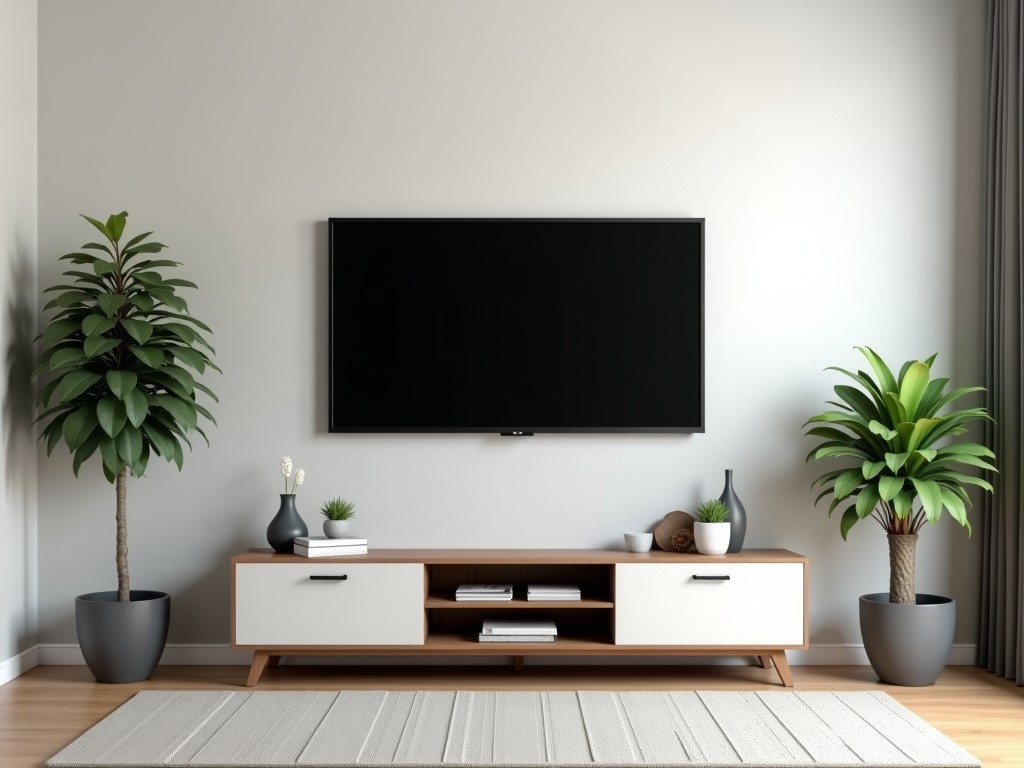
Custom TV Cabinet Supplier: Engineering-Focused Solutions for Industrial and Commercial Applications
When sourcing enclosures for display systems in control rooms, retail environments, or industrial facilities, the cabinet must do more than hold a screen—it must integrate with structural supports, manage thermal loads, resist environmental exposure, and allow for precise installation tolerances. Off-the-shelf options often fail to meet the dimensional, material, or mounting requirements of specialized installations. A custom TV cabinet supplier addresses these gaps by engineering enclosures to exact project specifications, ensuring compatibility with existing infrastructure and long-term operational reliability.
Industry Challenge: Dimensional Precision and Environmental Integration
In mission-critical applications such as broadcast studios, traffic management centers, or factory monitoring halls, display cabinets are frequently mounted into wall systems, consoles, or floor stands where millimeter-level alignment affects both aesthetics and functionality. Standard cabinets may introduce gaps, misalignment with VESA patterns, or insufficient clearance for cabling and cooling. These issues complicate installation, increase labor time, and can compromise system accessibility during maintenance.
Environmental factors further complicate selection. Cabinets in humid or dusty environments require materials that resist corrosion and particle ingress. Those near heat sources need thermal management features. In high-traffic public areas, impact resistance and secure mounting become priorities. A supplier without engineering depth may overlook these interdependencies, leading to field failures or costly retrofits.
Engineering Perspective: Material Selection and Structural Design
Material choice directly influences weight, stiffness, corrosion resistance, and finish quality. For indoor commercial settings, cold-rolled steel with powder coating offers a balance of formability, surface durability, and cost efficiency. In humid or chemically exposed environments, stainless steel grades like 304 or 316 may be specified to prevent oxidation, particularly when cabinets are mounted near washdown areas or coastal installations.
Aluminum alloys (such as 6061-T6) are selected when weight reduction is critical—common in ceiling-mounted or movable console systems—while still providing sufficient rigidity to prevent deflection under dynamic loads. Wall thickness typically ranges from 1.2mm to 2.0mm depending on span and load requirements, with reinforcement ribs or gussets added where stress concentrations occur.
Surface finish is not merely aesthetic; it affects light reflection, cleaning protocols, and long-term wear. Matte powder coatings reduce glare in viewing environments, while textured finishes improve scratch resistance in high-contact zones. Edge treatments are designed to eliminate sharp points, complying with safety standards in public access areas.
Manufacturing Process: From Design to Production Consistency
Custom cabinet production begins with detailed CAD models that incorporate client-provided dimensions, VESA patterns, cable entry points, and mounting interface requirements. Tolerances are held to ±0.5mm on critical mating surfaces to ensure seamless integration with mating hardware or adjacent panels. Laser cutting and CNC punching maintain repeatability across batches, while press braking forms precise bends without material thinning or cracking.
Welding, when used, follows controlled procedures to minimize distortion—especially important in large-format cabinets where thermal warping could misalign mounting rails. Post-weld stress relief may be applied depending on material thickness and geometry. All surfaces undergo pretreatment (degreasing, phosphating) before coating to ensure adhesion and corrosion resistance of the finish.
Assembly includes integration of accessories such as removable rear panels, vented tops, internal cable management channels, and locking mechanisms. Each unit undergoes dimensional verification and functional checks before packaging to confirm that doors align, loads are evenly distributed, and access points remain unobstructed.
Typical Specifications: Configurable Parameters for Industrial Use
| Parameter | Typical Range / Options |
|---|---|
| Material | Cold-rolled steel, stainless steel (304/316), aluminum (6061-T6) |
| Thickness | 1.0mm – 2.5mm (material-dependent) |
| Surface Finish | Powder coating (matte, semi-gloss, textured), brushed metal, anodized (Al) |
| Mounting Compatibility | VESA patterns (75x75, 100x100, 200x100, 200x200, 400x200, 400x400, 600x400), custom brackets |
| Dimensions (H x W x D) | Customizable; typical range: 400–2000mm H × 500–3000mm W × 100–500mm D |
| Load Capacity | Up to 150 kg (dependent on material, thickness, and mounting method) |
| Ingress Protection (Optional) | IP54-rated seals and gaskets available for dust and splash resistance |
Application Scenarios: Where Customization Delivers Value
In broadcast control rooms, cabinets are often built into ergonomic consoles where screen height, viewing angle, and reach to controls must align with operator posture. Custom depth allows for proper rear clearance to accommodate video processors, audio interfaces, and power distribution units without forcing cables into tight bends.
Retail environments such as airports or train stations use high-brightness displays mounted in vertical kiosks. Here, cabinets must resist tampering, allow for easy screen replacement, and integrate with branding elements—often requiring laser-cut logos or custom color matching to corporate identity guides.
Industrial facilities deploying HMI screens in production lines need cabinets that withstand vibration, resist coolant splashes, and provide quick access for maintenance. Sliding or lift-off panels with sealed gaskets and tool-less fasteners reduce downtime during service intervals.
Medical imaging centers require cabinets with antimicrobial coatings and smooth, crease-free surfaces to support cleaning protocols. Custom dimensions ensure alignment with ceiling booms or wall arms used in diagnostic suites.
OEM & ODM Service: Collaboration from Concept to Delivery
We work with integrators, display manufacturers, and facility engineers to develop cabinet solutions that meet both functional and aesthetic requirements. Early-stage engagement includes design for manufacturability (DFM) reviews to identify potential issues in forming, welding, or finishing before tooling is finalized.
Clients provide 2D drawings, 3D models, or detailed specifications including load expectations, environmental conditions, and interface details. Our engineering team validates these inputs against material behavior, deflection limits, and production feasibility. Prototypes can be produced for fit-check and functional validation prior to full production.
Tooling costs are amortized over production volume, making custom solutions viable even for mid-sized projects. Changes to dimensions, cutouts, or hardware placement can be accommodated through parametric design updates without requiring new tooling in many cases.
Customization Options: Tailoring to Project-Specific Needs
- Adjustable internal mounting rails for variable screen depths
- Vented tops or side panels with filter options for active or passive cooling
- Lockable doors with key, combination, or electronic access control
- Integrated power strips, data passthroughs, and grounding points
- Cable glands, strain reliefs, and internal routing channels
- Reinforced corners or impact-resistant bumpers for high-traffic zones
- Custom labeling, silk-screening, or laser etching for identification or branding
- Flat-pack design for reduced shipping volume and on-site assembly
Packaging and Logistics: Protecting Precision in Transit
Cabinet surfaces are vulnerable to scratches, dents, and coating damage during handling. To prevent this, we use multi-layer protection: interstitial foam or corrugated inserts prevent metal-to-metal contact, while corner guards absorb impact forces. Each unit is wrapped in polyethylene film to resist moisture and dust during storage or transit.
For LTL or international shipments, cabinets are packed in double-wall cartons with edge protection and clearly marked orientation labels. Flat-packed options reduce volumetric weight and simplify handling in confined spaces. All packages include packing lists, material certificates, and inspection reports upon request.
Lead times depend on material availability, complexity of features, and volume. Standard configurations typically ship within 3–4 weeks; highly customized units with special finishes or integrated electronics may require 5–6 weeks. Exact timelines are confirmed after technical review of the project scope.
Quality Control: Ensuring Consistency Across Batches
Dimensional accuracy is verified using calibrated calipers, height gauges, and coordinate measuring machines (CMM) on critical features such as hole patterns, flange alignment, and panel squareness. First-article inspection is conducted on the first unit of each production run, with subsequent spot checks performed at defined intervals.
Coating quality is assessed for adhesion (cross-hatch test), thickness (magnetic or eddy current gauges), and uniformity. Visual inspection under standardized lighting identifies surface defects such as orange peel, pinholes, or incomplete coverage. All results are documented and traceable to batch numbers.
Functional tests include load verification, door alignment checks, and access panel operation. For cabinets with IP ratings, spray and dust exposure tests validate sealing effectiveness before shipment.
Selection Guide: What to Consider When Specifying a Custom TV Cabinet
Begin by defining the operational environment—indoor, semi-protected, or exposed—as this drives material and sealing requirements. Next, map all interfaces: VESA pattern, cable entry size and location, mounting height, and required clearance for peripherals. Consider future accessibility: will screens need to be swapped frequently? Is rear access required for maintenance?
Evaluate load not just as static weight but as dynamic force—especially in mobile or vibrating environments. Determine whether active cooling is needed based on ambient temperature and device power dissipation. Finally, assess aesthetic constraints: color, finish, and branding elements must align with the surrounding architecture or corporate guidelines.
Engage the supplier early. Providing a 3D model or detailed 2D drawing with tolerances, material notes, and finish specifications reduces back-and-forth and ensures the first prototype matches intent. Clearly state whether the cabinet is a standalone unit or part of a larger system (e.g., console, kiosk, wall mount) to inform structural design.
Frequently Asked Questions
What file formats do you accept for custom designs?
We accept STEP, IGES, STL, DWG, DXF, and PDF formats. 3D models are preferred for complex geometries or interference checks. 2D drawings should include all critical dimensions, hole patterns, bend notes, and material callouts. If files are incomplete, our engineering team can work from sketches or verbal descriptions to produce a manufacturable design.
Can you provide samples or prototypes before full production?
Yes. Prototypes are available for fit-check, functional validation, or customer approval. Depending on complexity, prototype lead time ranges from 1–2 weeks. Costs are typically credited toward the first production order if the project proceeds.
How do you handle shipping damage or non-conforming units?
All units are inspected before packaging. In the rare event of transit damage, we require photos of the packaging and unit within 48 hours of receipt. Replacement or repair is arranged at no cost to the customer. Non-conforming units identified during installation are evaluated against the approved specification; corrections are made per warranty terms.
What is your minimum order quantity for custom cabinets?
There is no fixed MOQ. Single units are available for prototyping or replacement needs. For production runs, pricing becomes more favorable at higher volumes due to amortized tooling and setup costs. We provide volume-based quotations upon request.