Custom Outdoor Stainless Cabinet
Custom Outdoor Stainless Cabinet
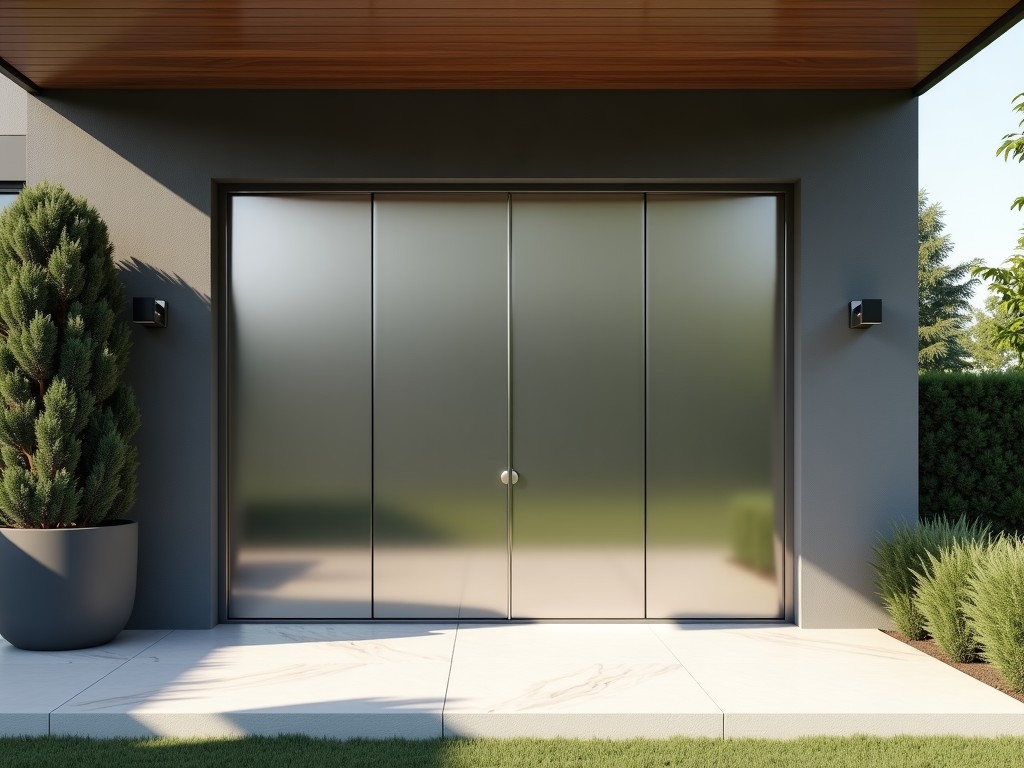
Outdoor Stainless Steel Enclosures: Material Selection and Environmental Performance
Selecting an enclosure for outdoor installation requires evaluating material behavior under prolonged exposure to moisture, temperature cycling, UV radiation, and airborne contaminants. For applications in telecommunications, utility infrastructure, transportation, and marine environments, 304 and 316L stainless steel grades are commonly specified due to their passive chromium oxide layer, which inhibits oxidation when properly maintained. The choice between grades depends on chloride concentration in the atmosphere — 304 suffices for inland urban settings, while 316L, with added molybdenum, resists pitting in coastal or industrial zones where salt spray or chemical pollutants are present.
Fabrication method influences long-term integrity. Cabinets constructed from continuously welded seams, followed by passivation treatment, eliminate crevices where moisture can accumulate and initiate localized corrosion. In contrast, enclosures relying solely on mechanical fasteners or spot welding may develop micro-gaps over time, especially under thermal cycling, compromising the protective oxide layer. Engineers assessing outdoor stainless cabinets should verify whether post-weld cleaning and passivation per ASTM A967 or A380 have been performed, as this step is critical to restoring corrosion resistance after thermal exposure during fabrication.
Gasket selection is equally vital to maintaining ingress protection. EPDM or silicone gaskets with compression set below 25% after 70 hours at 100°C (per ASTM D395) ensure durable sealing against dust and water jets. Neoprene, while cost-effective, degrades faster under UV exposure and may harden in sub-zero climates, leading to seal failure. For IEC 60529 compliance, cabinets intended for outdoor use typically target IP66 or IP67 ratings, requiring not only a robust gasket but also a flange design that maintains uniform compression across the door perimeter — often achieved through continuous piano hinges or multi-point locking systems that prevent corner warping.
Thermal management must be addressed during design, as stainless steel’s low thermal conductivity (approximately 16 W/m·K for 304) can trap heat inside the enclosure. Passive cooling via louvers or vented panels increases condensation risk if not paired with hydrophobic membranes or desiccant cartridges. Active solutions, such as thermoelectric coolers or filtered fan systems, add complexity but may be necessary for heat-sensitive equipment like PLCs or radio transceivers operating in direct solar gain. Thermal modeling based on local solar irradiance, ambient temperature extremes, and internal power dissipation helps determine whether ventilation, shading, or insulation is required to maintain internal temperatures within component operating limits.
Mounting and installation practices affect longevity. Cabinets should be installed on non-absorbent pads or rails to prevent wicking moisture from concrete foundations. Using isolators made of nylon or polypropylene prevents galvanic coupling when mounting on dissimilar metals. Grounding straps must be bonded to the cabinet body using star washers and anti-oxidation compound to ensure low-impedance paths for fault currents and surge protection — omitting this step can compromise both safety and equipment performance over time.
Typical Specifications for Outdoor Stainless Steel Cabinets
| Parameter | Typical Range / Option | Notes |
|---|---|---|
| Material Grade | 304, 316L | 316L preferred for chloride-rich environments |
| Material Thickness | 1.2 mm – 2.0 mm | Thicker gauges for larger enclosures or high-wind zones |
| Ingress Protection | IP66, IP67 | Verified per IEC 60529; gasket and hinge design critical |
| Surface Finish | No. 4 Brushed, Electropolished | Electropolishing enhances passive layer uniformity |
| Door Configuration | Single, Double, Hinged, Removable Panel | Multi-point latching improves seal compression |
| Mounting Options | Wall Mount, Pole Mount, Pad Mount, Flange Mount | Isolation pads recommended to prevent galvanic corrosion |
| Temperature Range | -40°C to +60°C (internal) | Depends on sealing, ventilation, and solar load management |
Customization is frequently required to accommodate specific equipment layouts, conduit entry points, or mounting brackets. Laser cutting and CNC punching allow precise modifications to standard housings without compromising structural integrity. When requesting modifications, providing detailed DXF or STEP files with clearly marked cutouts, hole patterns, and reinforcement zones ensures accurate fabrication. Changes to door size or hinge placement may necessitate recalculating gasket compression forces to maintain IP rating — a step often overlooked in field modifications.
Packaging for export must account for surface protection during handling. Interleaving sheets of polyethylene film between stacked units prevents scratching, while corner guards and edge protectors mitigate impact damage. For sea freight, desiccant bags and humidity indicators inside cartons help monitor moisture ingress during transit. Buyers should confirm whether packaging adheres to ISPM 15 standards for wood pallets if applicable, and whether shock-absorbing inserts are included for units with sensitive internal components.
Lead time varies based on material availability, complexity of customization, and current production load. Standard configurations in 304 grade with common dimensions typically ship within 2–3 weeks. Custom sizes, 316L material, or specialized finishes (e.g., electropolishing, powder coating over stainless) may extend lead time to 4–6 weeks. Engaging early with engineering teams allows for concurrent design review and material procurement, reducing delays caused by late-stage changes.
For technical evaluation, request material test reports (MTRs) confirming alloy composition, and ask for documentation of passivation treatment and IP testing. Third-party verification of corrosion resistance via salt spray testing (ASTM B117) or cyclic corrosion testing (ASTM G85) provides additional assurance for long-term deployment. Suppliers who routinely provide such documentation demonstrate tighter control over material traceability and process consistency — factors that directly influence field performance and lifecycle cost.
When evaluating outdoor stainless cabinets, focus on measurable attributes: material grade and thickness, post-weld treatment, gasket compression characteristics, hinge design, and thermal management provisions. Avoid selections based solely on appearance or generic claims of “weather resistance.” Instead, validate that the enclosure’s design aligns with the specific environmental stressors of the installation site — whether that involves UV exposure, salt spray, industrial pollutants, or extreme temperature swings. A specification-matched cabinet reduces the risk of premature failure, unplanned maintenance, and equipment damage, delivering better long-term value than a lower-priced alternative that lacks engineering rigor.