Custom Built Corner Cabinet
Custom Built Corner Cabinet
Custom Built Corner Cabinets for Industrial Workspaces
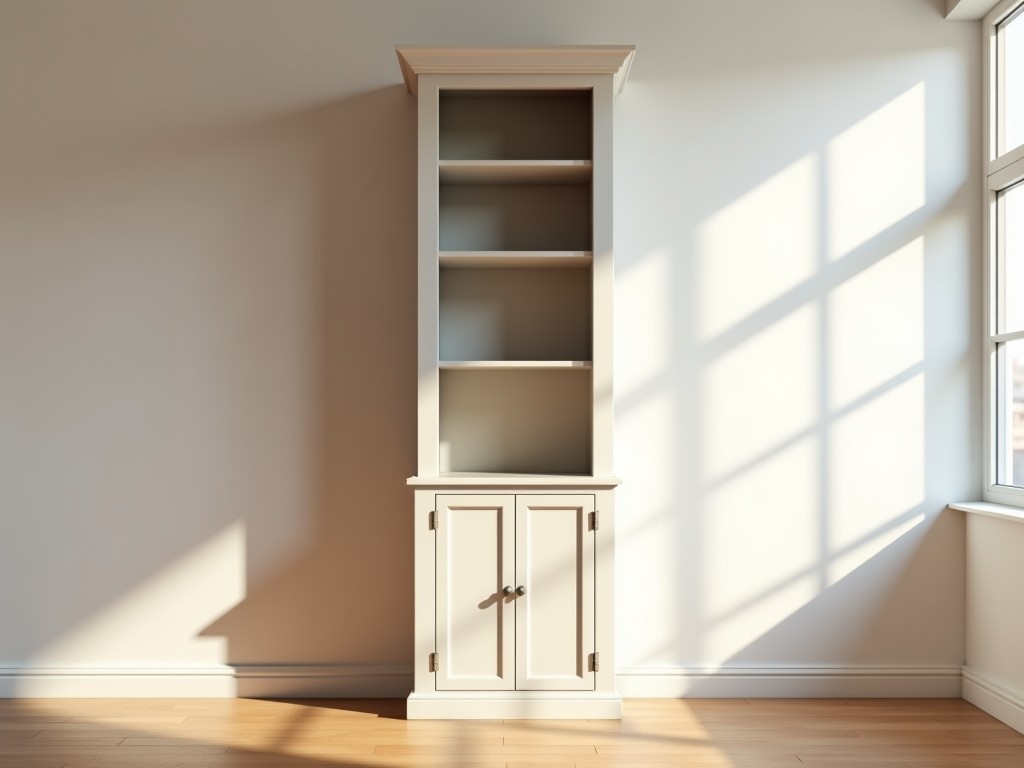
In manufacturing facilities, laboratories, and maintenance workshops, efficient use of floor space directly impacts workflow and safety. Corner areas are frequently underutilized due to the limitations of standard cabinetry, which cannot conform to 90-degree intersections without gaps or instability. Custom built corner cabinets address this by providing tailored storage solutions that integrate seamlessly into existing layouts while meeting the structural and environmental demands of industrial environments.
Engineering Considerations for Corner Cabinet Design
Unlike off-the-shelf units, custom corner cabinets are engineered to match specific spatial constraints, load requirements, and access patterns. The design process begins with precise on-site measurements or CAD data to determine the exact angle, depth, and height needed. This ensures the cabinet fills the corner completely, eliminating dead zones and preventing dust accumulation in hard-to-reach areas. Structural integrity is prioritized through reinforced joints and load-distributing frames, particularly important when storing heavy tools, fixtures, or process materials.
Material selection is driven by the operating environment. In dry, controlled settings such as assembly lines or tool rooms, cold-rolled steel with powder coating provides durability and resistance to light impacts. For environments exposed to moisture, cleaning agents, or temperature fluctuations — such as food processing, pharmaceutical labs, or outdoor maintenance bays — stainless steel grades 304 or 316 are selected for their corrosion resistance and ease of sanitation. Interior linings, such as chemical-resistant laminates or ESD-safe coatings, can be added based on stored contents.
Manufacturing Process and Tolerance Control
Production relies on CNC punching, braking, and welding techniques to achieve dimensional accuracy. Corner components are formed using precision dies to maintain consistent angles, typically within ±0.5° for steel and ±1.0° for stainless steel, depending on material thickness and bend radius. All welds are inspected for penetration and uniformity, with critical joints subjected to dye penetrant testing when required by industry standards. Fastening systems — whether threaded inserts, self-clinching nuts, or welded studs — are chosen based on expected vibration and disassembly frequency.
Surface preparation follows a multi-stage process: degreasing, phosphating, and electrostatic powder coating for steel, or passivation for stainless steel. Coating thickness is monitored to ensure uniform protection, typically ranging from 60 to 80 microns for industrial-grade finishes. These processes are not only protective but also contribute to long-term dimensional stability by minimizing thermal expansion discrepancies between substrate and coating.
Typical Specifications and Configuration Options
| Attribute | Typical Range / Option | Notes |
|---|---|---|
| Material | Cold-rolled steel, Stainless steel 304/316 | Selected based on environmental exposure |
| Exterior Dimensions | Height: 800–2200 mm Width (each leg): 400–1000 mm Depth: 300–600 mm |
Customizable to site measurements |
| Load Capacity (per shelf) | 50–200 kg | Dependent on material thickness and support design |
| Door Type | Swing, sliding, or lift-up | Chosen based on access frequency and clearance |
| Interior Accessories | Adjustable shelves, drawers, tool rails, lighting | Configured per workflow needs |
| Finish | Powder coat (RAL colors), brushed stainless, ESD coating | Available upon request |
Application Scenarios in Industrial Settings
In automotive assembly plants, corner cabinets are installed beside conveyor lines to hold torque wrenches, sockets, and calibration tools, reducing operator motion and improving shift changeover times. The angled design allows technicians to access contents without obstructing walkways or interfering with robotic arms. In electronics manufacturing, ESD-coated versions store sensitive components and test equipment, with grounding points integrated into the frame to prevent static discharge.
Pharmaceutical facilities utilize stainless steel corner cabinets in cleanrooms for storing gowns, filters, and small-batch reagents. The seamless interior, with coved edges and minimal crevices, supports compliance with ISO 14644 standards by simplifying cleaning procedures. Similarly, in food and beverage processing, cabinets with sloped tops and sealed joints prevent pooling of liquids and inhibit microbial growth in washdown zones.
Maintenance departments in power generation and heavy machinery plants rely on durable corner units to organize lubricants, seals, and diagnostic tools. Vibration-resistant mounting options and lockable doors ensure contents remain secure during operation. For outdoor installations, such as telecom hubs or renewable energy sites, weatherproof seals and UV-stable finishes extend service life despite exposure to temperature cycling and precipitation.
Customization and OEM Support
Customization extends beyond dimensions to include functional integration. Cabinets can be designed to interface with existing infrastructure — such as aligning with conveyor heights, matching machine control panel ergonomics, or incorporating pass-through ports for cables and tubing. Internal layouts are optimized using workflow analysis, ensuring high-frequency items are positioned for ergonomic access while less-used supplies are stored in deeper or higher compartments.
For OEMs and system integrators, we provide engineering collaboration from concept to production. This includes DFM (Design for Manufacturability) reviews, prototype validation, and documentation packages containing CAD models, material certifications, and inspection reports. Production scaling is supported through standardized tooling and modular design principles, allowing for consistent quality across multiple units or facilities.
Packaging, Logistics, and Installation
To prevent damage during transit, cabinets are packaged with corner protectors, edge guards, and moisture-barrier wrapping. Units are secured on pallets with straps and corner boards, optimized for forklift handling and container stacking. For knock-down (KD) designs, all hardware is pre-packed and labeled, with assembly instructions detailing bolt sequences and torque values to maintain structural integrity.
Installation typically requires only basic tools — wrenches, levels, and shims. Anchor points are provided for floor or wall mounting, depending on load and seismic considerations. On-site adjustments are accommodated through slotted holes or adjustable feet, allowing compensation for uneven surfaces without compromising alignment. Final positioning is verified using laser levels or digital inclinometers to ensure doors operate smoothly and shelves remain level.
Lead times vary based on material availability, finish complexity, and order volume. Standard configurations in stock materials typically ship within 2–4 weeks. Custom finishes, non-standard dimensions, or integrated electrical components may extend timelines, which are confirmed during the quoting phase. We maintain transparent communication throughout production, providing updates at key milestones such as material cut, forming, coating, and final inspection.
Quality Control and Long-Term Value
Quality assurance is embedded in every stage, from incoming material verification to final functional testing. Dimensional checks are performed using CMMs or calibrated fixtures to confirm corner angles and squareness. Finish adhesion is tested via cross-hatch and mandrel bend methods, while load-bearing capacity is validated through incremental weight testing on representative samples. These procedures ensure that each cabinet meets both performance expectations and safety requirements.
The value of a custom corner cabinet lies in its ability to solve a specific spatial inefficiency while enduring the rigors of daily industrial use. Unlike generic storage, it eliminates wasted space, reduces retrieval time, and contributes to a safer, more organized workspace. Over its lifecycle — often exceeding 10 years in non-corrosive environments — the initial investment is offset by improved efficiency, reduced tool loss, and lower maintenance compared to makeshift or poorly fitted alternatives.
To begin the customization process, share your layout drawings, load requirements, and environmental conditions with our engineering team. We will evaluate your needs and provide a detailed proposal including material recommendations, design options, and estimated timelines. This approach ensures the final solution is not only fit for purpose but also optimized for long-term reliability and integration into your operational workflow.