Commercial Storage Cabinet Supplier
Commercial Storage Cabinet Supplier
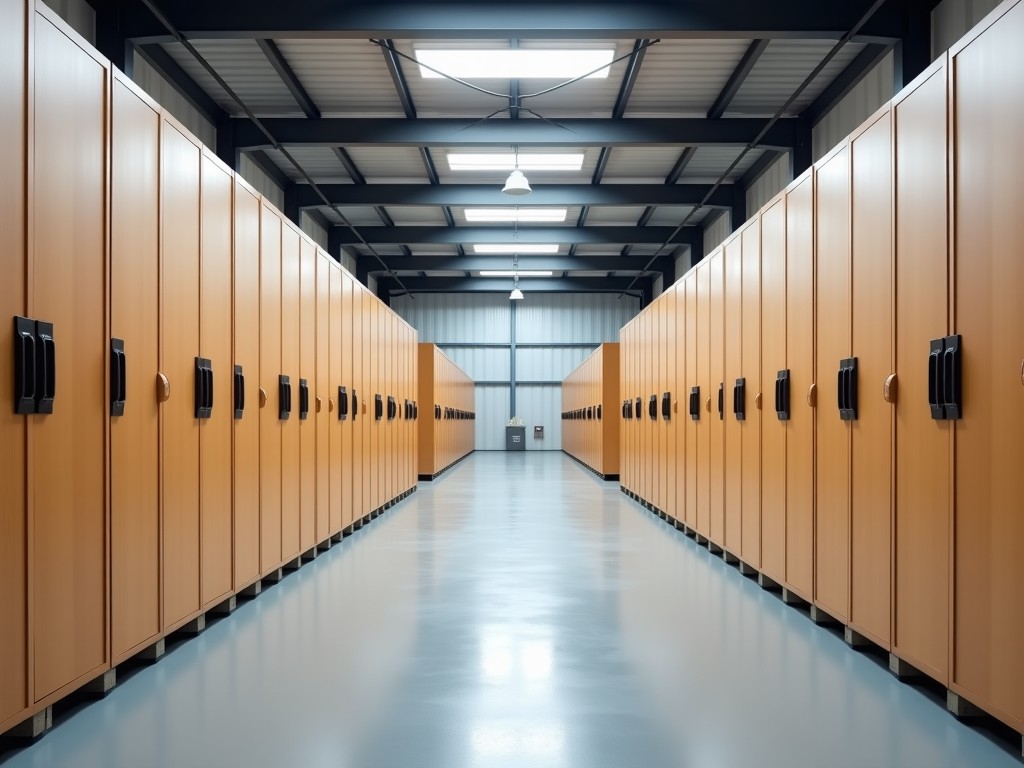
Commercial Storage Cabinets: Engineering-Grade Solutions for Industrial Environments
Selecting storage infrastructure for manufacturing, warehousing, or laboratory facilities requires more than aesthetic consideration. Engineers and procurement teams prioritize structural integrity, material compatibility with stored substances, environmental resistance, and long-term serviceability under operational loads. This page details the technical factors influencing cabinet selection, material behavior, and configuration options relevant to industrial buyers evaluating suppliers for repeatable, specification-driven outcomes.
Material Selection and Structural Behavior in Demanding Applications
The performance of a storage cabinet begins with base material choice. Cold-rolled steel (SPCC) offers high dimensional stability and weldability, suitable for dry environments where paint adhesion and corrosion resistance are managed through surface treatment. Galvanized steel (SECC) provides inherent barrier protection against moisture ingress, making it appropriate for areas with fluctuating humidity or occasional washdowns. Stainless steel grades (304, 316L) are selected when exposure to chemicals, cleaning agents, or strict hygiene protocols requires passive oxide layer stability and resistance to pitting. Material thickness typically ranges from 0.8mm to 1.5mm for body panels, with door and shelf gauges adjusted based on load expectations—critical when storing dense items like tooling, batteries, or chemical containers.
Deflection under load is a key serviceability criterion. Shelves exceeding 900mm in width often require reinforcement—either through folded edges, central supports, or increased material gauge—to maintain flatness under distributed loads of 50kg/m² or more. Door alignment depends on hinge quality and frame squareness; concealed or heavy-duty butt hinges with adjustable tension reduce long-term sag. Locking mechanisms, whether cam locks, paddle handles, or electronic keypads, must withstand repeated cycling without compromising seal integrity in enclosed units.
Manufacturing Process and Dimensional Consistency
Cabinet bodies are typically formed via progressive stamping or CNC press braking, ensuring repeatable flange dimensions and corner integrity. Tolerances on mating surfaces—such as door-to-frame clearance or shelf pin hole alignment—are controlled through fixture-based welding and punching operations. Powder coating is applied after phosphating pretreatment, with film thickness targeting 60–80μm for uniform coverage and edge protection. For stainless steel units, passivation follows welding to restore chromium oxide layers, particularly in heat-affected zones.
Production consistency relies on calibrated tooling and in-process inspection. First-article validation checks include squareness (measured via diagonal difference), surface finish uniformity (visually and via gloss meter), and functional testing of doors, locks, and load-bearing components. Custom dimensions—such as non-standard height for mezzanine installations or reduced depth for narrow aisles—require new tooling or modular framing adjustments, impacting lead time and minimum order quantities.
Typical Specifications and Configuration Options
| Attribute | Typical Range / Options |
|---|---|
| External Height | 900mm – 2000mm (customizable) |
| External Width | 600mm – 1200mm (standard modules) |
| External Depth | 400mm – 600mm (aisle-constrained designs available) |
| Body Material | Cold-rolled steel, galvanized steel, SS304, SS316L |
| Shelf Load Capacity | 30kg – 100kg per shelf (UDL, dependent on span and reinforcement) |
| Door Type | Swing, sliding, lift-up (material and thickness matched to body) |
| Locking Options | Cam lock, paddle handle, electronic keypad, hasp for padlock |
| Surface Finish | Powder coat (RAL colors), brushed stainless, galvanized (unpainted or painted) |
| Accessories | Adjustable shelves, dividers, pull-out trays, vent panels, leveling feet, caster bases |
Application-Specific Considerations
In electronics manufacturing, cabinets storing sensitive components often require anti-static dissipative coatings or grounded shelving to prevent charge accumulation. Laboratories using flammable solvents may specify cabinets with integrated spill containment (sump bases) and flame-arresting vents, compliant with OSHA or EN standards. Food processing facilities prioritize smooth, crevice-free interiors and seamless welds to eliminate harborage points, favoring stainless steel with electropolished finish for cleanability.
For high-density storage systems, modular cabinets with interlocking frames allow reconfiguration without structural modification. Ventilation requirements—whether passive (louvered doors) or active (ducted exhaust)—influence door and panel design, particularly when managing fumes from batteries, adhesives, or cleaning agents. Mobile units incorporate lockable casters with load ratings matching the cabinet’s total weight, including contents, to prevent instability during movement.
Customization, Tooling, and Supply Chain Implications
Custom dimensions, hole patterns for specific equipment mounting, or integrated power/data conduits require engineering review. Tooling changes for non-standard widths or heights affect unit pricing and lead time, typically adding 2–4 weeks for new stamping or bending dies. Laser-cut panels offer flexibility for low-volume or prototype orders but may exhibit edge burr requiring secondary deburring. Powder color matching to corporate standards or zone identification systems is achievable through custom formulation, though batch consistency should be verified for large projects.
Packaging for export typically involves corrugated cardboard with edge protectors, stretch wrapping, and palletization suitable for forklift handling. Shock and vibration testing during transit is not standard but can be arranged upon request for sensitive destinations. Volume orders benefit from nested or knock-down (KD) designs that reduce freight volume, though assembly time on-site must be factored into installation planning.
Quality Control and Long-Term Performance
Dimensional audits are conducted at first article and periodic intervals during production runs. Coating adhesion is verified via cross-hatch test (ASTM D3359), and corrosion resistance assessed through salt spray exposure (ASTM B117) when specified. Load testing applies static weights to shelves and doors to validate deflection limits under worst-case loading scenarios. Functional endurance—such as 5,000 lock cycles or 10,000 door openings—is available as a customized validation protocol for high-use environments.
Field service life depends on environmental exposure and maintenance. Powder-coated steel in dry industrial settings exceeds 10 years with minimal degradation. Stainless steel in chloride-rich or acidic environments may require periodic passivation to prevent surface staining. Hinges and locks benefit from light lubrication annually; adjustable feet should be checked for load distribution after reconfiguration. Suppliers should provide maintenance guidelines tailored to material and finish.
Industrial buyers evaluating storage cabinets should request material certifications, coating thickness reports, and load test data relevant to their stored goods and environment. Clear communication of application specifics—such as chemical exposure, load distribution, frequency of access, and spatial constraints—enables suppliers to propose configurations that balance performance, lead time, and total cost of ownership. Engaging early in the design phase allows for integration of accessories, locking systems, and modularity without retrofitting penalties.
Share your layout drawings, load requirements, or environmental specifications for a customized proposal. Our engineering team will review your constraints and return a detailed response covering material selection, structural options, and implementation timeline.