China Tall Pantry Cabinets
China Tall Pantry Cabinets
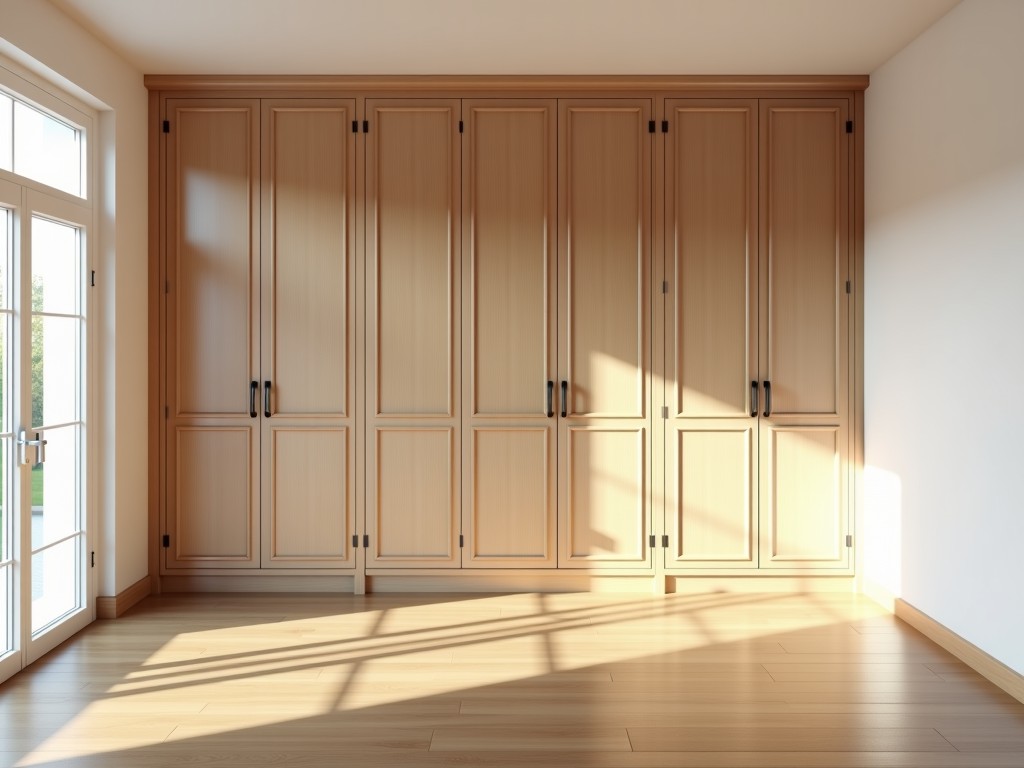
China Tall Pantry Cabinets: Engineered for Industrial Storage Efficiency
In high-volume production facilities, distribution centers, and laboratory environments, vertical space utilization directly impacts operational throughput. Tall pantry cabinets designed for industrial use address storage limitations by providing structured, accessible organization for tools, components, PPE, and consumables without expanding floor footprint. These units are specified not merely as storage furniture but as integrated workflow elements requiring dimensional stability, load-bearing capacity, and resistance to environmental stressors common in manufacturing settings.
Material Selection for Demanding Industrial Environments
The structural integrity of tall pantry cabinets begins with material choice. Cold-rolled steel substrates, typically SPCC or equivalent, provide the necessary yield strength to support distributed loads exceeding 150 kg per shelf when properly reinforced. Surface treatment via phosphate pretreatment followed by electrostatic powder coating creates a barrier against moisture, chemical splashes, and abrasion—critical in environments where cleaning agents or lubricants are present. Alternative configurations using galvanized steel or stainless steel (grade 304) are available for applications requiring enhanced corrosion resistance, such as food processing or pharmaceutical cleanrooms.
Engineering Design Principles
Unlike residential cabinetry, industrial tall pantry units incorporate specific design features to withstand continuous use. Frame construction uses 1.2mm to 1.5mm thick steel profiles with welded or riveted corner joints to prevent racking under dynamic loads. Shelves are engineered with front-to-back flanges or tubular reinforcements to resist deflection under point loads, maintaining flatness within ±2mm over 900mm spans. Door assemblies, when included, utilize concealed hinges rated for 50,000+ cycles and magnetic catches to ensure positive closure without sagging—addressing a common failure point in high-traffic areas.
Typical Specifications and Dimensional Flexibility
| Parameter | Typical Range | Notes |
|---|---|---|
| Overall Height | 1800–2200 mm | Customizable in 50mm increments |
| Width | 600–900 mm | Standard modules; gangable for wider runs |
| Depth | 450–600 mm | Aisle clearance considerations apply |
| Shelf Load Capacity | 100–180 kg UDL | Dependent on thickness and reinforcement |
| Door Opening Angle | 110° | Full access without interference |
| Finish Thickness | 60–80 μm | Powder coating; meets ISO 12944 C3 |
These specifications represent common industrial configurations. Actual dimensions, load ratings, and material thicknesses are adjusted based on project requirements, seismic zone considerations, and accessibility standards such as ADA where applicable. Tolerances on critical dimensions (shelf height, door alignment) are typically held to ±1.5mm to ensure interchangeability and proper function of internal accessories like drawers or dividers.
Customization Options for OEM Integration
Industrial buyers frequently require modifications beyond standard catalog offerings. Common customizations include:
- Integrated power/data conduits with grommeted access points for charging stations or sensor networks
- Adjustable shelf systems with incremental positioning (25mm pitch) and locking mechanisms to prevent displacement
- Ventilated back panels or perforated doors for applications requiring airflow (e.g., battery storage, chemical cabinets)
- Locking mechanisms ranging from cam locks to electronic keypad systems with audit trail capabilities
- Internal accessories such as pull-out trays, dividers, or specialized holders for tools, bottles, or containers
These modifications influence tooling requirements, minimum order quantities, and lead times. Simple adjustments like hole patterns or shelf repositioning typically incur no additional tooling cost, while novel door configurations or internal frameworks may require prototype validation. Engineering teams review DXF or STEP files to assess manufacturability and provide DFM feedback early in the quotation process.
Packaging and Logistics Considerations
Export-ready packaging addresses the vulnerabilities of tall, narrow units during transit. Standard practice involves:
- Knock-down (KD) assembly to reduce volumetric weight and minimize damage risk
- Corner protectors and edge guards made from expanded polystyrene or corrugated polypropylene
- Five-layer corrugated cartons with burst strength ≥275 kPa, sealed with pressure-sensitive tape
- Horizontal strapping and shock-absorbing inserts to prevent frame twisting during handling
- Labeling compliant with ISPM 15 for wood pallets and destination-country marking requirements
Fully assembled units are available for short-haul or dedicated container shipments but increase freight costs significantly. KD kits include all necessary hardware (pre-threaded where applicable), illustrated assembly instructions, and torque specifications for critical fasteners to ensure field assembly matches factory tolerances. Lead times for standard configurations range from 15–25 days post-PPG approval, extending to 4–6 weeks for complex customizations requiring new tooling.
Quality Control and Consistency
Production stability is maintained through standardized processes rather than reliance on individual skill. Critical control points include:
- Incoming material verification: thickness, coating adhesion, and flatness of steel coils
- Punching and forming accuracy: monitored via SPC on CNC turret presses (±0.1mm positional tolerance)
- Weld integrity: 100% visual inspection of load-bearing joints with periodic destructive testing
- Coating uniformity: DFT measurements at 5+ points per panel; gloss and adhesion testing per ASTM D523/D3359
- Final assembly: functional checks of door alignment, shelf levelness, and hardware operation
Statistical process control ensures batch-to-batch consistency. Packaging integrity is verified through drop testing (ISTA 3A) and vibration simulation to confirm that units arrive without deformation or finish damage. Traceability is maintained via lot numbers linking raw material cohorts to finished goods, facilitating rapid investigation if field performance deviates from expectations.
Application Scenarios in Industrial Settings
These cabinets solve specific operational challenges:
- Maintenance workshops: Organizing specialty tools, calibration equipment, and consumables near workcells to reduce motion waste
- Cleanroom adjunct areas: Storing gowning supplies, wipes, and disinfectants in non-shedding, easy-to-clean enclosures
- Laboratory prep rooms: Housing glassware, reagents, and instruments with chemical-resistant interiors
- Distribution centers: Securing high-value small parts or documentation in lockable units near packing stations
- Food processing lines: Holding PPE and sanitation tools in washdown-rated enclosures with sloped tops to prevent pooling
Selection hinges on matching cabinet attributes to environmental stressors—not merely storing items but enhancing process reliability. For example, a cabinet in a plating line requires different specifications than one in a dry storage warehouse due to exposure to vapors, temperature cycling, and cleaning protocols.