China Grey Built In Cabinets
China Grey Built In Cabinets
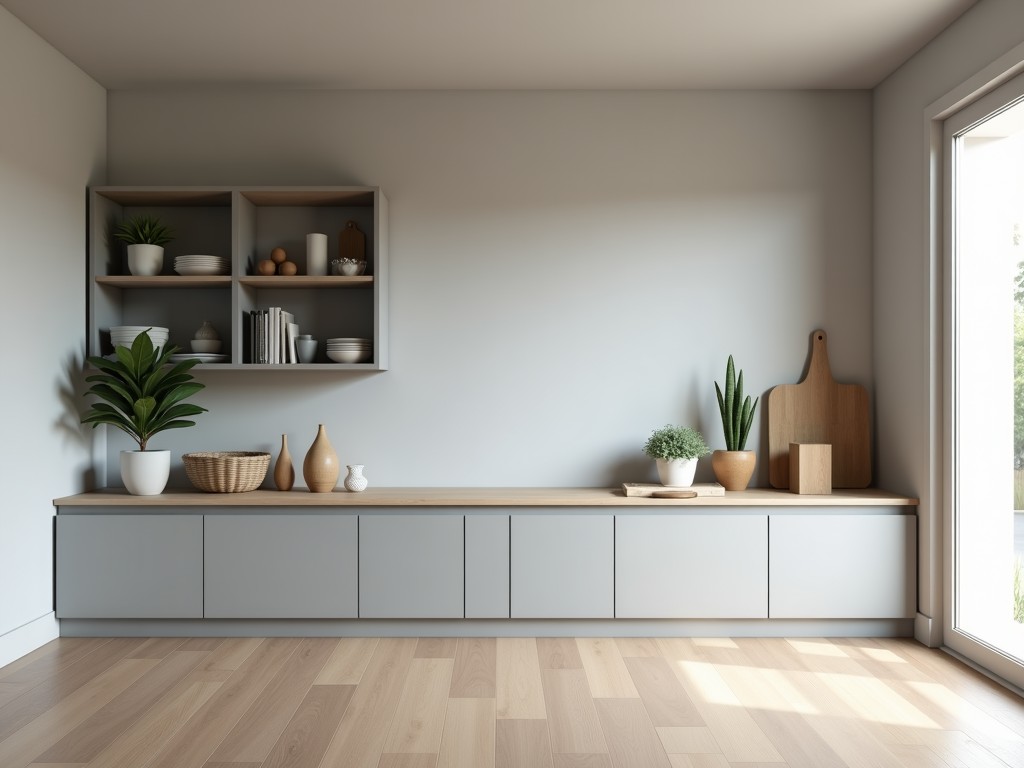
Grey Built-In Cabinets for Industrial Storage and Equipment Housing
In manufacturing facilities, workshops, and industrial environments, storage solutions must withstand continuous use, resist wear from tools and materials, and integrate seamlessly into existing layouts without compromising workflow. Grey built-in cabinets are engineered to meet these demands by providing durable, space-efficient enclosures that protect tools, components, and sensitive equipment while maintaining a clean, professional appearance. Unlike freestanding units, built-in designs eliminate floor obstructions and reduce dust accumulation in hard-to-reach areas, supporting lean organization and safety compliance.
Material Selection and Structural Integrity
The performance of industrial cabinets begins with material choice. Grey built-in cabinets are commonly constructed from cold-rolled steel or aluminum alloys, selected based on load requirements, environmental exposure, and corrosion resistance needs. Cold-rolled steel offers high tensile strength and rigidity, making it suitable for heavy-duty tool storage or machinery housing, while aluminum provides a lighter alternative with natural corrosion resistance, ideal for cleanrooms or humid environments. Surface preparation includes degreasing, phosphating, and powder coating in a uniform grey finish (typically RAL 7035 or similar), which enhances adhesion, UV stability, and resistance to chipping — critical in high-traffic zones where impact and abrasion are frequent.
Panel thickness typically ranges from 0.8mm to 1.5mm for steel and 1.2mm to 2.0mm for aluminum, depending on span and load conditions. Reinforcement ribs, flanged edges, and welded corners improve torsional stiffness, preventing flex under dynamic loads such as sliding drawers or vibrating equipment. These structural details are not cosmetic; they directly affect long-term alignment, door closure consistency, and the lifespan of hinges and slides — factors procurement teams evaluate when assessing total cost of ownership.
Manufacturing Process and Dimensional Consistency
Built-in cabinets are fabricated using precision CNC punching, bending, and welding techniques to ensure repeatable dimensions and tight tolerances. Laser cutting or turret punching creates clean openings for doors, vents, and cable access, while CNC bending maintains consistent flange angles and panel alignment. Tolerances for critical interfaces — such as door frame to carcass or drawer runner mounting points — are typically held within ±0.5mm to ensure smooth operation without binding or gaps that compromise sealing or safety.
Welding is performed using robotic MIG or TIG systems on load-bearing joints, followed by grinding to achieve a smooth, flush surface before coating. This minimizes stress concentrations and prevents coating failure at weld points. Unlike mass-produced consumer cabinets, industrial built-in units often undergo fixture-based assembly to maintain squareness across large installations, ensuring that multiple units align perfectly when installed side-by-side in wall systems or under workbenches.
Powder coating is applied in a controlled electrostatic process, followed by curing at 180–200°C. This creates a thick, uniform film (typically 60–80 microns) that resists solvents, oils, and mild chemicals commonly found in industrial settings. The grey color is not merely aesthetic; it reduces glare under bright workshop lighting and conceals light dust and minor scuffs better than white or dark finishes, supporting visual order in busy environments.
For projects requiring non-standard dimensions, integrated power outlets, or special mounting configurations, manufacturers offer customization through CAD-driven prototyping. Tooling adjustments are minimized by using modular brake presses and adjustable fixtures, allowing cost-effective production even for low-volume OEM requests — a key consideration for machine builders and system integrators.
Quality control includes dimensional inspection using CMM or height gauges, finish adhesion testing (ASTM D3359), and cycle testing of doors and drawers (5,000–10,000 operations) to validate performance under simulated use. These steps are not optional; they prevent field failures that disrupt production schedules and increase maintenance burden.
Typical Specifications and Configuration Options
| Specification | Typical Range / Option | Notes |
|---|---|---|
| Panel Material | Cold-rolled steel (SPCC), Aluminum (5052-H32) | Selected based on load and environment |
| Panel Thickness | Steel: 0.8–1.5mm Aluminum: 1.2–2.0mm |
Thicker panels for wider spans or higher loads |
| Surface Finish | Powder coating, RAL 7035 (Light Grey) | Custom colors and textures available |
| Door Type | Flush, overlay, or louvered | Louvered for ventilation; lockable options |
| Drawer Load Capacity | Up to 40kg per drawer (with full-extension slides) | Ball bearing slides; soft-close available |
| Standard Height | 800mm, 900mm, 1000mm (to match workbench heights) | Custom heights upon request |
| Depth | 400mm, 500mm, 600mm | Deeper units for bulky equipment storage |
| Width Modularity | 300mm, 400mm, 500mm, 600mm increments | Enables wall system integration |
Application Scenarios and Industry Use
Grey built-in cabinets are widely adopted in CNC machining centers, where they store precision tools, gauges, and fixtures near the machine operator, reducing motion waste and protecting sensitive measuring instruments from coolant and swarf. In electronics assembly, they house soldering stations, component bins, and ESD-sensitive materials, with optional grounding points and anti-static liners. Automotive repair facilities use them to organize diagnostic equipment, specialty wrenches, and fluid containers, benefiting from the chemical-resistant coating and easy-to-clean surface.
In pharmaceutical and food processing environments, where hygiene and cleanability are paramount, stainless steel or powder-coated aluminum units are preferred, with sealed seams and sloped tops to prevent particle accumulation. The grey finish supports visual inspection protocols by highlighting debris or residue against a neutral background. Laboratories and testing facilities integrate built-in cabinets under work surfaces to house analyzers, refrigeration units, and cable management systems, maintaining clear access for calibration and maintenance.
For OEMs producing industrial machinery, built-in cabinets are often specified as part of the machine base or control console, providing integrated storage for manuals, spare parts, and diagnostic tools. Custom cutouts for displays, keyboards, and cooling vents are engineered during the design phase to ensure proper fit and airflow, avoiding costly field modifications.
Customization, Logistics, and Installation
Customization extends beyond dimensions to include internal configurations: adjustable shelves, drawers with dividers, pull-out trays, and cable glands. Mounting options vary from direct wall anchoring to freestanding bases with leveling feet, depending on floor conditions and seismic requirements. For export shipments, cabinets are disassembled into flat-pack kits when necessary, with labeled components and hardware packs to simplify reassembly on-site — a critical factor for international OEMs managing global installations.
Lead times depend on complexity and volume: standard configurations typically ship in 2–3 weeks, while customized units with special cutouts, finishes, or internal accessories may require 4–6 weeks. Packaging includes corner protectors, edge guards, and stretch film to prevent scratching during transit, with palletized shipping for LTL or FCL logistics. Installation is facilitated by pre-drilled mounting holes and alignment pins, reducing field labor and ensuring consistent positioning across multiple units.
When evaluating suppliers, procurement teams should assess not only price but also the manufacturer’s ability to maintain dimensional consistency across batches, provide material certifications upon request, and offer engineering support for integration into larger systems. A supplier’s quality control process — particularly finish adhesion and cycle testing — often predicts long-term performance better than marketing claims.
Discuss your project requirements with our engineering team.
Share your drawings, load specifications, or environmental conditions for a customized proposal and detailed lead time estimate.