China Built In Laundry Cabinet Storage
China Built In Laundry Cabinet Storage
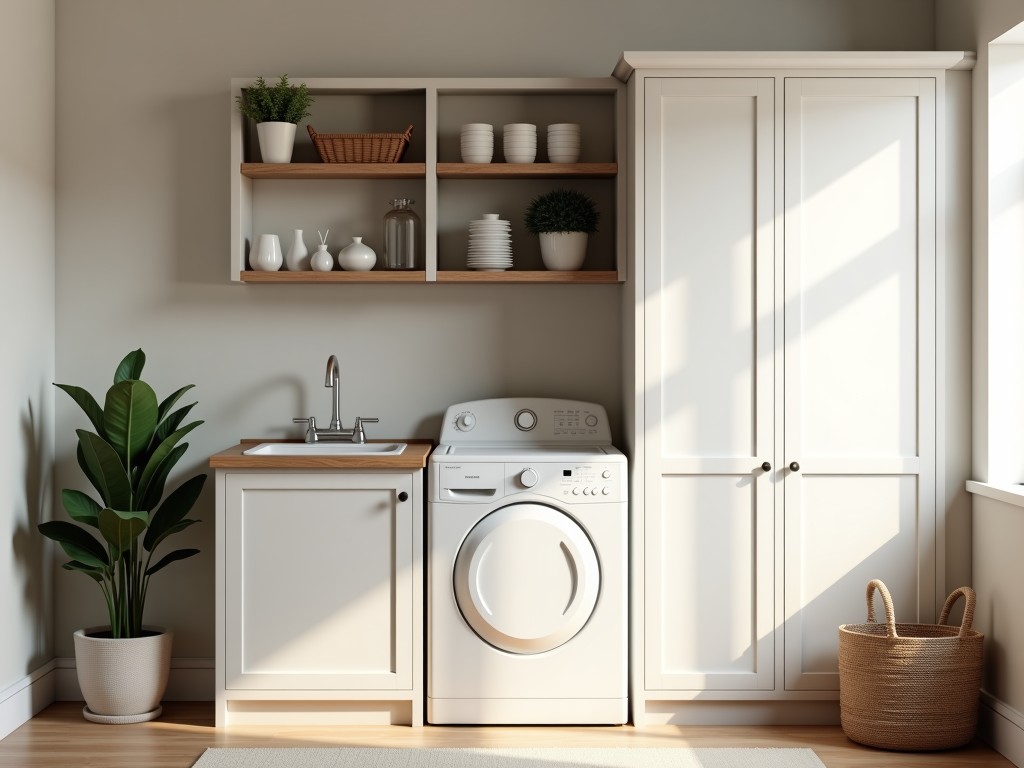
Engineering Specifications for Built-In Laundry Cabinet Storage Systems
Integrating laundry operations into residential or commercial facility architectural plans requires a rigorous understanding of structural load-bearing requirements, moisture resistance, and ergonomic spatial optimization. Unlike freestanding units, built-in systems must be engineered to withstand the dynamic vibrations of high-efficiency appliances while maintaining dimensional integrity under humidity and chemical exposure from detergents. Effective design focuses on the seamless integration of cabinetry with the structural framework to ensure alignment stability over a long life cycle.
Material Selection for High-Humidity Environments
The choice of core material determines the operational lifespan of the laundry storage unit. In environments where water vapor and temperature fluctuations are constant, standard particle board often fails due to swelling and delamination at the edges. Procurement and engineers should prioritize materials based on their density and moisture-resistance coefficients.
- Moisture-Resistant MDF (MR-MDF): Utilizes specialized resin binders that reduce water absorption rates compared to standard MDF, ideal for paneling near sink zones.
- Marine-Grade Plywood: Offers superior structural stability and screw-holding strength; preferred for load-bearing shelving and heavy-duty frames.
- Polymeric Core Laminates: Often specified for high-traffic commercial applications where chemical resistance to industrial-grade cleaning agents is non-negotiable.
Structural Considerations and Load Distribution
A built-in system must account for the static weight of stored linens and the dynamic load generated by a washing machine during the spin cycle. If the cabinetry is not properly anchored to the wall studs or floor substrate, the vibration can lead to hardware loosening, door misalignment, and structural failure of the joints.
| Technical Parameter | Standard Specification | Engineering Benefit |
|---|---|---|
| Cabinet Depth Range | 650mm - 750mm | Accommodates standard front-loading and top-loading clearances. |
| Shelf Load Capacity | 25kg - 50kg per linear meter | Prevents sagging under heavy textile storage. |
| Hinge Specification | Soft-close, concealed-grade | Reduces impact noise and protects mechanical wear. |
| Surface Finish Resistance | HPL Laminate / UV Coating | Resists abrasion and common detergent staining. |
Functional Integration and Workflow Optimization
The layout of built-in storage is dictated by the sequence of the laundry process: sorting, washing, drying, and folding. Professional design solutions utilize "zones" to minimize unnecessary movement. This includes integrating deep countertops above the appliances to provide a continuous folding surface, and utilizing vertical pull-outs for sorting by fabric type.
Ventilation is a critical overlooked factor in built-in designs. Proper airflow gaps around mechanical dryers are essential to prevent heat buildup and moisture accumulation, which can degrade the cabinetry materials over time. We recommend recessed ventilation channels and integrated venting pathways that maintain the aesthetic of the enclosure.
Customization and OEM Capabilities
For large-scale residential developments or commercial hospitality projects, standard dimensions often fail to meet requirements. Our manufacturing process allows for dimensional adjustments to fit specific site-specific plumbing and electrical layouts. We can provide custom-configured inserts for organizational systems, specialized hardware for heavy-duty drying racks, and integrated lighting systems within the cabinetry.
Project Inquiry Checklist
-
To provide an accurate technical proposal, please provide:
- Site plans and appliance dimensional specifications (including clearance requirements).
- Preferred material finishes based on environmental exposure levels.
- Total load requirements for specialized shelving units.
- Project timeline for manufacturing and on-site installation.
Frequently Asked Technical Questions
How is vibration isolation handled in built-in units?
We utilize reinforced mounting points and vibration-dampening gaskets where the appliance frame meets the cabinetry. This prevents the energy transfer to the cabinet panels, minimizing rattling and joint fatigue.
Is the cabinetry compatible with steam-functions?
Yes, provided that the material edge-banding is sealed with high-pressure PUR adhesives to ensure steam moisture does not penetrate the core material during high-heat cycles.
What is the typical lead time for custom OEM orders?
Lead times vary based on volume and material availability, but typically custom-scale projects range from 8 to 12 weeks from blueprint approval and material selection.
Ready to discuss technical specifications for your project?
Request Technical Consultation & Quotation