Balcony Storage Cabinet Solutions Manufacturer
Balcony Storage Cabinet Solutions Manufacturer
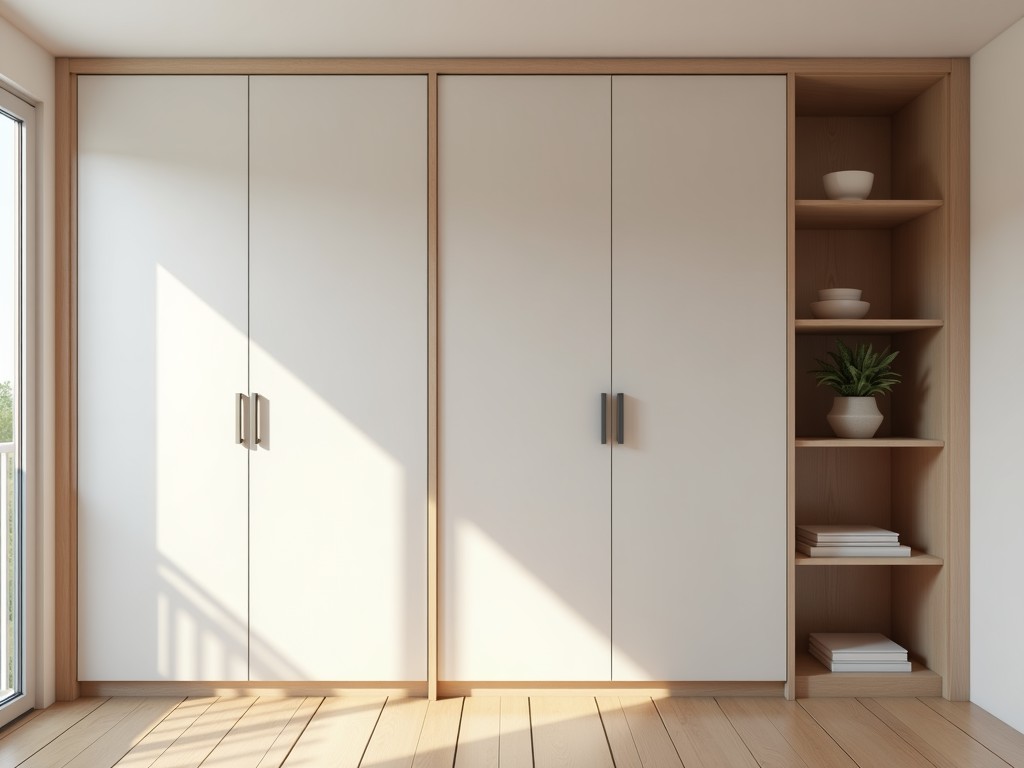
Industrial-Grade Balcony Storage Cabinet Solutions
Engineered for high-density storage in urban architectural environments where structural integrity and environmental resistance are critical. Our systems are designed to withstand fluctuating weather conditions while maintaining dimensional stability under heavy load distribution.
Engineering Challenges in Urban Balcony Storage
Standard indoor cabinetry often fails in balcony environments due to thermal expansion, UV-induced degradation, and moisture ingress. For procurement managers and design engineers, the challenge lies in selecting a solution that balances spatial efficiency with the mechanical demands of outdoor exposure. Materials not specifically rated for exterior use typically suffer from warping, structural joint failure, or hardware corrosion.
When specifying storage solutions, the primary concern is the load-bearing capacity of the balcony floor versus the weight of the unit. Our design focuses on even weight distribution across the floor area to prevent stress concentrations, ensuring that the unit remains secure without compromising the structural integrity of the building facade.
Material Selection and Environmental Resistance
The longevity of a balcony cabinet is dictated by its material composition. We evaluate materials based on their specific strength, corrosion resistance, and stability.
| Material Type | Technical Characteristics | Primary Benefit |
|---|---|---|
| Galvanized Steel Frame | High tensile-to-weight ratio, zinc-coated for oxidation. | Maximum load capacity for heavy equipment. |
| High-Density Polyethylene (HDPE) | Non-porous, UV-stabilized, inert. | Zero maintenance, completely waterproof. |
| Powder-Coated Aluminum | Natural oxide resistance, low thermal expansion. | Lightweight, rust-resistant finish. |
Technical Specifications and Configuration
To ensure compatibility with various architectural plans, our units adhere to strict tolerance standards. We offer modular configurations that allow for scaling based on specific balcony dimensions and clearance requirements.
- Static Load Capacity: Up to 250kg per linear meter, depending on frame reinforcement.
- Moisture Management: Integrated EPDM gaskets and sloped roof profiles to prevent water internal condensation.
- Hardware Specification: Grade 304 stainless steel hinges and fasteners to prevent salt-air accelerated corrosion.
- Mounting: Adjustable leveling feet (±25mm) to compensate for uneven flooring slopes.
Manufacturing and Quality Control
Our production process integrates precision CNC cutting with rigorous assembly testing. Every unit undergoes a dimensional inspection to ensure squareness within a ±1.5mm tolerance, which is vital for the alignment of sliding doors in tight frames.
Quality control includes salt-spray testing for metal components to verify the longevity of the coating and UV-exposure simulation for any polymer elements. This ensures that the finish will not peel or become brittle after one season of direct solar exposure.
Customization and OEM Services
We recognize that "off-the-shelf" solutions rarely fit complex commercial or residential projects. We provide comprehensive ODM services for developers who require integrated storage into the building design.
Custom Dimensions
Adjustable heights and widths to accommodate specific tool sets, gardening equipment, or architectural architectural requirements.
Functional Layouts
Internal shelving configurations, reinforced drawer slides for tools, and ventilated compartments for chemical storage.
Frequently Asked Questions
How do these cabinets handle high-humidity coastal environments?
We utilize 304 stainless steel hardware and marine-grade powder coatings specifically designed to resist the pitting corrosion common in high-salinity environments.
What is the maintenance requirement for the HDPE units?
HDPE units require minimal maintenance beyond a simple wash with water and mild detergent. They do not require painting or sealing throughout their lifecycle.
Can these units be anchored to the balcony wall for safety?
Yes, all frames include pre-drilled points for secure anchoring to masonry or timber structures, ensuring stability in high-wind zones.